Mortgage Servicing
Recent $4.6M SPS Settlement Highlights Rampant Mortgage Servicing Abuses: How to Defend Your Home
A recent $4.6 million enforcement action against Select Portfolio Servicing exposes widespread mortgage servicing abuses. Learn how to spot these errors and protect your home from wrongful foreclosure.
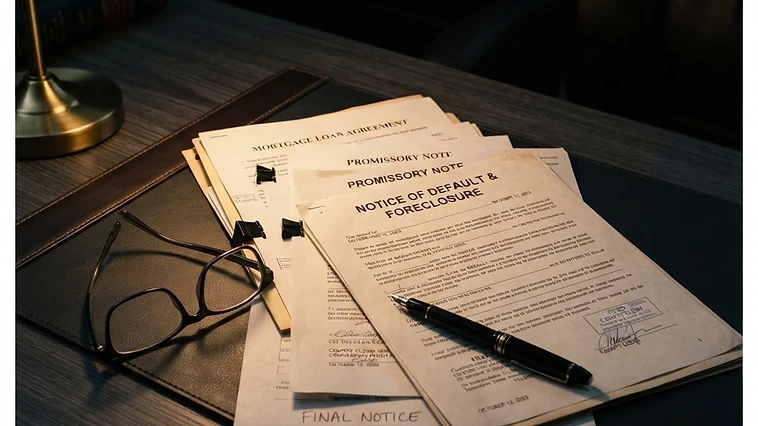
Disclaimer: The following article is for educational purposes only and does not constitute legal advice. If you are facing foreclosure, consult with a qualified attorney in your jurisdiction.
When you fall behind on your mortgage payments, the letters and phone calls from your mortgage servicer can quickly become overwhelming. Many homeowners assume that the bank holds all the cards and that the numbers on their monthly statements are infallible. However, recent enforcement actions prove that mortgage servicers frequently make devastating errors, violate federal and state laws, and strip homeowners of their rights.
If you are facing late payments or the threat of foreclosure, understanding how mortgage servicers operate—and how they break the law—is your first line of defense. A major enforcement action from June 2026 serves as a perfect case study of the abuses homeowners face every day, and more importantly, how you can identify these violations to build a robust foreclosure defense strategy.
The $4.6 Million Wake-Up Call for Homeowners
On June 18, 2026, a massive enforcement action sent shockwaves through the mortgage servicing industry. According to the Attorney General Bonta Secures $4.6 Million Settlement, Consumer Relief with Mortgage Servicer, Select Portfolio Servicing, for Violations of Foreclosure Protections During the COVID-19 Pandemic | State of California - Department of Justice - Office of the Attorney General, Select Portfolio Servicing (SPS), a large sub-prime mortgage servicer, agreed to a $4.6 million settlement to resolve allegations of widespread mortgage servicing and debt collection violations.
The allegations against SPS highlight exactly what foreclosure defense advocates have been warning about for years: servicers often fail to provide homeowners with the support and accurate information required by law. The investigation revealed that SPS failed to give homeowners adequate information about forbearance plans, sent mortgage statements wrongly stating that late fees would be charged for missed payments, and failed to have tailored loss mitigation discussions with homeowners nearing the end of their forbearance periods.
Furthermore, the servicer allegedly failed to ensure that homeowners received adequate support from a single point of contact—a strict requirement under the Homeowner Bill of Rights (HBOR). They also failed to process loan modification applications according to legal timelines. For homeowners currently battling their servicers, this settlement is undeniable proof that the entity foreclosing on your home may be actively violating your rights.
Understanding Your Rights Under the Homeowner Bill of Rights
To fight back against servicing abuses, you must first understand the legal framework designed to protect you. Following the 2008 financial crisis, both federal and state governments implemented strict rules to prevent unnecessary foreclosures. One of the most powerful tools for homeowners is the Homeowner Bill of Rights (HBOR), which exists in California and has inspired similar protections in other states and at the federal level through the Consumer Financial Protection Bureau (CFPB).
As outlined in the recent SPS settlement, HBOR provides critical protections to homeowners facing foreclosure. Your mortgage servicer must attempt to contact you at least 30 days before starting the foreclosure process to discuss your financial situation and explore options to avoid foreclosure. Furthermore, if you apply for a loan modification, your servicer must notify you within five business days of any missing information, errors, or deadlines for completing your application.
 A magnifying glass resting on a mortgage statement, representing the forensic review of mortgage servicing errors and foreclosure documents.

Federal law also provides a robust shield. According to Homeowners' Legal Rights Before, During, and After Foreclosure | Foreclosure Law Center | Justia, the foreclosure process cannot officially begin until your mortgage payments are more than 120 days overdue. This 120-day window is a critical period designed to allow you to submit a complete loss mitigation application. If you miss a payment, the servicer must attempt to contact you by phone within 36 days and in writing within 45 days to discuss loss mitigation options. If your servicer rushes to file a Notice of Default or a foreclosure lawsuit before these timelines expire, they are violating federal law, which can serve as a powerful defense in court.
How to Spot Mortgage Servicing Errors and Abuses
Mortgage servicers manage the day-to-day administration of your loan. They process your payments, manage your escrow account, and handle loss mitigation requests. Because they handle thousands of accounts, their automated systems are prone to catastrophic errors.
According to Errors and Abuses by Mortgage Servicers & Your Legal ... Justia, mistakes made by mortgage servicers can have a devastating impact on homeowners. One of the most common issues is the failure to properly process monthly payments. Under the federal prompt crediting rule, a servicer must credit your payment on the day it receives the funds. However, servicers frequently place partial payments or payments made during a dispute into a "suspense account." Instead of applying the money to your principal and interest, the funds sit in limbo, triggering late fees and falsely inflating your past-due balance.
Another rampant abuse is the assessment of illegal junk fees. Servicers may improperly charge late fees, tack on inappropriate property inspection costs, or impose invalid corporate advance fees. In the SPS settlement, the servicer was caught sending statements that wrongly threatened late fees during protected forbearance periods. If you are in foreclosure, you must forensically audit your mortgage statements. Look for unexplained fees, unauthorized property preservation charges, and discrepancies in your escrow account. A servicer's failure to maintain accurate accounting is not just an annoyance; it is a legal defense against foreclosure.
The Danger of Dual Tracking During Loss Mitigation
Perhaps the most insidious tactic used by mortgage servicers is "dual tracking." Dual tracking occurs when a mortgage servicer ostensibly negotiates with a homeowner to modify their loan while simultaneously pushing forward with foreclosure proceedings.
Imagine spending weeks gathering tax returns, bank statements, and hardship letters to submit a complete loan modification application. Your single point of contact assures you that your application is under review and that your home is safe. Meanwhile, the servicer's legal department is quietly filing a Notice of Sale or asking a judge for a summary judgment of foreclosure.
Federal law and state Homeowner Bills of Rights strictly prohibit dual tracking. Once you submit a complete loss mitigation application, the servicer must halt all foreclosure activity until they have evaluated your application, provided a written decision, and allowed the appeal period to expire. If your servicer sells your home at auction while your modification application is pending, they have committed a severe legal violation. Documenting every interaction, saving every email, and sending documents via certified mail are essential steps to prove that dual tracking occurred.
Building Your Foreclosure Defense Strategy
The revelations from the SPS settlement and the widespread reports of servicing errors mean that you cannot take your servicer's claims at face value. If you are facing foreclosure, you must transition from a passive borrower to an active defender of your property.
Start by organizing your evidence. Keep a detailed log of every phone call with your servicer, noting the date, time, the representative's name, and what was discussed. Save every piece of mail, especially breach letters, notices of default, and monthly statements.
If you suspect your servicer has made an error, you have the right to demand answers under the Real Estate Settlement Procedures Act (RESPA). You can send a Notice of Error (NOE) or a Request for Information (RFI) to your servicer's designated address. By law, the servicer must acknowledge your request within five business days and conduct a reasonable investigation to correct the error within 30 days. If they fail to respond or correct the error, you have established a documented paper trail of their non-compliance, which can be presented to a judge to challenge the validity of the foreclosure.
Remember, the burden of proof in a foreclosure case ultimately rests on the foreclosing party. They must prove that they have the legal standing to foreclose, that they have complied with all pre-foreclosure notice requirements, and that the amount they claim you owe is perfectly accurate. By identifying servicing abuses, you dismantle their case piece by piece.
Why the Foreclosure Defense Survival Playbook Helps
Navigating the complex web of mortgage servicing laws, federal regulations, and court procedures is incredibly daunting for any homeowner. The recent $4.6 million settlement against Select Portfolio Servicing proves that servicers routinely break the rules, but exposing these violations in court requires specialized knowledge and meticulous preparation. This is exactly where the Foreclosure Defense Survival Playbook becomes your most valuable asset.
This comprehensive 530-page educational guide is specifically designed to help homeowners understand their mortgage documents, decode confusing servicing procedures, and organize their evidence like a seasoned professional. The Playbook breaks down complex legal concepts—like RESPA violations, dual tracking, and the Homeowner Bill of Rights—into plain, actionable language. It teaches you how to forensically audit your mortgage statements for illegal fees, how to draft effective Notices of Error to force your servicer to correct their mistakes, and how to conduct the legal research necessary to stand up for your rights in court.
You do not have to face the threat of foreclosure feeling helpless or uninformed. By equipping yourself with the Foreclosure Defense Survival Playbook, you gain the knowledge needed to hold deceptive mortgage servicers accountable and fight for your home. Order your copy today and take the first crucial step toward leveling the playing field.

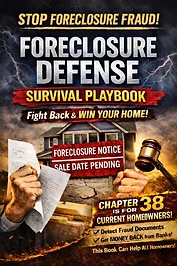
Order The Playbook
Get the Foreclosure Defense Survival Playbook
530 pages of structured, educational guidance covering mortgage documents, foreclosure procedures, evidence organization, and legal research — the same foundation this article draws from.