What Is a Mortgage Servicing Dispute?
A servicing dispute is a disagreement with the company that collects your mortgage payments, manages your escrow account, and handles loss mitigation — which is often a different company than the one that originally made your loan. Servicers process payments, charge fees, maintain escrow for taxes and insurance, and initiate default and foreclosure proceedings when payments fall behind.
Because servicers handle enormous volumes of loans and because mortgages are frequently transferred between servicers, mistakes are common. A servicing dispute can arise even when you have never missed a payment — and unresolved errors can snowball into default, fees, or foreclosure if left unchallenged.
Common Servicing Disputes
01Payment misapplication
Payments applied to fees or suspense instead of principal and interest, generating late fees and a false default.
02Escrow analysis errors
Incorrect tax or insurance estimates, shortages, or surpluses that distort your monthly payment.
03Force-placed insurance
Costly lender-purchased insurance added when the servicer believes your coverage lapsed, even when it did not.
04Servicing transfer mistakes
Lost paperwork, misapplied payments, or balance discrepancies when your loan moves between servicers.
05Unauthorized fees
Charges for inspections, broker price opinions, or property preservation that are excessive or improperly assessed.
06Loss mitigation mishandling
Delayed, lost, or denied modification applications, or foreclosure activity continued while a complete application is under review.
07Dual tracking
Foreclosure proceedings advanced at the same time a loss-mitigation application is pending, which rules generally restrict.
08Statement and notice errors
Incorrect balances, missing periodic statements, or default notices with wrong amounts or deadlines.
Why Servicing Errors Can Lead to Foreclosure
A servicer mistake does not have to be large to cause harm. A misapplied payment can trigger late fees and a credit report error. A force-placed insurance charge can inflate your payment beyond what you can afford. A lost modification application can let a foreclosure sale proceed while you believed you were under review. Because servicers control the records and the timeline, the homeowner is usually the one who must catch the error — and do it quickly.


How to Document a Servicing Dispute
01Keep a payment log
Record every payment — date, amount, and where it was sent — and compare it to your statements and payment history.
02Save every notice and letter
Retain periodic statements, escrow analyses, default notices, and any force-placed insurance or fee notices.
03Communicate in writing
Send disputes and requests in writing and keep copies; written records are easier to prove than phone calls.
04Request your payment history
Ask the servicer for a complete payment and transaction history and reconcile it against your own records.
05Track transfers
Note every servicing transfer date and verify your balance, escrow, and pending applications immediately after each one.
06Watch the deadlines
Servicing disputes and loss-mitigation decisions often have strict timelines; missing one can limit your options.
When a Servicing Dispute Becomes a Defense
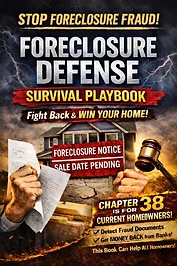
In some cases, a documented servicing error — a misapplied payment, a wrongful fee, or continued foreclosure during a complete loss-mitigation application — can become part of a foreclosure defense. Whether it applies depends on the facts, your loan type, and governing law. The Foreclosure Defense Survival Playbook explains how servicing records work, what to challenge, and how to organize the evidence so a dispute can be presented clearly if it ever needs to be.
Keep Reading
Related Resources

Order The Playbook
Get the Foreclosure Defense Survival Playbook
530 pages of structured, educational guidance covering mortgage documents, foreclosure procedures, evidence organization, and legal research — the same foundation this page draws from.