What This Resource Helps You Do
01Procedures and deadlines vary by jurisdiction
02Records and timelines help clarify the dispute
03Education supports—not replaces—legal representation
Understanding the Foreclosure Process
Foreclosure is the legal process a lender may use to enforce a security interest in property after a borrower defaults. The exact procedures, timelines, notices, and options vary significantly depending on your state, your loan type, and the terms of your mortgage. There is no single national foreclosure process — and that is exactly why understanding the rules that apply to you is so important.
Broadly, foreclosure proceeds through several stages: default, formal notice, a period during which the borrower may have opportunities to cure, and finally a sale or judgment. Some states require a court proceeding (judicial foreclosure); others allow the process to proceed without one (non-judicial). The deadlines and remedies available to a homeowner differ dramatically between these systems.
Why Procedures and Deadlines Vary by Jurisdiction
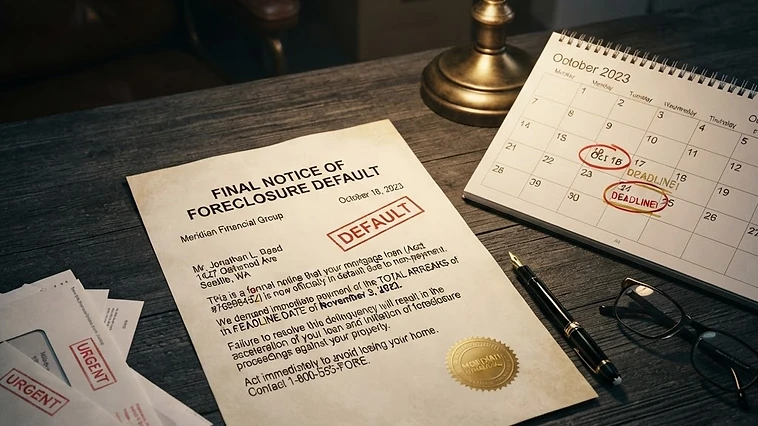
Foreclosure law is shaped by state statutes, local rules, court decisions, and the specific language of your mortgage. A step that is required in one state may not apply in another. A deadline measured in days in one jurisdiction may be measured in months elsewhere. This is why the Playbook emphasizes understanding the rules that govern your specific situation rather than relying on general assumptions.
Treating a deadline casually is one of the most common and most damaging mistakes a homeowner can make. Missed deadlines can limit or eliminate options that would otherwise have been available. The book helps you identify which deadlines may apply and how to track them carefully.
Documents to Examine During Foreclosure
If you are facing foreclosure, the documents connected to your loan become the center of the dispute. Careful review can help you understand what is being asserted and identify questions worth investigating:
01The Note
Review parties, terms, signatures, and any endorsements or allonges.
02The Mortgage / Deed of Trust
Confirm the security instrument and its recorded status.
03Assignments
Trace the chain of transfers of any interest in the security instrument.
04Default & Foreclosure Notices
Check dates, amounts, recipients, cure information, and required steps.
05Servicing & Payment Records
Review who collected payments, transfers, fees, escrow, and stated balances.
06Recorded Documents
Compare public land records with the copies in your own file.


Organizing Your Evidence
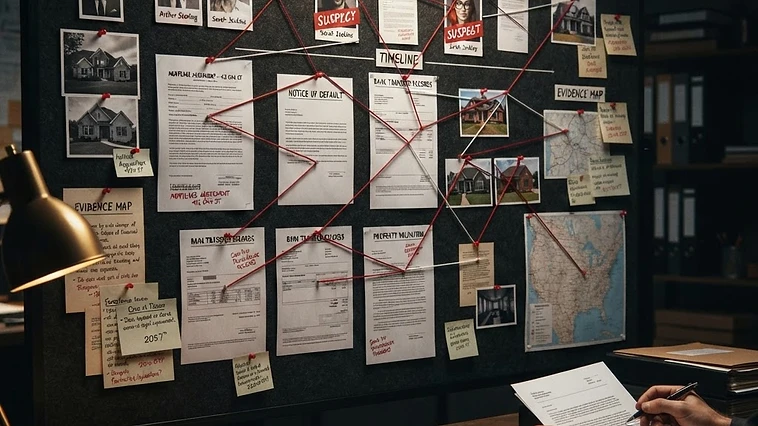
Effective preparation depends on organization. Build a complete, dated file that connects every document, payment, notice, and conversation to a specific date. Keep originals safe, maintain backed-up digital copies, and assemble a clear chronological timeline. A clean file supports every other step — from your own understanding to any work done by a qualified professional.
An inconsistency you identify is a signal worth documenting, not a conclusion. Whether a particular issue has legal significance depends on the facts, governing law, procedure, and evidence specific to your case. The Playbook teaches you to record questions carefully rather than assume outcomes.

Working With Qualified Professionals
Foreclosure involves legal rights, legal procedures, and legal deadlines. The Playbook is educational — it does not provide legal representation or legal advice. If you are facing foreclosure, one of the most important steps you can take is to consult a qualified attorney licensed in your jurisdiction as early as possible.
Education supports, but does not replace, professional representation. The better organized and informed you are, the more productive that consultation will be — and the more effectively a professional can help you. Use the book to prepare informed questions, not to substitute your own judgment for that of a qualified attorney.
Common Mistakes to Avoid
01Ignoring notices
Default and foreclosure notices contain deadlines and required steps. Ignoring them rarely makes the process go away and can eliminate options.
02Assuming all documents are correct
Records are created by people and systems. Careful review can reveal inconsistencies worth investigating.
03Missing deadlines
Foreclosure timelines can be short and unforgiving. Track every date and act promptly.
04Waiting too long to seek help
Early consultation with a qualified attorney gives you the widest range of options.
05Confusing education with representation
Information helps you prepare, but it is not a substitute for qualified legal counsel.
06Drawing conclusions too quickly
An inconsistency is a question to research, not a guaranteed outcome.

Order The Playbook
Get the Foreclosure Defense Survival Playbook
530 pages of structured, educational guidance covering mortgage documents, foreclosure procedures, evidence organization, and legal research — the same foundation this page draws from.