Mortgage Documents
Is Your Mortgage File Tainted? How to Spot Loan Document Errors and Hidden Fraud
Recent federal indictments and the rise of AI-generated fake documents highlight a growing crisis in real estate. Even if you are current on your payments, auditing your mortgage paperwork is essential to protect your home.
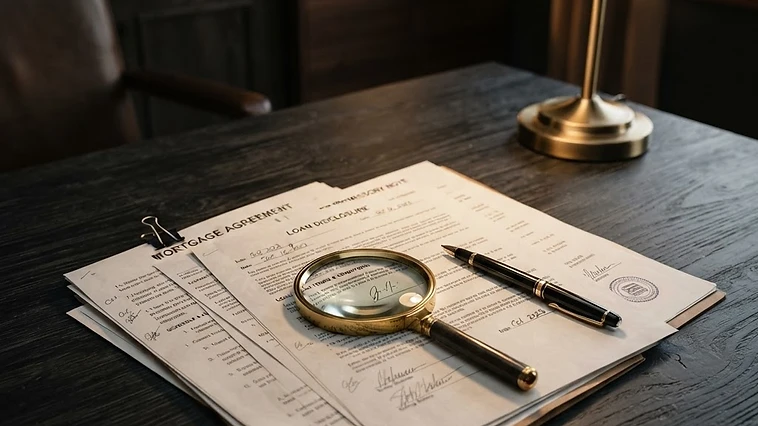
Disclaimer: This article is strictly for educational purposes and does not constitute legal advice. Always consult with a qualified attorney regarding your specific legal situation.
When you sign the final papers at a real estate closing, you likely assume that the bank, the title company, and the notary have executed everything flawlessly. You make your payments on time, keep your property taxes current, and trust that your home is secure. However, recent federal enforcement actions and the alarming rise of artificial intelligence in real estate scams have exposed a terrifying reality: the mortgage industry is rife with fabricated documents, missing assignments, and systemic errors.
Even if you are completely current on your payments, your mortgage file might be a ticking time bomb of inaccuracies. Whether you are planning to refinance, sell your property, or simply want peace of mind, conducting a thorough mortgage document review is no longer just for homeowners facing foreclosure. It is a vital protective measure for every property owner in the United States.
The Hidden Epidemic of Mortgage Fraud and Falsified Records
In October 2026, the Department of Justice unsealed indictments against multiple individuals in Texas for a massive mortgage fraud scheme involving falsified financial documents. According to the U.S. Attorney's Office, the defendants allegedly submitted fraudulent loan applications supported by fabricated pay stubs, W-2 forms, and bank statements to misrepresent borrowers' employment and income. This follows a similar September 2026 indictment involving a $7.3 million mortgage fraud ring operating across Texas and Oklahoma.
While these specific federal cases primarily involve individuals defrauding lenders, they highlight a much broader, systemic vulnerability in the real estate market: the ease with which documents can be fabricated, altered, or improperly recorded. When fraudulent or erroneous documents enter the public record, they pollute the chain of title.
For the average homeowner, this means that the very system designed to record and protect your property rights is highly susceptible to manipulation. If bad actors can easily slip fake W-2s and altered bank statements past underwriters, what is stopping loan servicers, aggressive debt buyers, or predatory lenders from filing inaccurate assignments of mortgage or flawed affidavits in your county records? The answer is very little. This is why a proactive mortgage audit is essential to ensure that the entity claiming to hold your note actually has the legal right to do so.
How AI is Weaponizing Refinance Paperwork
Adding fuel to the fire is the rapid advancement of artificial intelligence. Recent industry reports from October 2026 warn that AI is making mortgage fraud both easier to commit and harder to spot. Scammers are now utilizing generative AI to create highly realistic, forged documents at an unprecedented scale.
In some of the most brazen schemes, criminals use AI-generated documents and false personas to apply for loans or refinance homes that do not even belong to them. They manipulate title documents, alter electronic records with new bank account numbers, and attempt to siphon equity out of properties owned by unsuspecting, on-time borrowers.
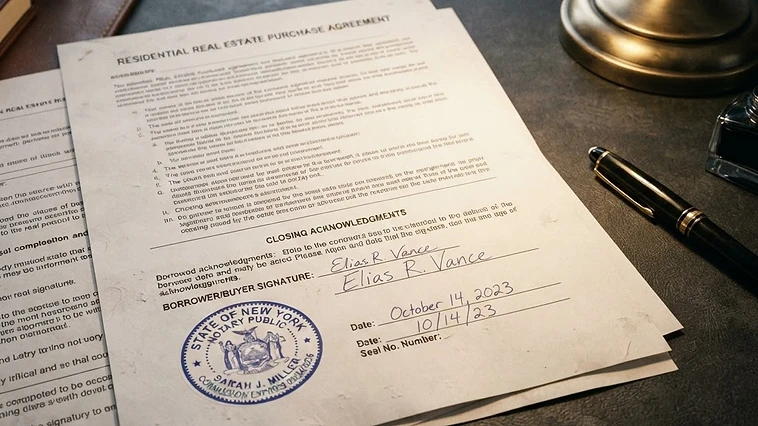 Close-up of a mortgage document being reviewed for notary and signature errors under a warm desk lamp.

Furthermore, AI errors are not limited to scammers. In September 2026, a major mortgage trustee was penalized in a foreclosure appeal because their outside legal counsel used AI to draft a legal brief, resulting in the submission of fake, hallucinated case citations to the court. If the legal teams representing massive Wall Street trusts are submitting fabricated information to appellate courts, how can you blindly trust the accuracy of the refinance paperwork or loan modifications they send to you?
Why Current Homeowners Need a Mortgage Document Review
It is a common misconception that you only need to scrutinize your mortgage paperwork if you fall behind on payments and face foreclosure. In reality, the best time to audit your documents is when you are current on your loan and not under the immense stress of a looming auction date.
When you decide to refinance your home to take advantage of better interest rates or to pull out equity, the new lender will conduct a title search. If your original mortgage contains loan document errors—such as an unrecorded assignment, a defective notary acknowledgment, or a break in the chain of title—your refinance could be delayed or denied entirely.
Moreover, the widespread use of the Mortgage Electronic Registration Systems (MERS) has created a labyrinth of digital transfers that often fail to match the physical reality of who owns your promissory note. During the subprime mortgage crisis, the industry became infamous for "robo-signing"—the practice of having low-level employees blindly sign thousands of affidavits and mortgage assignments without verifying their accuracy. While regulations have tightened, the legacy of these practices remains embedded in millions of property records across the country.
By conducting a comprehensive mortgage document review now, you can identify and address these hidden defects before they derail a future financial transaction or leave you vulnerable to a predatory servicer.
Common Loan Document Errors to Look For
When you sit down to review your mortgage file, you are looking for discrepancies that could invalidate the enforceability of the lien or expose fraudulent activity. A proper mortgage audit involves meticulously comparing your original closing documents against the public land records in your county. Here are some of the most critical loan document errors to watch out for:
-
Breaks in the Chain of Title: Your mortgage or deed of trust must be properly assigned every time the loan is sold from one bank to another. If Bank A sold your loan to Bank B, but there is no recorded assignment, Bank B may lack the legal standing to enforce the debt.
-
Notary and Signature Irregularities: Examine the signatures and notary stamps on your documents. Are the dates consistent? It is physically impossible for a document to be notarized before it was signed, yet this error occurs with shocking frequency. Additionally, look for signs of forged signatures or "robo-signed" documents where the signer's title changes wildly from one document to the next.
-
Missing or Altered Promissory Notes: The promissory note is the actual IOU that you signed. The mortgage is simply the document that secures the note to your property. If your servicer cannot produce the original note, or if the note lacks the proper endorsements (stamps showing it was transferred), they may not have the right to collect your payments.
-
Inaccurate Servicing Disclosures and Fee Pyramiding: Review your monthly statements and escrow accounts. Servicers frequently make accounting errors, misapply payments, or charge unauthorized fees for property inspections and broker price opinions. Over time, these small loan document errors can snowball, stripping you of your hard-earned equity.
-
Predatory Refinance Terms: If you are currently looking at refinance paperwork, be on high alert for bait-and-switch tactics. Ensure that the Truth in Lending Act (TILA) disclosures match the final closing disclosure, and verify that you are not being charged exorbitant, hidden origination fees.
Why Auditing Your Mortgage Paperwork Matters
Your home is likely your most valuable asset, yet most homeowners spend more time reading the manual for a new television than they do reviewing the contract that dictates their housing security for the next thirty years. Even if you have never missed a payment, you cannot afford to be complacent. The recent surge in AI-driven mortgage fraud and federal indictments for falsified financial documents proves that the real estate industry is fraught with peril.
Auditing your mortgage paperwork matters because it puts the power back in your hands. It ensures that your title is clear, your equity is protected, and your servicer is held accountable to the letter of the law. If you wait until you are facing a financial hardship or a delayed refinance to discover that your loan documents are defective, it may be too late to mount an effective defense.
This is exactly why the "Foreclosure Defense Survival Playbook" is an indispensable resource for every homeowner. This comprehensive, 530-page educational guide is not just for those in default; it is the ultimate manual for conducting a forensic mortgage document review. The Playbook teaches you step-by-step how to obtain your complete loan file, decode complex mortgage jargon, spot hidden fraud, and organize your evidence like a seasoned investigator.
Do not wait for a crisis to discover that your mortgage file is tainted. Take control of your financial future, protect your property rights, and learn the secrets the banks hope you never find out. Order your copy of the Foreclosure Defense Survival Playbook today and start your mortgage audit with confidence.


Order The Playbook
Get the Foreclosure Defense Survival Playbook
530 pages of structured, educational guidance covering mortgage documents, foreclosure procedures, evidence organization, and legal research — the same foundation this article draws from.