Mortgage Documents
Is Your Mortgage Paperwork Accurate? How to Spot Hidden Loan Document Errors Before You Refinance
Recent industry reports reveal a troubling spike in mortgage document defects and fraud. Even if you pay on time, auditing your loan paperwork is essential before refinancing.
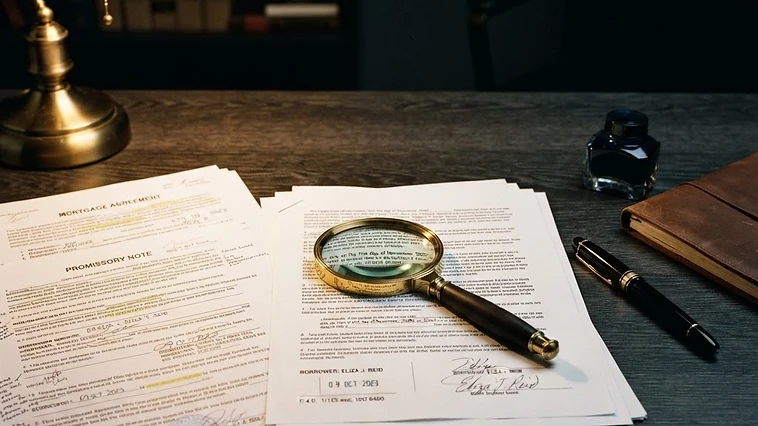
Disclaimer: The following article is for educational purposes only and does not constitute legal advice. Always consult with a qualified attorney regarding your specific legal situation.
Many homeowners operate under a simple, logical assumption: if you pay your mortgage on time every month, your loan is in perfect standing and your paperwork is flawless. You receive your monthly statement, you send in your payment, and your balance slowly decreases. But what happens when you decide to refinance, sell, or simply organize your estate, only to discover that the documents securing your largest financial asset are riddled with errors, missing signatures, or even fraudulent alterations?
Recent industry reports and federal indictments reveal a troubling reality about the American mortgage system. From rising critical defect rates in loan origination to sophisticated fraud rings falsifying financial documents, the integrity of mortgage paperwork is under constant threat. For the responsible homeowner who is current on their payments, conducting a thorough mortgage document review is no longer just for those facing foreclosure—it is a vital step in protecting your property rights and financial future.
The Alarming Rise in Loan Document Errors
If you think your mortgage file is a pristine stack of perfectly executed legal documents, recent data suggests otherwise. According to the Q1 2026 Mortgage QC Industry Trends Report released by ACES Quality Management, the mortgage industry's critical defect rate has risen sharply to 1.71% [6]. This marks a significant increase from previous quarters and highlights a growing problem with institutional quality control.
Even more concerning for homeowners is the nature of these defects. The report notes that legal, regulatory, and compliance defects accounted for a staggering 26.02% of all findings [6]. Furthermore, general loan documentation errors increased by over 19%, adding to the growing list of findings outside core underwriting categories [9].
What does this mean for you? It means that the bank or servicer managing your loan may be relying on incomplete, inaccurate, or legally non-compliant paperwork. These loan document errors can range from missing endorsements on the promissory note to improperly recorded deeds of trust. While these defects might remain hidden while you are making routine payments, they can create massive legal headaches if you ever need to prove clear title, challenge an inaccurate payoff statement, or transfer the property.
The Hidden Risks in Your Refinance Paperwork
Refinancing your home is often pitched as a seamless way to lower your interest rate or tap into your home's equity. However, the rush to process new loans often leads to sloppy paperwork. The same ACES report highlighted that the share of quality control reviews involving refinances increased to 32.05% in early 2026, marking the highest level in four years [6].
When you sign refinance paperwork, you are essentially paying off an old loan and creating a new one. This requires a flawless chain of title, proper recording of the satisfaction of the old mortgage, and the accurate execution of the new documents. Unfortunately, the high volume of refinance transactions often results in missing assignments, unrecorded releases, and notary irregularities.
Before you sign a new stack of refinance paperwork, it is crucial to ensure that your current loan documents are accurate. If your existing mortgage has a broken chain of title or an unrecorded assignment, refinancing can inadvertently sweep these fatal flaws under the rug, or worse, cause your new lender to reject the application due to title defects.
Mortgage Fraud: Not Just a Problem for the Bad Guys
When we hear the term "mortgage fraud," we typically picture shadowy criminals stealing money from banks. However, mortgage fraud often involves industry insiders—loan officers, brokers, and processors—manipulating documents to push loans through the system.
In October 2026, the Department of Justice announced the indictment of two Houston-area residents for allegedly submitting fraudulent financial documents to multiple mortgage lenders [2]. The defendants allegedly created falsified pay stubs, W-2 forms, and bank statements to misrepresent borrowers' employment and income [4]. Just a month prior, in September 2026, a federal grand jury in Dallas indicted four individuals in a sweeping $7.3 million mortgage fraud scheme targeting FHA and VA programs, where insiders flooded lenders with fabricated finance and employment information [5].
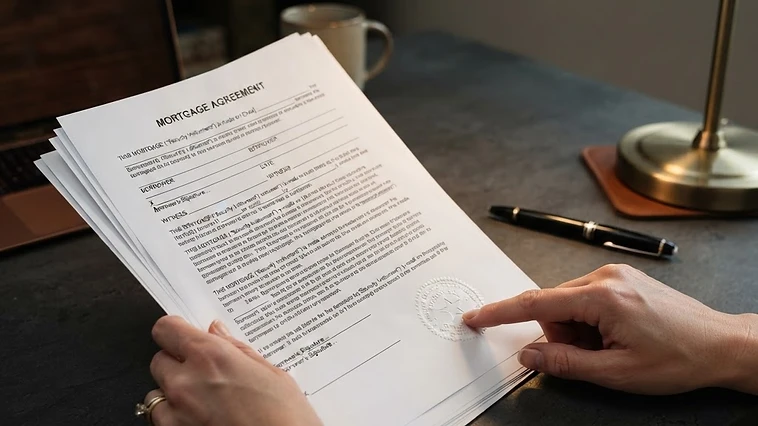 Homeowner conducting a mortgage document review under a warm gold desk lamp

While you may not have participated in any fraudulent activity, the presence of bad actors in the origination process means that your loan file could contain fabricated documents, inflated appraisals, or forged signatures that you know nothing about. If a rogue loan officer altered your income documents to ensure your loan was approved, that fraud is now sitting in your file. A proactive mortgage audit can help you identify if your loan was part of a predatory lending scheme or if your file contains unauthorized alterations.
Institutional Sloppiness: When the Bank's Representatives Cut Corners
It isn't just rogue brokers causing problems; sometimes, the very institutions tasked with enforcing mortgages are caught cutting corners. In a shocking case from September 2026, a mortgage trustee representing Deutsche Bank in a foreclosure appeal was caught submitting a legal brief filled with fake case citations generated by Artificial Intelligence [7]. The appellate court struck the entire brief, noting that the law firm failed to verify the AI-generated citations, resulting in four cited cases that simply did not exist [7].
If the high-powered attorneys representing major Wall Street trusts are submitting fabricated legal citations to appellate courts, how much trust can you place in the accuracy of the routine paperwork they file in county recording offices? This institutional sloppiness is exactly why homeowners must take matters into their own hands. You cannot rely on your servicer or their legal representatives to maintain the integrity of your mortgage file.
Taking Control: The Basics of a Mortgage Document Review
So, how do you protect yourself? The answer lies in conducting a comprehensive mortgage document review. Even if you are current on your payments, you have the right to know exactly what is in your loan file and who actually owns your debt.
A proper review involves gathering your original closing documents, your promissory note, your deed of trust (or mortgage), and a complete history of your property's title records from the county clerk. You should be looking for:
- The Promissory Note: Is it properly endorsed? If your loan was sold (which almost all are), there must be a clear chain of endorsements or a specific allonge attached to the note. Blank endorsements or missing allonges are major red flags.
- Assignments of Mortgage: Has your mortgage been assigned from the original lender to a new trust or servicer? Are these assignments properly recorded in the county records? "Robo-signed" documents—where a single individual signs thousands of assignments without verifying their accuracy—are still a prevalent issue.
- Notary Irregularities: Check the dates and notary stamps on your documents. Were you actually present before the notary on the date listed? Post-dated or back-dated notary stamps are a clear sign of document tampering.
- Servicing Disclosures: Has your servicer provided accurate and timely disclosures regarding the transfer of your loan? Under the Real Estate Settlement Procedures Act (RESPA), you have specific rights regarding how your loan is serviced and how inquiries are handled.
The Power of a Proactive Mortgage Audit
Waiting until you are in financial distress to look at your mortgage paperwork is a dangerous game. By conducting a mortgage audit while you are current on your payments, you operate from a position of strength.
If you discover that your chain of title is broken or that your servicer lacks the proper documentation to prove ownership of your loan, you have the time and leverage to demand corrections. This is especially critical if you plan to sell your home or pass it on to your heirs. A clouded title caused by a sloppy mortgage assignment can derail a home sale and cost thousands of dollars in legal fees to clear up.
Furthermore, if you are preparing to refinance, a clean mortgage audit ensures that your new lender will not encounter unexpected title hurdles. It also gives you peace of mind, knowing that the foundation of your homeownership is legally sound and free from the taint of institutional fraud or negligence.
Why Auditing Your Mortgage Paperwork Matters
Your home is likely your most valuable asset, yet the documents securing it are often treated with shocking disregard by the financial industry. As recent defect reports and fraud indictments prove, the mortgage system is far from perfect. Even current, on-time homeowners must remain vigilant. You must audit your mortgage paperwork before refinancing, before selling, and certainly before any future financial hardship strikes.
Understanding the complex web of promissory notes, assignments, securitization trusts, and servicing guidelines can be overwhelming. That is exactly why the Foreclosure Defense Survival Playbook was created. This comprehensive, 530-page educational resource is not just for homeowners in default—it is the ultimate guide for any homeowner who wants to understand their mortgage documents, organize their evidence, and master the art of legal research.
The Playbook teaches you step-by-step how to spot the exact fraud, errors, and defects in the documents your lender or servicer handed you. It empowers you to conduct your own forensic review, decode the confusing language of mortgage servicing, and ensure that your property rights are fiercely protected. Don't wait for a sloppy servicer or a hidden title defect to threaten your home. Order the Foreclosure Defense Survival Playbook today, and take absolute control of your mortgage paperwork.


Order The Playbook
Get the Foreclosure Defense Survival Playbook
530 pages of structured, educational guidance covering mortgage documents, foreclosure procedures, evidence organization, and legal research — the same foundation this article draws from.