Foreclosure Defense
Rising Foreclosures in 2026: How Homeowners Can Defend Their Rights
With foreclosure rates surging across the U.S., homeowners must understand their legal rights, mortgage documents, and how to spot servicing abuses.


Disclaimer: The following article is for educational purposes only and does not constitute legal advice. If you are facing foreclosure, please consult with a qualified attorney in your jurisdiction.
The Recent Surge in Foreclosure Filings
Recent data indicates a troubling trend for American homeowners. According to recent reports, including Foreclosures, short sales rise as homeowners weigh their options, foreclosure filings and short sales are seeing a significant uptick in mid-2026. As economic pressures mount, many homeowners find themselves falling behind on their monthly mortgage payments. When late payments accumulate, mortgage servicers initiate the foreclosure process, threatening families with the loss of their homes.
Understanding the landscape of foreclosure is the first step in mounting a viable defense. Foreclosure is not an overnight event; it is a strict legal procedure that banks and servicers must follow to the letter of the law. Unfortunately, history and recent enforcement actions show that financial institutions often cut corners, misplace vital documents, or engage in questionable servicing practices. For homeowners, this means that fighting back is not only possible but often necessary to ensure that their rights are protected.
Understanding Your Mortgage Documents and Assignments
To effectively defend against a foreclosure, a homeowner must intimately understand their mortgage documents. The two most critical documents in any mortgage transaction are the Promissory Note and the Mortgage (or Deed of Trust). The Promissory Note is the actual IOU—your promise to repay the loan. The Mortgage is the security instrument that gives the lender the right to foreclose if you default on the Note.
During the life of a typical loan, it is frequently sold and transferred between various financial entities, often ending up in a securitized trust. Each time the Mortgage is transferred, an "Assignment of Mortgage" must be executed and recorded. In many foreclosure cases, the chain of assignments is broken, fraudulent, or improperly executed. If the entity attempting to foreclose cannot definitively prove they own both the Note and the Mortgage, they may lack the legal standing to foreclose. Scrutinizing these assignments is a cornerstone of foreclosure defense.
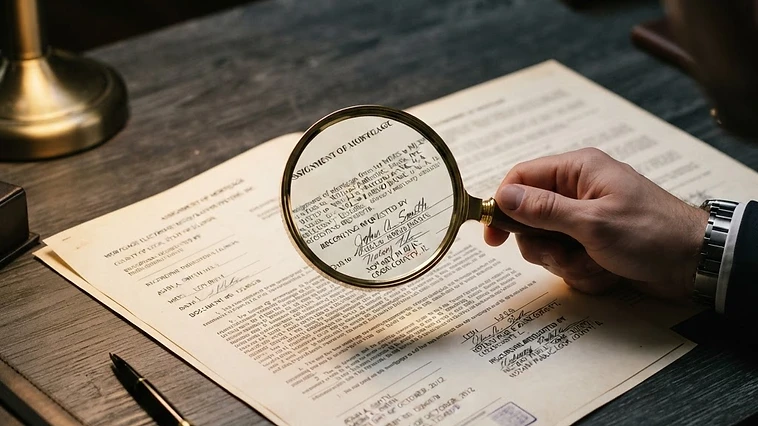 Magnifying glass examining a mortgage assignment document on a dark desk
Spotting Servicing Abuses and Robo-Signing
Mortgage servicing abuses remain a rampant issue in the housing market. Servicers are responsible for collecting payments, managing escrow accounts, and handling modifications. However, they frequently make errors, such as misapplying payments, charging unauthorized fees, or dual-tracking (proceeding with foreclosure while a loan modification application is pending).
Furthermore, the ghost of "robo-signing" still haunts the industry. Robo-signing occurs when bank employees or third-party contractors sign thousands of foreclosure documents without verifying the accuracy of the information contained within them. While major settlements have attempted to curb this practice, variations of it still exist. Homeowners must demand strict proof of the claims made in foreclosure complaints and affidavits. If an affidavit appears to be rubber-stamped or contains glaring factual errors regarding the payment history, it can be challenged in court.
Beware of Foreclosure Rescue Scams
As foreclosures rise, so do the predatory scams targeting vulnerable homeowners. The Consumer Financial Protection Bureau (CFPB) and state attorneys general frequently take action against companies offering fraudulent mortgage assistance relief services. These scammers often promise to "save your home" or "audit your loan for fraud" in exchange for hefty upfront fees, only to deliver nothing and leave the homeowner in a worse position.
Homeowners must be vigilant. Legitimate legal defenses are built on solid evidence, procedural knowledge, and court rules—not on magic bullets sold by telemarketers. It is crucial to rely on verified educational resources and licensed legal professionals rather than falling victim to entities that exploit financial distress.
Organizing Your Evidence for Foreclosure Defense
Success in foreclosure defense heavily relies on the meticulous organization of evidence. Homeowners should maintain a comprehensive file containing every piece of correspondence with their lender or servicer. This includes monthly statements, notices of default, letters regarding loan modifications, and records of all payments made.
In addition to personal records, homeowners should utilize the discovery process if they are in litigation. Discovery allows you to demand documents from the bank, such as the original wet-ink Promissory Note, complete payment histories, and pooling and servicing agreements. By organizing this evidence systematically, homeowners can identify discrepancies, challenge the bank's standing, and build a robust defense strategy that holds the financial institution accountable to the strict rules of evidence and civil procedure.
Why the Foreclosure Defense Survival Playbook Helps
Navigating the complexities of mortgage law, servicing abuses, and court procedures can feel overwhelming, especially when the roof over your head is on the line. This is exactly "Why the Foreclosure Defense Survival Playbook Helps."
Our 530-page educational book is designed specifically for homeowners who are behind on payments or already facing foreclosure. It breaks down complex legal jargon into plain language, teaching you how to dissect your mortgage documents, spot fraudulent assignments, and organize your evidence like a pro. The Playbook empowers you with the knowledge to understand pro se litigation, conduct effective legal research, and hold banks accountable for servicing abuses. Don't face the banks unarmed. Order the Foreclosure Defense Survival Playbook today and take the first step toward fighting for your home.

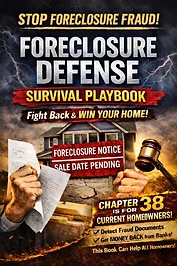
Order The Playbook
Get the Foreclosure Defense Survival Playbook
530 pages of structured, educational guidance covering mortgage documents, foreclosure procedures, evidence organization, and legal research — the same foundation this article draws from.