Foreclosure Defense
Recent Foreclosure Rulings Expose Mortgage Servicing Abuses and Evidence Failures
Recent court decisions and federal investigations reveal a pattern of mortgage servicing abuses, giving homeowners new ways to challenge foreclosures based on evidence and timing errors.
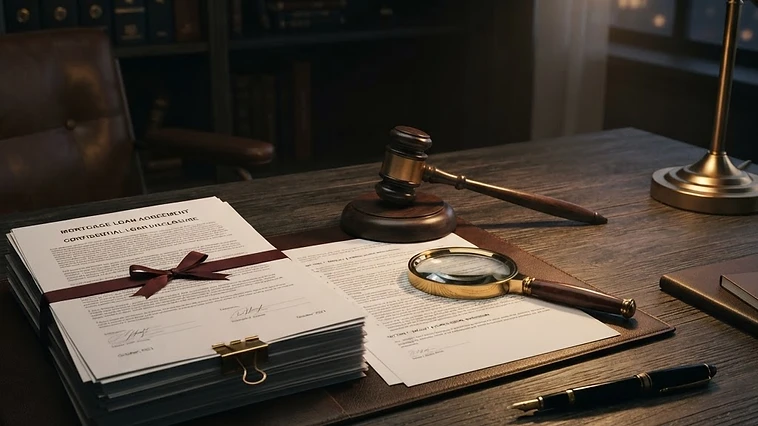
Disclaimer: The following article is for educational purposes only and does not constitute legal advice. If you are facing foreclosure, consult with a qualified attorney in your jurisdiction.
Facing foreclosure is one of the most stressful experiences a homeowner can endure. However, recent developments in the courts and federal regulatory agencies show that banks and mortgage servicers are far from invincible. In fact, recent rulings and enforcement actions highlight a growing trend: lenders are frequently losing foreclosure cases due to sloppy evidence, timing errors, and blatant servicing abuses.
For homeowners who are behind on payments or already in foreclosure, understanding these recent shifts is critical. By learning how courts are scrutinizing servicer affidavits, enforcing strict statute of limitations rules, and penalizing dual tracking, you can better organize your defense and hold your lender accountable.
The Rising Tide of Mortgage Servicing Abuses
Mortgage servicers are the companies that collect your monthly payments, manage your escrow account, and handle loss mitigation requests. Unfortunately, they are also notorious for making catastrophic errors that push vulnerable homeowners closer to losing their homes.
Recent findings from the Consumer Financial Protection Bureau (CFPB) in their Spring 2024 Supervisory Highlights reveal a disturbing pattern of unfair, deceptive, and abusive acts or practices (UDAAP) by mortgage servicers. Federal examiners discovered that servicers have been illegally charging homeowners for unnecessary property inspection fees, particularly on Fannie Mae loans where such inspections are explicitly prohibited by guidelines once a borrower is delinquent.
Furthermore, the CFPB found that servicers were assessing improper late fees that exceeded the amounts allowed in the original loan agreements. In some cases, these fees were charged even after consumers had entered into loss mitigation agreements. These nickel-and-dime tactics not only inflate the homeowner's perceived debt but also create a manufactured default that can trigger a foreclosure action.
Courts are also seeing the real-world impact of these servicing failures. In the recent case of Freeman v. Ocwen Loan Servicing, LLC (7th Cir. 2024), a homeowner successfully cured her mortgage default through a Chapter 13 bankruptcy plan. Despite completing all required payments, her servicer inaccurately reported the loan as delinquent, began rejecting her monthly payments, and initiated a second, unjustified foreclosure action. This case underscores a vital lesson for homeowners: you cannot blindly trust the accounting or the legal authority of your mortgage servicer. You must demand proof.
How Small Slips in Timing and Evidence Sink Lenders
Foreclosure is a strict legal process, and lenders must follow the rules of civil procedure and state-specific foreclosure laws to the letter. When they rush, they make mistakes. Recent rulings demonstrate that courts are increasingly willing to dismiss foreclosure actions when lenders fail to provide proper evidence or miss critical deadlines.
In May 2026, a series of rulings against major financial institutions like Deutsche Bank highlighted how small slips on timing, pre-foreclosure notices, and servicer affidavits can completely sink a lender's case. In New York, for example, the Foreclosure Abuse Prevention Act (FAPA) has severely tightened the screws on lenders. FAPA prevents lenders from manipulating the statute of limitations by voluntarily dismissing and refiling foreclosure cases to reset the clock.
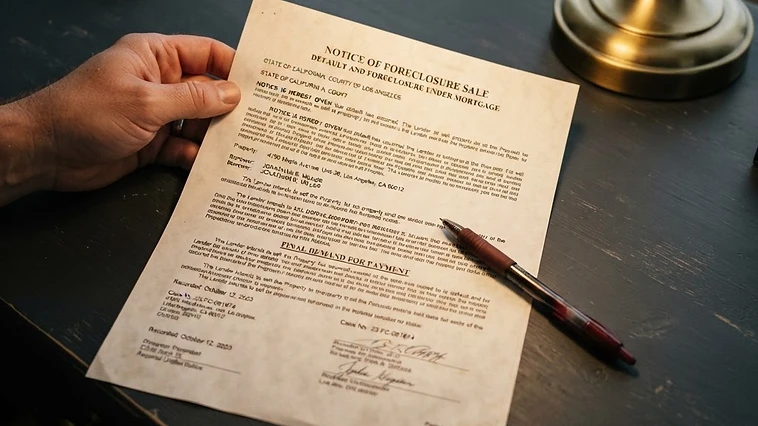 Close-up of a homeowner reviewing a foreclosure notice under a desk lamp.

In one notable instance, a bank attempted to file a second foreclosure action while a motion to voluntarily discontinue the first case was still pending. The courts ruled against the bank, emphasizing that lenders cannot have multiple bites at the apple while ignoring procedural rules.
Additionally, courts are heavily scrutinizing "servicer affidavits"—the sworn statements provided by bank employees claiming to have personal knowledge of the borrower's default and the bank's possession of the original promissory note. Often, these affidavits are generated through "robo-signing" practices, where employees sign thousands of documents without ever reviewing the underlying files. When homeowners challenge the admissibility of these affidavits and demand to see the original, wet-ink mortgage documents, lenders frequently struggle to produce them, leading to dismissed cases.
The Threat of Dual Tracking and Notice Violations
Another major area of recent litigation involves "dual tracking" and the failure to provide mandatory pre-foreclosure notices. Dual tracking occurs when a mortgage servicer moves forward with foreclosure proceedings while simultaneously negotiating a loan modification or loss mitigation option with the homeowner. This practice is strictly prohibited by federal law under the Real Estate Settlement Procedures Act (RESPA) and various state Homeowner Bill of Rights statutes.
In the recent Supreme Court petition Reese v. Select Portfolio Services (2024/2025), the core issue revolved around allegations of fraud and dual tracking, where the servicer allegedly advanced foreclosure on an incapacitated borrower despite loss mitigation protections. Federal regulations (Sections 1024.41(f) and (g)) directly prohibit servicers from initiating or advancing foreclosure when a complete loss mitigation application is pending. Violations of these rules can be raised as a powerful affirmative defense in foreclosure proceedings.
State courts are also enforcing strict notice requirements. In a May 2026 tentative ruling in Howell v. Select Portfolio Servicing (Fresno Superior Court), the court examined California Civil Code section 2923.55. This law requires a mortgage servicer to contact the borrower in person or by telephone to assess their financial situation and explore options to avoid foreclosure at least 30 days before recording a Notice of Default. When servicers fail to make this mandatory contact, the entire foreclosure process can be halted or invalidated.
Defending Your Home: The Importance of Document Review
What do all these recent rulings and regulatory actions mean for you, the homeowner? It means that fighting foreclosure is not a lost cause. The banks are relying on you to be intimidated, confused, and passive. They expect you to default on the lawsuit so they can obtain a quick judgment and sell your home at auction.
To mount an effective foreclosure defense, you must become an active participant in your case. This begins with a meticulous review of your mortgage documents, payment history, and all correspondence with your servicer.
- Audit Your Payment History: Request a complete payment history from your servicer. Look for unexplained fees, unauthorized property inspection charges, and misapplied payments. As the CFPB highlighted, these errors are rampant.
- Demand the Note: Challenge the bank's legal standing to foreclose. Force them to prove they hold the original promissory note with the proper endorsements and assignments.
- Check the Dates: Review the timeline of your foreclosure. Did the bank send the required pre-foreclosure notices (like a 90-day notice of intent to foreclose) exactly as required by state law? Did they wait the mandatory period before filing the lawsuit?
- Watch for Dual Tracking: If you submitted a complete loan modification application, the bank must halt the foreclosure process. If they filed a motion for judgment or scheduled a sale date while your application was pending, they have violated federal law.
By organizing your evidence and understanding the procedural rules, you can identify the fatal flaws in the bank's case. Many homeowners have successfully used these strategies to force lenders to the negotiating table, resulting in favorable loan modifications, principal reductions, or even the outright dismissal of the foreclosure action.
Why the Foreclosure Defense Survival Playbook Helps
Navigating the complex world of mortgage documents, court procedures, and legal research can feel overwhelming, especially when you are facing the imminent threat of losing your home. You need a comprehensive guide to help you level the playing field against the banks and their high-priced attorneys.
This is exactly why the Foreclosure Defense Survival Playbook is an absolute must-have resource. This 530-page educational manual is specifically designed for homeowners who are behind on payments or already in foreclosure. It breaks down complex legal concepts into plain, easy-to-understand language, empowering you to take control of your defense.
The Playbook teaches you how to:
- Analyze Mortgage Documents: Learn how to spot fraudulent assignments, missing endorsements, and robo-signed affidavits that can destroy a lender's case.
- Understand Foreclosure Procedures: Master the timeline of judicial and non-judicial foreclosures, ensuring you never miss a critical deadline to respond or file a motion.
- Organize Your Evidence: Discover the exact methods for auditing your payment history, identifying illegal servicer fees, and proving dual tracking violations.
- Conduct Legal Research: Gain the skills to find recent case law, statutes, and CFPB regulations that support your defense, just like the recent rulings discussed in this article.
Don't let the bank steal your home because of a technicality or a fabricated document. Equip yourself with the knowledge to fight back. Order the Foreclosure Defense Survival Playbook today and take the first step toward saving your home and securing your financial future.


Order The Playbook
Get the Foreclosure Defense Survival Playbook
530 pages of structured, educational guidance covering mortgage documents, foreclosure procedures, evidence organization, and legal research — the same foundation this article draws from.