Foreclosure Defense
Recent Foreclosure Rulings and CFPB Actions: How Servicer Errors Can Help Your Defense
Recent court rulings and CFPB enforcement actions highlight widespread mortgage servicing errors, dual tracking violations, and evidentiary failures that homeowners can use to defend against foreclosure.
Disclaimer: The following article is for educational purposes only and does not constitute legal advice. If you are facing foreclosure, consult with a qualified attorney in your jurisdiction.
When you fall behind on your mortgage payments, the foreclosure process can feel like an unstoppable machine. Banks and mortgage servicers often project an image of absolute authority and flawless record-keeping. However, recent enforcement actions by the Consumer Financial Protection Bureau (CFPB) and a wave of state and federal court rulings reveal a very different reality. Mortgage servicers frequently make critical errors, violate federal regulations, and fail to follow basic legal procedures.
For homeowners facing foreclosure, understanding these recent developments is crucial. By learning how to spot servicing abuses, illegal fees, and evidentiary failures, you can hold your lender accountable and potentially stop a wrongful foreclosure in its tracks.
The Rise of Mortgage Servicing Abuses and Junk Fees
Mortgage servicers are responsible for managing your loan account, processing payments, and handling loss mitigation requests. Unfortunately, they often prioritize their own profits over compliance with the law. Recent reports from federal regulators highlight a disturbing trend of "junk fees" and deceptive practices.
In its Spring 2024 Supervisory Highlights, the CFPB noted that examiners continue to find supervised mortgage servicers assessing unnecessary property inspection fees and improper late fees Federal Register :: Supervisory Highlights, Issue 33, Spring 2024. For example, servicers have been caught charging homeowners for property inspections following a delinquency on Fannie Mae loans, even when such inspections were strictly prohibited by Fannie Mae guidelines 18 CFPB Actions in 2024 Aiding Private Consumer Litigants | NCLC Digital Library.
These illegal fees inflate the homeowner's balance, making it even harder to cure a default. Furthermore, the CFPB found that servicers engaged in unfair, deceptive, and abusive acts or practices (UDAAP) by sending deceptive loss mitigation eligibility notices to vulnerable consumers. When a servicer inflates your debt with unauthorized charges, it compromises the legal validity of the default amount they claim in a foreclosure lawsuit.
Dual Tracking: When Servicers Negotiate and Foreclose Simultaneously
One of the most egregious violations committed by mortgage servicers is "dual tracking." This occurs when a servicer moves forward with foreclosure proceedings while simultaneously negotiating a loan modification or other loss mitigation option with the homeowner. Federal law, specifically the Real Estate Settlement Procedures Act (RESPA) under Regulation X, strictly prohibits this practice.
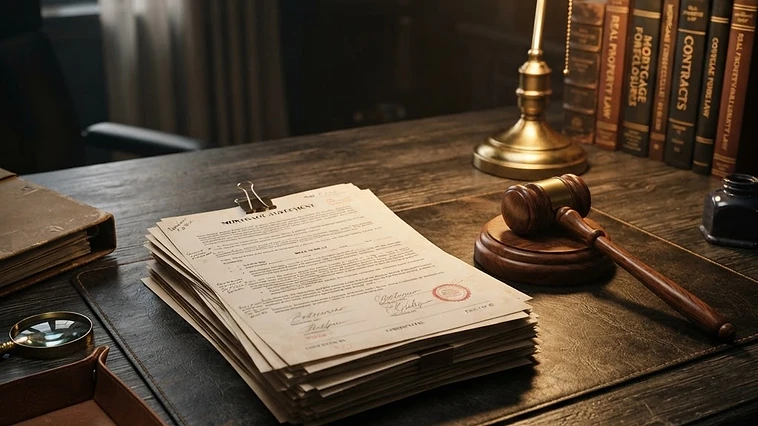
 A magnifying glass examining a mortgage loan statement on a dark desk.

Recent enforcement actions demonstrate that dual tracking remains a pervasive issue. In August 2024, the CFPB issued a massive order against Fay Servicing, LLC, a residential mortgage servicer headquartered in Florida. The Bureau found that Fay Servicing violated RESPA and the Homeowners Protection Act, requiring the company to pay $3 million in consumer redress and a $2 million civil penalty Fay Servicing, LLC | Consumer Financial Protection Bureau. The enforcement action highlighted the servicer's failure to provide accurate information about loss mitigation options and its improper advancement of foreclosure processes against borrowers who had applied for help Hudson Cook Enforcement Alert: CFPB Takes Action Against Mortgage Servicer for Alleged Order Violations and Servicing Errors.
Violations of RESPA Section 1024.41 can be raised as a powerful affirmative defense in foreclosure proceedings. If you submitted a complete loss mitigation application and the servicer proceeded to file a Notice of Default or schedule a sheriff's sale, they may have violated federal law, giving you grounds to challenge the foreclosure.
Evidentiary Failures and Missing Service
Foreclosure is a strict legal process. Banks cannot simply take your home; they must prove they have the legal right to do so, and they must follow the rules of civil procedure to the letter. Recent court rulings show that when homeowners force lenders to prove their case, the banks often stumble over their own sloppy paperwork.
For instance, an Ohio appeals court recently tossed a foreclosure decree granted to Union Home Mortgage Corporation because the lender failed to properly serve one of the property's co-owners. The court ruled that without proper service, there is no jurisdiction, rendering the foreclosure order completely void Union Home Mortgage loses foreclosure after failing to serve co-owner | Mortgage Professional.
Similarly, a series of recent rulings against Deutsche Bank illustrates how small slips on timing, notices, and servicer affidavits can sink a lender's case. In New York, where the Foreclosure Abuse Prevention Act has tightened the rules on lenders, courts are increasingly dismissing cases where banks fail to strictly adhere to statutory timelines or attempt to improperly restart the statute of limitations Deutsche Bank splits four foreclosure rulings as timing, evidence bite lenders | Mortgage Professional.
These cases underscore a vital lesson for homeowners: never assume the bank's paperwork is correct. From missing assignments of mortgage to defective affidavits and failure to provide pre-foreclosure notices, evidentiary failures are rampant in the industry.
State-Specific Protections and Pre-Foreclosure Contact
In addition to federal laws like RESPA, many states have enacted their own homeowner bill of rights to prevent unnecessary foreclosures. A common requirement is that the servicer must attempt to contact the borrower to discuss foreclosure avoidance options before officially initiating the foreclosure process.
In California, for example, Civil Code Section 2923.55 prohibits a mortgage servicer from recording a Notice of Default until they have contacted the borrower in person or by telephone to assess their financial situation and explore options to avoid foreclosure. In a recent tentative ruling in Fresno Superior Court, a homeowner successfully alleged that Select Portfolio Servicing (SPS) violated this statute by failing to make the required contact more than 30 days before recording the Notice of Default Tentative Rulings for Department 503 — May 13, 2026 (Fresno Superior Court).
Understanding the specific pre-foreclosure requirements in your state is a critical component of foreclosure defense. If the bank skipped a mandatory step, you can often file a motion to dismiss the case or seek an injunction to stop the sale.
How Homeowners Can Spot Servicer Errors
To effectively defend your home, you must become an auditor of your own mortgage file. Here are the key steps every homeowner should take when facing late payments or foreclosure:
- Request a Complete Payment History: Send a Qualified Written Request (QWR) or Request for Information (RFI) under RESPA to your servicer, asking for a complete, line-by-line payment history. Scrutinize this document for unauthorized property inspection fees, inflated late fees, or corporate advance fees.
- Document All Loss Mitigation Efforts: Keep a meticulous log of every phone call, email, and letter sent to your servicer regarding loan modifications. Save proof of delivery for all applications. If the servicer files for foreclosure while your application is pending, you have documented proof of dual tracking.
- Demand the Original Note: Challenge the bank's standing by demanding to see the original promissory note with all proper endorsements. If the loan was securitized and transferred multiple times, the current plaintiff may lack the legal authority to foreclose.
- Review Pre-Foreclosure Notices: Check your state's laws regarding Notices of Intent to Foreclose or Notices of Default. Did the bank send the notice via the required method (e.g., certified mail)? Did it contain the exact language mandated by statute?
By systematically breaking down the bank's claims and comparing them against federal and state laws, you shift the balance of power. You force the bank to prove its case, and as recent rulings show, they frequently fail to do so.
Why the Foreclosure Defense Survival Playbook Helps
Navigating the complex world of mortgage documents, federal regulations, and court procedures can be overwhelming, especially when you are under the immense stress of potentially losing your home. You need a comprehensive guide that translates complex legal concepts into actionable, plain-language strategies.
This is exactly why the Foreclosure Defense Survival Playbook is an indispensable resource for homeowners. Across its 530 pages, the Playbook provides a deep dive into how to audit your mortgage documents, spot the exact servicing abuses highlighted by recent CFPB actions, and organize your evidence to fight back. It teaches you how to identify dual tracking, challenge junk fees, and hold lenders accountable for evidentiary failures like missing assignments or improper service.
Don't let the bank's intimidating tactics force you out of your home without a fight. Equip yourself with the knowledge to demand proof, expose servicer errors, and assert your rights. Order the Foreclosure Defense Survival Playbook today and take the first step toward leveling the playing field and saving your home.


Order The Playbook
Get the Foreclosure Defense Survival Playbook
530 pages of structured, educational guidance covering mortgage documents, foreclosure procedures, evidence organization, and legal research — the same foundation this article draws from.