Foreclosure Defense
Recent Foreclosure Rulings and CFPB Actions: A Homeowner's Guide to Defense
Recent court rulings and CFPB enforcement actions are reshaping the foreclosure defense landscape. Learn how homeowners can leverage these developments to fight servicing abuses.
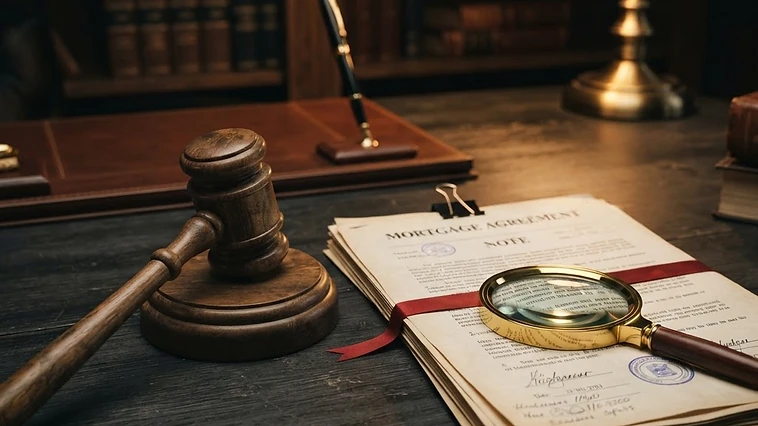
Disclaimer: The information provided in this article is for educational purposes only and does not constitute legal advice. If you are facing foreclosure, please consult with a qualified attorney in your jurisdiction.
Navigating the threat of foreclosure is one of the most stressful experiences a homeowner can face. When you fall behind on mortgage payments, it often feels like the bank holds all the cards. However, the landscape of foreclosure defense is constantly shifting. Recent court rulings, regulatory crackdowns by the Consumer Financial Protection Bureau (CFPB), and ongoing battles over mortgage servicing abuses are providing homeowners with new tools to fight back.
In recent weeks, the financial sector has seen a flurry of activity regarding foreclosure practices. From high-profile court cases in New York to multi-million dollar settlements over foreclosure scams, the power struggle between mortgage lenders and distressed homeowners is intensifying. This article breaks down the most recent developments in foreclosure law and regulatory enforcement, explaining what they mean for your rights and how you can use this knowledge to defend your home.
The Rising Tide of Foreclosures and Servicing Abuses
According to recent reports from financial industry watchdogs, foreclosure inventory has been creeping up to multi-year highs. As pandemic-era relief programs and forbearance periods have fully expired, many homeowners are finding themselves in the crosshairs of aggressive mortgage servicers. But this increase in foreclosure activity has also brought a renewed focus on the practices of the companies managing these loans.
The Consumer Financial Protection Bureau (CFPB) has recently taken a hardline stance against mortgage servicers who fail to do their jobs properly. In a significant policy shift, the CFPB has declared that ineffective loan servicing can be classified as an "abusive act or practice" under federal law. This is a massive development for homeowners. Historically, servicers have hidden behind the excuse of administrative errors or "glitches" when they misapply payments, fail to process loan modification applications, or charge unauthorized fees.
Now, federal regulators are signaling that incompetence is not an excuse. If a mortgage servicer's failure to maintain accurate records or communicate effectively causes harm to a homeowner—such as pushing them closer to foreclosure—that servicer can be held liable for abusive practices. For homeowners building a foreclosure defense, this means that documenting every interaction, saving every statement, and proving a pattern of servicer incompetence can be a powerful substantive defense in court.
Recent Legal Battles: The Power Struggle in New York
The battleground of foreclosure defense is often fought at the state level, and recent reporting has highlighted a bruising power struggle in New York that has national implications. A recent feature in the American Banker detailed the "stop-and-start, never-ending foreclosure" cases that are clogging the courts. These cases often revolve around the statute of limitations—the legal time limit a bank has to foreclose on a property after a borrower defaults.
In New York, the Foreclosure Abuse Prevention Act (FAPA) was enacted to stop lenders from manipulating the statute of limitations. For years, banks would initiate a foreclosure, voluntarily dismiss it, and then restart the clock whenever it suited them, keeping homeowners in a state of perpetual legal limbo. Recent court battles have centered on whether these protections apply retroactively, with courts frequently being asked to decide if banks have permanently lost their right to foreclose due to their own delays.
While this specific legislation is unique to New York, the underlying legal strategy is applicable nationwide. Homeowners and their advocates are increasingly challenging the procedural standing of foreclosing entities. If a bank waits too long to file, fails to provide the legally required notices of default, or cannot prove they actually hold the promissory note, the court may dismiss the foreclosure action. These procedural defenses require a meticulous review of the timeline and the documents filed by the bank.
CFPB Crackdowns on Foreclosure Scams and Servicer Errors
In addition to targeting ineffective servicing, federal regulators are actively pursuing outright fraud. Recently, the CFPB resolved a major foreclosure scam case with a $12 million settlement. This enforcement action targeted bad actors who preyed on distressed borrowers by promising bogus loan modifications or foreclosure relief in exchange for hefty upfront fees.
 Close-up of a homeowner reviewing mortgage servicing documents for errors under a warm gold light.

For homeowners, this serves as a critical warning: the foreclosure defense industry is unfortunately rife with scams. Legitimate foreclosure defense relies on understanding the law, analyzing mortgage documents, and holding the bank accountable in court—not on paying thousands of dollars to a shadowy company promising a "secret" way to cancel your mortgage.
Furthermore, the CFPB and the Department of Justice (DOJ) have issued stern warnings to mortgage servicers regarding their treatment of military families under the Servicemembers Civil Relief Act (SCRA). Servicers who illegally foreclose on active-duty military personnel are facing severe penalties. This highlights a broader theme in current foreclosure defense: regulatory agencies are actively looking for violations of federal statutes like the SCRA, the Truth in Lending Act (TILA), and the Real Estate Settlement Procedures Act (RESPA). Homeowners who can identify these violations in their own case files have a significant advantage.
Procedural vs. Substantive Defenses in Today's Courts
Understanding the recent news requires a basic understanding of how foreclosure defense works in practice. When you are fighting a foreclosure, your arguments generally fall into two categories: procedural defenses and substantive defenses.
Procedural Defenses
Procedural defenses focus on the rules the bank must follow to legally take your home. As recent court rulings have shown, judges are increasingly willing to hold banks to strict procedural standards. Common procedural defenses include:
- Lack of Standing: The foreclosing party must prove they have the legal right to foreclose. If your mortgage has been bought and sold multiple times (as is common with securitized trusts), the bank may not have the proper chain of assignments or the original promissory note. While the "produce the note" defense is harder to win today than it was in 2010, sloppy record-keeping by the bank can still lead to a dismissal.
- Failure to Provide Notice: State laws and the terms of your mortgage contract require the lender to send specific notices before initiating foreclosure (e.g., a Notice of Default or a Notice of Intent to Accelerate). If they fail to send these, or send them to the wrong address, the foreclosure may be invalid.
- Statute of Limitations: As seen in the recent New York battles, if the bank waits too long to file the lawsuit after accelerating the loan, they may be barred from foreclosing forever.
Substantive Defenses
Substantive defenses focus on the facts of the case and the conduct of the mortgage servicer. The CFPB's recent declaration that ineffective servicing is an abusive practice heavily supports substantive defenses. Examples include:
- Misapplied Payments: The servicer failed to credit your payments correctly, creating a false default.
- Dual Tracking: This is a severe violation of federal law where the servicer proceeds with foreclosure while simultaneously negotiating a loan modification with you. The CFPB strictly prohibits this practice.
- Excessive or Unauthorized Fees: Servicers often pad the debt with illegal property inspection fees, late fees, or corporate advances. Challenging the accuracy of the debt amount is a crucial substantive defense.
The Importance of Evidence and Discovery
To leverage these recent rulings and regulatory actions, homeowners must become meticulous record-keepers. You cannot simply walk into court and claim the bank is committing fraud; you must prove it. This requires engaging in the discovery process—demanding documents from the bank, such as the payment history, the original note, the pooling and servicing agreement (if the loan was securitized), and all communication logs.
When you understand how to read a mortgage payment history, you can spot the exact moment a servicer misapplied a payment or charged an illegal fee. When you understand RESPA, you know how to send a Qualified Written Request (QWR) or a Notice of Error (NOE) to force the servicer to investigate their mistakes. If they fail to respond properly, you have just created a federal cause of action against them, which can be used as leverage to stop the foreclosure or negotiate a favorable settlement.
Why the Foreclosure Defense Survival Playbook Helps
Reading about recent court rulings and CFPB enforcement actions is empowering, but applying these concepts to your own case can feel overwhelming. The legal system is complex, and mortgage servicers rely on the fact that most homeowners do not know how to fight back effectively. This is exactly why the Foreclosure Defense Survival Playbook was created.
This comprehensive, 530-page educational resource is designed specifically for homeowners who are behind on payments or facing active foreclosure. It bridges the gap between knowing your rights and actually enforcing them. The Playbook provides deep, plain-language education on:
- Deconstructing Mortgage Documents: Learn how to read your promissory note, mortgage/deed of trust, and complex payment histories to spot the exact errors the CFPB is cracking down on.
- Understanding Court Procedure: Discover the difference between judicial and non-judicial foreclosures, and learn the step-by-step procedural rules you need to navigate the system.
- Evidence Organization and Discovery: Get practical guidance on how to organize your files, draft Notices of Error, and demand the documents the bank doesn't want you to see.
- Legal Research: Learn how to find and apply recent court rulings (like the statute of limitations cases in New York) to your specific situation.
The banks have teams of lawyers working to take your home. You need a comprehensive resource to help you level the playing field. Don't let servicer abuse or procedural errors cost you your property. Order the Foreclosure Defense Survival Playbook today and gain the knowledge you need to stand up to the banks and fight for your home.


Order The Playbook
Get the Foreclosure Defense Survival Playbook
530 pages of structured, educational guidance covering mortgage documents, foreclosure procedures, evidence organization, and legal research — the same foundation this article draws from.