Foreclosure Defense
Recent Foreclosure News: Supreme Court Rulings, CFPB Actions, and Homeowner Rights
Recent developments in foreclosure law, including a major Supreme Court case on equity theft and new CFPB servicing rules, are reshaping homeowner rights.

Disclaimer: The following article is for educational purposes only and does not constitute legal advice. If you are facing foreclosure, please consult with a qualified attorney in your jurisdiction.
Navigating the threat of foreclosure is one of the most stressful experiences a homeowner can face. However, the legal landscape surrounding homeowner rights, mortgage servicing, and foreclosure defense is constantly evolving. Recent news, including landmark cases reaching the U.S. Supreme Court and aggressive enforcement actions by the Consumer Financial Protection Bureau (CFPB), highlights the ongoing battle between homeowners and financial institutions.
For homeowners who are behind on payments or already in foreclosure, understanding these recent developments is crucial. Knowledge is power, and staying informed about mortgage fraud, servicing abuses, and procedural defenses can provide the leverage needed to fight back. In this article, we will explore the most recent and impactful news in the foreclosure arena and explain how these developments impact your rights as a homeowner.
The Supreme Court Weighs In: Pung v. Isabella County and Equity Theft
One of the most significant recent developments in foreclosure law is the U.S. Supreme Court's decision to hear the case of Pung v. Isabella County. This case strikes at the heart of a controversial practice often referred to as "home equity theft" in the context of tax foreclosures.
In this case, the Pung family owed a relatively small amount in property taxes—approximately $2,200. In response, the county foreclosed on the property and sold it at auction for $76,000. Instead of returning the surplus equity to the homeowners after the tax debt was satisfied, the government kept the entire amount. The Supreme Court is now tasked with determining whether this practice violates the constitutional rights of homeowners.
While this specific case deals with tax foreclosures rather than traditional mortgage foreclosures, the underlying principle is vital for all homeowners: your equity is your property. In traditional mortgage foreclosures, lenders are generally required to return surplus funds to the homeowner after the mortgage debt and associated costs are paid. However, the aggressive tactics used by foreclosing entities often strip homeowners of their hard-earned equity through inflated fees, improper accounting, and rushed auction sales. The Supreme Court's scrutiny of equity theft signals a growing judicial awareness of the disproportionate financial harm inflicted on homeowners during the foreclosure process.
CFPB Cracks Down on Mortgage Servicing Abuses
Mortgage servicers—the companies that collect your monthly payments and manage your escrow accounts—play a massive role in the foreclosure process. Unfortunately, servicing errors and abuses are rampant. Recently, the Consumer Financial Protection Bureau (CFPB) has taken decisive action to curb these abuses, formally declaring that "ineffective loan servicing is an abusive act or practice."
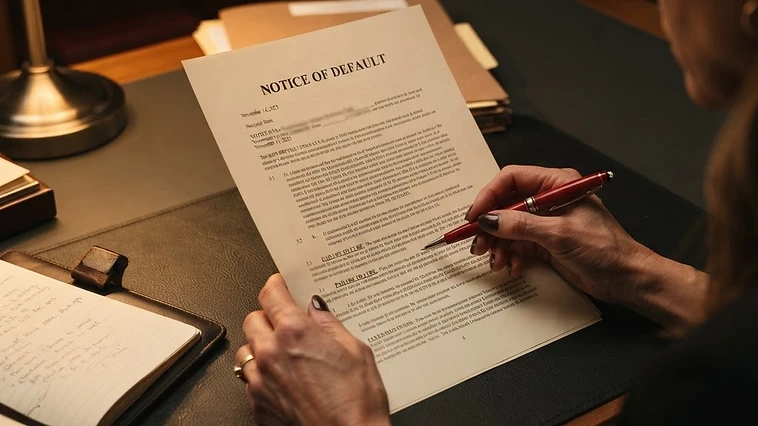 Homeowner reviewing a Notice of Default document with a red pen on a dark desk

The CFPB has entered into consent orders with major mortgage servicers to resolve allegations of improper foreclosure practices. These enforcement actions target a range of illegal behaviors, including:
- Dual Tracking: This occurs when a servicer moves forward with foreclosure proceedings while simultaneously negotiating a loan modification or other loss mitigation option with the homeowner. Dual tracking is illegal under federal law, yet it remains a common tactic that pushes homeowners into foreclosure unnecessarily.
- Improper Payment Application: Servicers frequently fail to promptly or accurately credit homeowner payments. A payment might be placed in an "unapplied funds" account or credited to the wrong account entirely, artificially triggering a default and subsequent foreclosure.
- Excessive and Unauthorized Fees: Servicers often pile on late fees, inspection fees, and corporate advance fees that are not authorized by the original mortgage documents. These inflated balances make it nearly impossible for homeowners to reinstate their loans.
The CFPB's recent proposed rules aim to streamline mortgage servicing for borrowers experiencing payment difficulties, making it easier for homeowners to access loss mitigation options without jumping through endless bureaucratic hoops. For homeowners in foreclosure, these CFPB actions provide a powerful framework for raising substantive defenses based on servicer misconduct.
Foreclosure Activity Trends: What the Latest Data Shows
Despite regulatory crackdowns, foreclosure activity remains a significant threat to American families. According to the Year-End 2024 U.S. Foreclosure Market Report released by ATTOM, foreclosure filings—including default notices, scheduled auctions, and bank repossessions—were reported on 322,103 U.S. properties in 2024.
While this represents a slight decline from previous years, the sheer volume of foreclosures indicates that lenders and servicers are still aggressively pursuing property seizures. Furthermore, the data shows that thousands of properties are entering the foreclosure process every month.
For homeowners, this data underscores the importance of being proactive. Foreclosure is not an isolated event; it is an industrialized process driven by high-volume law firms and automated systems (often referred to as "robo-signing"). Because the system is designed to process foreclosures as quickly as possible, errors are inevitable. Homeowners who understand how to spot these errors can disrupt the machinery and force the foreclosing party to prove their case.
Procedural and Substantive Defenses in Today's Courts
When defending against a foreclosure, homeowners generally rely on two categories of defenses: procedural and substantive. Recent court rulings and legislative changes have strengthened several of these defenses.
Procedural Defenses: Challenging Standing and Assignments
A procedural defense focuses on the rules and requirements the foreclosing party must follow. The most common procedural defense is challenging the plaintiff's "standing" to foreclose. To foreclose legally, the plaintiff must prove that it owns the promissory note and the mortgage (or deed of trust) at the time the lawsuit is filed.
Because mortgages are frequently bought, sold, and securitized into complex trusts, the chain of title is often broken. Assignments of mortgage are frequently fabricated, backdated, or signed by individuals who lack the authority to do so (robo-signers). Recent depositions in foreclosure cases have revealed instances where representatives of major trusts admitted under oath that entities like MERS (Mortgage Electronic Registration Systems) were not the true beneficiaries, despite claiming to be in legal documents. If the foreclosing party cannot produce a valid, unbroken chain of assignments and the original promissory note, the court may dismiss the case.
Substantive Defenses: RESPA, TILA, and Servicer Fraud
Substantive defenses focus on the specific facts of the case and the conduct of the lender or servicer. Violations of federal laws like the Real Estate Settlement Procedures Act (RESPA) and the Truth in Lending Act (TILA) provide strong substantive defenses.
For example, RESPA requires servicers to provide specific notices when a loan is transferred and mandates strict timelines for responding to a homeowner's Request for Information (RFI) or Notice of Error (NOE). If a servicer ignores these requests or provides false information regarding the amount needed to reinstate the loan, the homeowner can use these violations to challenge the foreclosure. Additionally, if a homeowner can prove that the servicer engaged in dual tracking or misapplied payments, these substantive errors can be grounds for dismissing the foreclosure action.
Why the Foreclosure Defense Survival Playbook Helps
Understanding recent Supreme Court cases, CFPB regulations, and complex legal defenses can feel overwhelming, especially when you are facing the immediate threat of losing your home. The legal system is complex, and the banks have teams of attorneys working to expedite the foreclosure process. You need a comprehensive resource to help you level the playing field.
This is exactly why the Foreclosure Defense Survival Playbook is an essential tool for any homeowner fighting to save their property. This 530-page educational manual is designed specifically for homeowners who are behind on payments or already in foreclosure.
The Playbook breaks down complex legal concepts into plain, understandable language. It teaches you how to:
- Analyze Your Mortgage Documents: Learn how to spot broken chains of title, fraudulent assignments, and robo-signed documents that can destroy the bank's standing to foreclose.
- Organize Your Evidence: Discover how to audit your payment history, identify illegal fees, and document servicer abuses like dual tracking and misapplied payments.
- Understand Court Procedure: Gain a clear understanding of the judicial and non-judicial foreclosure processes, including how discovery works and how to properly format legal research.
- Leverage Federal Laws: Learn how to use RESPA, TILA, and recent CFPB rules to hold your mortgage servicer accountable for their errors and abuses.
The banks rely on homeowners being uninformed and intimidated by the legal process. By educating yourself, you can disrupt their automated systems and force them to prove every single element of their case. Don't face the foreclosure machine alone. Order the Foreclosure Defense Survival Playbook today and gain the knowledge you need to fight for your home and your rights.


Order The Playbook
Get the Foreclosure Defense Survival Playbook
530 pages of structured, educational guidance covering mortgage documents, foreclosure procedures, evidence organization, and legal research — the same foundation this article draws from.