Mortgage Servicing
Recent Court Rulings on Mortgage Servicing Abuses: What Homeowners Need to Know
Recent federal and state court rulings are holding mortgage servicers accountable for escrow mismanagement and foreclosure violations, offering new hope for homeowners.

Disclaimer: The following article is for educational purposes only and does not constitute legal advice. If you are facing foreclosure, consult with a qualified attorney in your jurisdiction.
For homeowners who have fallen behind on their mortgage payments or are actively fighting foreclosure, the legal landscape can feel overwhelming. However, recent court rulings and ongoing litigation against major mortgage servicers highlight a critical truth: banks and servicers make mistakes, and those mistakes can sometimes be the key to defending your home.
Recently, federal and state courts have issued rulings that scrutinize how mortgage servicers handle escrow accounts, process loan modifications, and initiate foreclosures. By understanding these recent developments, homeowners can better identify servicing abuses, organize their evidence, and assert their rights under federal and state laws.
The Growing Problem of Mortgage Servicing Errors
Mortgage servicing is a massive industry. Servicers are responsible for collecting monthly payments, managing escrow accounts for taxes and insurance, and processing loan modification applications. Unfortunately, the system is prone to errors. When a homeowner falls behind on payments, these errors can quickly snowball into a wrongful foreclosure.
Common servicing abuses include misapplying payments, failing to pay property taxes from an escrow account, dual tracking (proceeding with foreclosure while a loan modification is pending), and relying on flawed or fraudulent documents to prove ownership of the debt. For years, consumer advocates have argued that these practices strip wealth from homeowners and violate fundamental contract laws.
Recent legal actions demonstrate that courts are increasingly willing to hold servicers accountable when they violate the rules. This is crucial for foreclosure defense, as proving a servicer's noncompliance can sometimes halt foreclosure proceedings or provide grounds for a lawsuit.
Recent Federal Rulings: Akkus v. Rocket Mortgage and RESPA
One of the most significant recent developments in mortgage servicing litigation involves the Real Estate Settlement Procedures Act (RESPA). RESPA is a federal law designed to protect consumers from abusive practices by mortgage lenders and servicers. Specifically, RESPA Section 2605(g) requires loan servicers to make payments from a borrower's escrow account for taxes, insurance premiums, and other charges in a timely manner.
In a recent federal case, Akkus v. Rocket Mortgage, LLC, homeowners filed a class-action lawsuit alleging that their mortgage servicer mismanaged their escrow accounts. The plaintiffs claimed that the servicer failed to pay property taxes from their escrow accounts on time, violating RESPA.
The servicer attempted to have the case dismissed, arguing for a narrow interpretation of the law regarding what constitutes a "pattern or practice" of noncompliance. However, the United States District Court for the District of Maryland denied the servicer's motion to dismiss. The court ruled that plaintiffs do not need to allege violations involving the exact same conduct from the exact same subsection of the law to prove a pattern or practice. Instead, alleging that the defendant routinely violated any RESPA section is enough to plausibly state a claim for statutory damages.
This ruling is a major victory for homeowners. It broadens the ability of borrowers to hold servicers financially accountable for systemic errors. If your servicer has repeatedly mismanaged your escrow account, failed to pay your taxes, or ignored your requests for information, this ruling reinforces your right to seek damages under RESPA.
State Level Protections: The Homeowner's Bill of Rights
While federal laws like RESPA provide a baseline of protection, many states have enacted their own laws to protect homeowners from aggressive foreclosure tactics. California's Homeowner's Bill of Rights (HBOR), for example, provides strict guidelines that servicers must follow before and during the foreclosure process.
Recent tentative rulings in state courts, such as the ongoing litigation in Heffernan v. Nationstar Mortgage, LLC, highlight the importance of these state-level protections. In this case, homeowners brought multiple causes of action against their servicer and related entities, including Quiet Title, Violation of the Homeowner's Bill of Rights, Negligence, and Breach of the Implied Covenant of Good Faith and Fair Dealing.
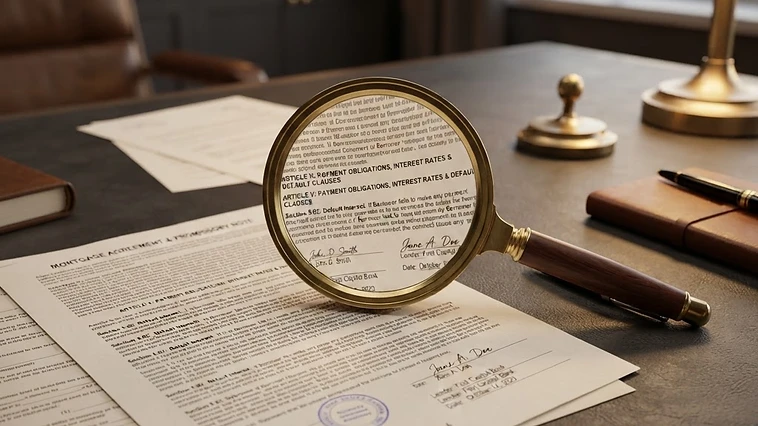 Magnifying glass examining mortgage servicing documents and escrow statements.

Cases like this underscore the complexity of modern foreclosure defense. Homeowners are not just fighting a simple breach of contract; they are challenging the entire chain of title, the validity of assignments of deeds of trust, and the servicer's compliance with statutory pre-foreclosure requirements. When servicers fail to provide a single point of contact, engage in dual tracking, or record fraudulent assignments, homeowners can use state laws to demand accountability and potentially stop the foreclosure sale.
The Importance of the Promissory Note and Chain of Title
To understand why these recent rulings matter, it is essential to revisit the fundamental rules of real estate law. The most basic rule is that only the true owner of the debt (the mortgagee or their authorized agent) has the legal standing to foreclose.
During the 2010 foreclosure crisis, the "robo-signing" scandal revealed that banks were routinely foreclosing on homes without proper documentation. Employees were signing thousands of affidavits without verifying the information, and servicers were filing foreclosure complaints without attaching the original promissory note.
While the industry claims to have cleaned up its act, chain of title issues remain a potent defense today. In a judicial foreclosure, the rules of civil procedure generally require that a complaint based on a written contract include a copy of that contract. This means the servicer must produce the promissory note, the mortgage (or deed of trust), and any assignments that prove how the debt was transferred from the original lender to the current trust.
If a servicer cannot prove that they hold the note, or if the assignments are forged, backdated, or signed by individuals who lacked the authority to do so, the homeowner can challenge the servicer's standing to foreclose. As legal experts have testified before the Senate Committee on Banking, Housing, and Urban Affairs, evidence and process in foreclosures are not mere technicalities. They are a paid-for part of the bargain between banks and homeowners, ensuring procedural fairness and protecting against fraud.
How to Document and Dispute Servicing Abuses
If you suspect that your mortgage servicer is violating RESPA, mismanaging your escrow account, or proceeding with a foreclosure without proper standing, you must take immediate and organized action.
First, keep meticulous records. Save every letter, monthly statement, and notice you receive from your servicer. Take notes during every phone call, recording the date, time, the name of the representative you spoke with, and a summary of the conversation.
Second, utilize a Qualified Written Request (QWR) or a Notice of Error (NOE) under RESPA. These are formal letters sent to your servicer disputing an error or requesting specific information about your account, such as the identity of the owner of your loan or a complete payment history. By law, the servicer must acknowledge receipt of your letter and provide a substantive response within a specific timeframe. If they fail to do so, you may have grounds for a RESPA claim, as highlighted by the recent Akkus v. Rocket Mortgage ruling.
Third, scrutinize your foreclosure documents. If you are in a judicial foreclosure state, review the complaint filed against you. Is the promissory note attached? Are there endorsements on the note? Do the assignments of the mortgage make sense, or are there gaps in the chain of title? If you are in a non-judicial foreclosure state, review the Notice of Default and Notice of Sale for compliance with state laws like the Homeowner's Bill of Rights.
Why the Foreclosure Defense Survival Playbook Helps
Navigating the complexities of RESPA violations, chain of title disputes, and state foreclosure laws is a daunting task for anyone, especially when facing the stress of losing a home. The legal jargon, the strict court deadlines, and the sheer volume of paperwork can easily overwhelm a homeowner trying to fight back against a massive financial institution.
This is exactly why the "Foreclosure Defense Survival Playbook" is an indispensable resource. This comprehensive, 530-page educational guide is designed specifically for homeowners who are behind on payments or already in foreclosure. It breaks down complex legal concepts—like standing, robo-signing, and escrow mismanagement—into plain, understandable language.
The Playbook teaches you how to read and analyze your mortgage documents, how to spot the exact servicing abuses mentioned in recent court rulings, and how to organize your evidence effectively. It provides step-by-step guidance on drafting Qualified Written Requests, understanding court procedures, and conducting the legal research necessary to defend your home.
You do not have to face the banks alone or unarmed. By educating yourself on your rights and the rules the banks must follow, you can level the playing field. Order the Foreclosure Defense Survival Playbook today and take the first step toward taking control of your foreclosure defense.

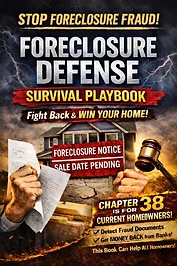
Order The Playbook
Get the Foreclosure Defense Survival Playbook
530 pages of structured, educational guidance covering mortgage documents, foreclosure procedures, evidence organization, and legal research — the same foundation this article draws from.