Foreclosure Cases
Recent Court Rulings Reshape Foreclosure Appeals and Evidence Rules
Recent supreme and appellate court decisions have drastically altered the landscape of foreclosure appeals and the strict requirements for proving mortgage fraud.
Disclaimer: The following article is for educational purposes only and does not constitute legal advice. Homeowners facing foreclosure should consult with a qualified attorney in their jurisdiction to understand their specific legal rights and options.
Foreclosure defense is a constantly evolving battlefield. For homeowners who are behind on payments or actively fighting a foreclosure lawsuit, staying informed about the latest court rulings is not just helpful—it is absolutely critical. The rules governing how evidence is presented, how appeals are handled, and how banks are held accountable change frequently based on new appellate and supreme court decisions.
In October 2026, two major legal developments occurred that perfectly illustrate the dual nature of foreclosure defense. On one hand, the Supreme Court of Ohio handed down a massive victory for homeowners regarding the right to appeal a foreclosure even after a sheriff's sale. On the other hand, a New York appellate court issued a stark warning about the strict requirements for proving mortgage fraud and vacating old judgments.
Understanding these recent rulings can help you better navigate the complex world of mortgage documents, court procedures, and evidence organization.
The Ohio Supreme Court Victory: Appeals Are No Longer Automatically Moot
For decades, homeowners fighting foreclosure have faced a terrifying procedural trap known as the "mootness doctrine" combined with the requirement of a "supersedeas bond."
When a homeowner loses a foreclosure case at the trial court level, they have the right to appeal that decision to a higher court. However, simply filing an appeal does not automatically stop the bank from selling the house at a sheriff's auction. To stop the sale during the appeal, the homeowner typically must post a "supersedeas bond"—a massive cash deposit or insurance bond that guarantees the judgment amount.
In the recent October 2026 case of Wells Fargo Bank, Natl. Assn. v. Doberdruk, the homeowner (who was actually a former foreclosure defense attorney) appealed her foreclosure judgment but could not afford the staggering $472,905 supersedeas bond required to pause the sale. Because she could not post the bond, the trial court allowed the sheriff's sale to proceed. The property was sold, the sale was confirmed, and the deed was distributed to the buyer.
Historically, appellate courts in many states would look at this situation and declare the homeowner's appeal "moot." The logic was that since the house had already been sold and the deed transferred, there was nothing left for the appellate court to decide. The homeowner would lose their right to appeal simply because they were not wealthy enough to post a half-million-dollar bond.
However, in a landmark reversal, the Supreme Court of Ohio dismantled this long-standing procedural shield used by lenders. Building on another recent decision (Drushal v. Miller), the Supreme Court unanimously reversed the lower appellate court's dismissal. The Court ruled that a foreclosure appeal is not automatically moot just because the property has been sold and no bond was posted.
What This Means for Homeowners Fighting Sheriff's Sales
This ruling is a seismic shift in foreclosure defense and appellate law. It means that banks and mortgage servicers can no longer rely on the sheer financial burden of a supersedeas bond to silence homeowners.
If a homeowner has legitimate grounds for an appeal—such as proving that the bank lacked standing, that the mortgage assignments were forged (robo-signing), or that the servicer violated federal loss mitigation rules—they can continue to fight that battle in the appellate court even if the property has been auctioned off.
For banking professionals and mortgage servicers, this ruling delays the finality of sheriff's sales and drastically increases post-sale litigation risks. If an appellate court later determines that the foreclosure was illegal or that the bank lacked standing, the sale could potentially be unwound, or the homeowner could be entitled to significant restitution.
For homeowners, this emphasizes the absolute importance of preserving the record. To win an appeal, you must have raised the correct legal arguments, objected to the bank's evidence, and filed the proper motions during the original trial court proceedings. The appellate court will only review what is in the official record.
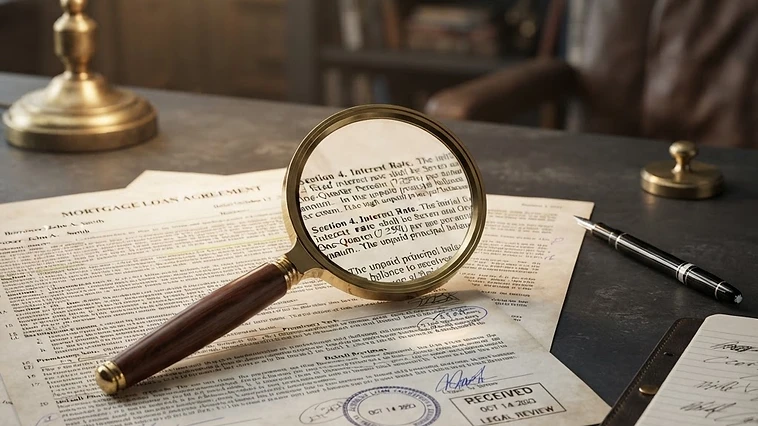 Magnifying glass examining a mortgage contract for evidence of fraud.

The New York Warning: "Newly Discovered Evidence" Must Be Truly New
While the Ohio ruling offers hope for appeals, a recent decision out of New York serves as a harsh reminder of how strict courts are when it comes to evidence of mortgage fraud.
On October 21, 2026, the Appellate Division of the Supreme Court of the State of New York ruled in a mortgage foreclosure case involving a homeowner named William L. Vetri and U.S. Bank National Association. The homeowner was attempting to vacate (cancel) a prior judgment of foreclosure and sale that had been entered against him years earlier.
In foreclosure defense, homeowners sometimes discover evidence of fraud, forged assignments, or servicing abuses long after a judgment has been entered. Under the rules of civil procedure in most states, a court can relieve a party from a final judgment based on "newly discovered evidence."
However, the New York appellate court affirmed the denial of the homeowner's motion to vacate. The court explicitly stated that to vacate a judgment based on newly discovered evidence, the homeowner must prove that the evidence, "if introduced at the trial, would probably have produced a different result."
Furthermore, the court found that the homeowner failed to demonstrate that the evidence he claimed was "newly discovered" was actually unavailable to him during the original proceedings. The court also ruled that his allegations of fraud against U.S. Bank were not supported by sufficient, concrete evidence.
How to Properly Document Mortgage Fraud and Servicing Errors
This New York ruling highlights a critical lesson for anyone facing foreclosure: you cannot simply walk into court and yell "fraud" or "robo-signing." You must have meticulously organized, admissible evidence, and you must present it at the correct time.
Many homeowners fall into the trap of believing that because mortgage fraud is widely known to exist, the judge will automatically take their side. This is not how the legal system works. The burden of proof is often on the homeowner to demonstrate exactly how the fraud occurred in their specific case.
To avoid the fate of the homeowner in the New York case, you must engage in aggressive "discovery" during the early stages of your foreclosure lawsuit. This includes:
- Sending Qualified Written Requests (QWRs): Under the Real Estate Settlement Procedures Act (RESPA), you have the right to demand specific information and documents from your mortgage servicer. This can uncover illegal junk fees, misapplied payments, and dual-tracking violations.
- Demanding the Original Note: You must challenge the bank's standing by demanding to see the original, wet-ink promissory note, complete with all proper endorsements.
- Analyzing Mortgage Assignments: You must forensically examine the chain of title. Were the assignments recorded years after the trust closed? Were they signed by known robo-signers?
- Presenting Evidence Before Judgment: Do not wait until after a judgment is entered to bring up evidence of fraud. As the New York court showed, trying to reopen a case based on "newly discovered evidence" is incredibly difficult if you could have found that evidence earlier through basic diligence.
The Importance of Preserving Your Rights on the Record
Both the Ohio and New York cases underscore the importance of court procedure. The legal system is a machine governed by strict rules of evidence and civil procedure.
If you are defending yourself pro se (without an attorney), you are still expected to know and follow these rules. If the bank submits a fraudulent affidavit, you must file a written objection and a motion to strike that affidavit. If you fail to object, the fraudulent document becomes part of the official court record, and the judge will rely on it to grant the foreclosure.
Furthermore, if you do not raise an issue in the trial court, you generally cannot raise it for the first time on appeal. The Ohio homeowner was able to appeal her case because she had actively fought the foreclosure and preserved her arguments on the record. The New York homeowner failed to vacate his judgment because he could not prove his evidence was truly new or sufficient to change the outcome.
Foreclosure defense is not about finding a magic bullet or a secret legal loophole. It is about holding the bank strictly accountable to the rules of evidence, forcing them to prove every single element of their case, and meticulously documenting their failures and frauds on the official court record.
Why the Foreclosure Defense Survival Playbook Helps
Navigating the treacherous waters of foreclosure defense, appellate procedure, and evidence gathering is overwhelming for anyone, especially when the roof over your head is on the line. The recent rulings in Ohio and New York prove that while the courts can offer protection, they demand strict adherence to procedural rules and evidentiary standards.
This is exactly why the Foreclosure Defense Survival Playbook is an indispensable resource for homeowners. This comprehensive 530-page educational guide breaks down the complex legal jargon into plain, understandable language. It teaches you how to forensically examine your mortgage documents for signs of robo-signing and fraud, just like the experts do.
The Playbook provides detailed, step-by-step explanations on how to organize your evidence, how to draft Qualified Written Requests to uncover servicing abuses, and how to understand the rules of civil procedure so you don't miss critical deadlines. It empowers you to build a solid record in the trial court, ensuring that if you ever need to appeal—like the victorious homeowner in Ohio—your arguments are properly preserved and supported by hard facts, not just allegations.
Don't wait until a judgment is entered to start looking for "newly discovered evidence." Equip yourself with the knowledge to fight back from day one. Order your copy of the Foreclosure Defense Survival Playbook today and take the first step toward leveling the playing field against the banks.


Order The Playbook
Get the Foreclosure Defense Survival Playbook
530 pages of structured, educational guidance covering mortgage documents, foreclosure procedures, evidence organization, and legal research — the same foundation this article draws from.