Foreclosure Cases
Recent Court Rulings Expose Foreclosure Abuses and Protect Homeowner Appeal Rights
Recent landmark court decisions are shifting the landscape of foreclosure defense, striking down procedural traps and slashing exorbitant servicer fees.
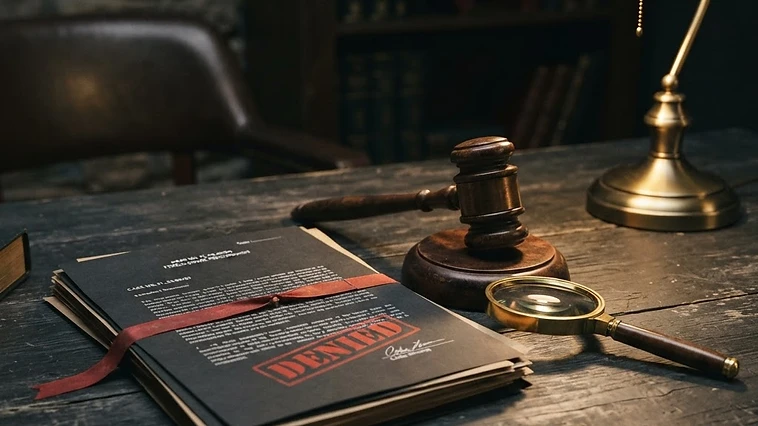
Disclaimer: The information provided in this article is strictly for educational purposes and does not constitute legal advice. If you are facing foreclosure, behind on your mortgage payments, or dealing with a legal dispute, please consult a qualified attorney in your jurisdiction.
For homeowners facing the terrifying prospect of foreclosure, the legal system can often feel like a rigged game. Banks, mortgage servicers, and their armies of lawyers have historically relied on procedural loopholes, aggressive timelines, and inflated fees to steamroll borrowers. However, the landscape of foreclosure defense is constantly evolving. In October 2026, several landmark court rulings were handed down that significantly shift the balance of power back toward the homeowner.
From state supreme courts dismantling procedural shields used by lenders to finalize foreclosures prematurely, to appellate courts slashing exorbitant attorney fees demanded by mortgage servicers, these recent developments offer a glimmer of hope. Understanding these recent rulings is critical for anyone currently navigating the foreclosure process, organizing their evidence, or researching their legal rights.
The "Mootness" Trap in Foreclosure Appeals
One of the most devastating tactics used by foreclosing banks has been the exploitation of the "mootness doctrine" during the appeals process. Historically, if a homeowner lost their foreclosure case at the trial court level, they had the right to appeal. However, to stop the bank from selling the house at a sheriff's sale while the appeal was pending, the homeowner was usually required to post a "supersedeas bond."
A supersedeas bond is a massive financial deposit—often equal to or exceeding the total amount of the mortgage debt—designed to protect the bank's financial interests during the appeal. For a homeowner who is already behind on payments and facing financial hardship, posting a bond of hundreds of thousands of dollars is entirely impossible.
Because the homeowner could not afford the bond, the trial court would allow the sheriff's sale to proceed. The bank would buy the property or sell it to a third party, confirm the sale, and distribute the deed. Once the property was sold, the appellate court would look at the homeowner's pending appeal and dismiss it as "moot." The court's reasoning was that because the property had already been sold and the deed transferred, there was no longer any meaningful relief the court could provide.
This created a horrific Catch-22: homeowners were priced out of their right to an appeal, and banks were incentivized to rush the sheriff's sale to permanently kill the homeowner's legal challenges.
The Ohio Supreme Court Dismantles the Lenders' Shield
In a massive victory for foreclosure defense, the Supreme Court of Ohio recently dismantled this long-standing procedural shield. In the pivotal October 2026 decisions of Drushal v. Miller and the subsequent remand in Wells Fargo Bank, Natl. Assn. v. Doberdruk, the court drastically reshaped the mootness doctrine in real estate litigation.
In the Doberdruk case, Wells Fargo obtained a foreclosure judgment against a homeowner. The homeowner appealed the decision but could not afford the staggering $472,905 supersedeas bond required to pause the sale. Consequently, the trial court allowed the sheriff's sale to proceed, confirmed the sale, and distributed the deed. Predictably, the appellate court dismissed the homeowner's appeal as moot.
However, the Supreme Court reversed this practice. The court clarified that a foreclosure appeal is not automatically moot simply because the property has been sold and the homeowner could not afford the bond. The court established critical principles that directly translate to mortgage foreclosures, ruling that appellate courts must still hear the merits of the case. If the appellate court finds that the original foreclosure judgment was flawed, fraudulent, or lacked standing, the court can still fashion a remedy for the homeowner, such as financial restitution, even if the physical property has been transferred.
This ruling is a seismic shift. For banking professionals, mortgage servicers, and foreclosure counsel, these rulings delay the absolute finality of sheriff's sales and drastically increase post-sale litigation risks. For homeowners, it means that the bank can no longer use a rushed auction as a get-out-of-jail-free card to avoid appellate scrutiny of their potentially fraudulent or sloppy mortgage documents.
Courts Crack Down on Exorbitant Servicer Fees
Beyond procedural tricks, another major battleground in foreclosure defense is the assessment of junk fees, inflated corporate advances, and exorbitant attorney fees. When a loan goes into default, mortgage servicers frequently pile on thousands of dollars in questionable charges, making it mathematically impossible for the homeowner to ever catch up or reinstate the loan.
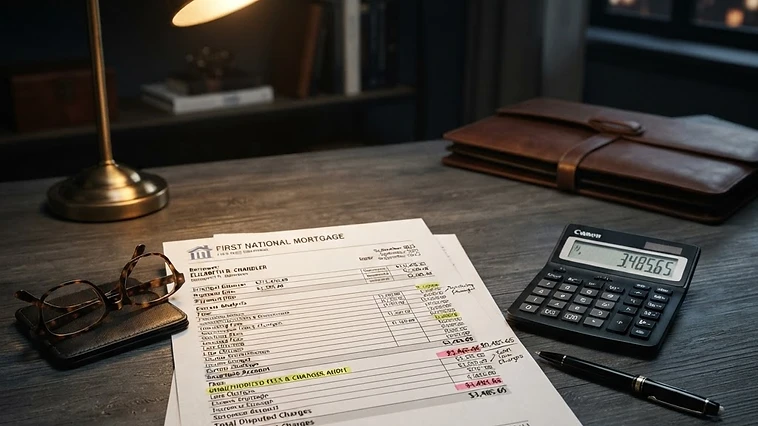 A magnifying glass and calculator resting on a mortgage statement, representing the auditing of servicer fees.

Fortunately, courts are beginning to scrutinize these demands with a much harsher lens. In October 2026, the Appellate Division of the New York Supreme Court handed down a unanimous ruling in Wilmington Trust, N.A. v Stradtman Park, LLC that serves as a stark warning to greedy mortgage servicers and their legal teams.
In this case, a Commercial Mortgage-Backed Security (CMBS) trustee won a foreclosure judgment. Following the victory, the special servicer, LNR Partners, submitted a demand for approximately $588,000 in attorneys' fees to be paid out of the foreclosure proceeds. The servicer claimed they were paying their lawyers between $650 and $800 an hour for partners.
The trial court, however, refused to rubber-stamp this exorbitant demand. The court gutted the fee request, slashing it from $588,000 down to $250,000. The court also denied the servicer's attempt to stack two layers of default interest on the mortgage.
When the trustee appealed the reduction, the appellate court unanimously upheld the trial court's decision. The appellate panel noted that even when a mortgage contract permits the lender to recover attorneys' fees, those fees must be reasonable and warranted for the services actually rendered. The court ruled that it is not bound by whatever inflated fee schedule a servicer agrees to pay its lawyers, particularly when those rates far exceed what the local market charges.
Identifying Servicing Abuses and Junk Fees in Your Case
While the Wilmington Trust case involved a commercial property, the legal principle applies directly to residential foreclosure defense. Mortgage servicers are notorious for padding residential foreclosure accounts with unreasonable fees.
If you are fighting a foreclosure, it is imperative that you demand a detailed payment history and a complete breakdown of all corporate advances and fees assessed to your account. During the discovery phase of your litigation, you should meticulously audit these records for common servicing abuses, including:
- Inflated Legal Fees: As seen in the recent New York ruling, servicers often attempt to pass on exorbitant, above-market legal fees to the borrower. You have the right to challenge the reasonableness of these fees.
- Duplicative Property Inspections: Servicers frequently charge for "drive-by" property inspections every single month, sometimes multiple times a month, even when they know the property is occupied and maintained. These $15 to $50 charges add up to thousands of dollars over the life of a default.
- Broker Price Opinions (BPOs): Servicers may order unnecessary property valuations and pass the inflated costs onto the homeowner.
- Force-Placed Insurance: If your hazard insurance lapses, the servicer will buy a policy to protect the property. However, these force-placed policies are often purchased at wildly inflated premiums from affiliated companies, resulting in illegal kickbacks to the servicer.
By understanding that courts are willing to strike down unreasonable fees, homeowners can use the discovery process to challenge the exact amount the bank claims is owed. If the bank cannot prove that their fees are reasonable, accurate, and legally permissible under the terms of the original promissory note and mortgage, those fees can be stripped from the final judgment.
The Importance of Staying Educated
The landscape of foreclosure law is highly complex and constantly shifting. Banks rely on the fact that the average homeowner does not understand the rules of civil procedure, the rules of evidence, or the recent appellate decisions that govern their jurisdiction. When a homeowner represents themselves (pro se) without a deep understanding of the law, they are at a severe disadvantage.
For example, another recent October 2026 ruling from the Second Circuit Court of Appeals (Dernier v. U.S. Bank) highlighted the dangers of navigating these waters unprepared. In that case, pro se homeowners attempted to fight a foreclosure by alleging that their mortgage assignment was forged. However, because they failed to properly structure their legal arguments and present their evidence according to the strict rules of the court, their claims were dismissed, and the foreclosure was affirmed.
Having the right facts is only half the battle; knowing how to present those facts, how to conduct legal research, and how to hold the bank accountable to the rules of procedure is what ultimately levels the playing field.
Why the Foreclosure Defense Survival Playbook Helps
Facing foreclosure is one of the most stressful experiences a person can endure, but you do not have to fight this battle in the dark. The Foreclosure Defense Survival Playbook is a comprehensive, 530-page educational resource specifically designed to demystify the legal process for homeowners.
This Playbook breaks down complex legal concepts into plain, understandable language. It teaches you how to dissect your mortgage documents, identify missing or fraudulent assignments, and spot the exact types of servicing abuses and junk fees that courts are currently striking down. Furthermore, it provides step-by-step guidance on how the court system works, how to organize your evidence for maximum impact, and how to conduct the legal research necessary to find recent, favorable case law in your specific state.
Whether you are trying to negotiate a modification, fighting a wrongful foreclosure in court, or simply trying to understand your rights before the bank takes action, knowledge is your ultimate weapon. Don't let the banks use procedural traps and inflated fees to steal your home. Order the Foreclosure Defense Survival Playbook today, empower yourself with the education you need, and learn how to fight back effectively.


Order The Playbook
Get the Foreclosure Defense Survival Playbook
530 pages of structured, educational guidance covering mortgage documents, foreclosure procedures, evidence organization, and legal research — the same foundation this article draws from.