Foreclosure Defense
Recent CFPB Enforcement Actions and Foreclosure Defense Strategies for Homeowners
Recent regulatory crackdowns and court rulings highlight ongoing mortgage servicing abuses, offering homeowners new avenues for foreclosure defense.
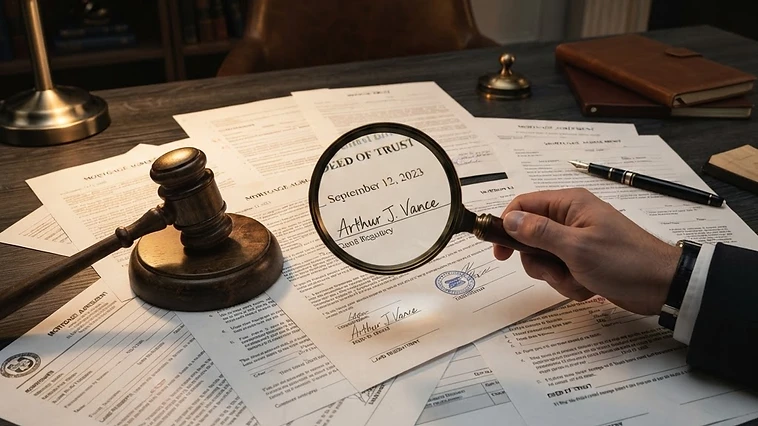
Disclaimer: This article is for educational purposes only and does not constitute legal advice. If you are facing foreclosure, please consult with a qualified attorney in your jurisdiction.\n\nFor homeowners who have fallen behind on their mortgage payments or are actively facing foreclosure, the legal landscape can feel overwhelming. However, recent regulatory actions and court rulings demonstrate that mortgage servicers are still being held accountable for abusive practices. Understanding these recent developments is crucial for any homeowner looking to mount a strong foreclosure defense. By staying informed about how federal agencies and state courts are handling mortgage fraud, servicing abuses, and procedural errors, you can better protect your home and your rights.\n\n## Recent CFPB Crackdowns on Mortgage Servicing Abuses\n\nMortgage servicers are responsible for managing your loan account, processing payments, and handling loss mitigation requests. Unfortunately, servicing errors and outright abuses remain a significant problem in the industry. Recently, the Consumer Financial Protection Bureau (CFPB) has taken decisive action against servicers that violate homeowner rights.\n\nIn a notable recent enforcement action, the CFPB entered into a consent order with a Florida-based mortgage servicer to resolve allegations of improper foreclosure practices. According to the Mortgage Orientation or Servicing, the CFPB found that the servicer's practices violated the Consumer Financial Protection Act of 2010. These types of enforcement actions highlight that regulatory bodies are actively monitoring how servicers handle default and foreclosure processes. For homeowners, this means that if your servicer has mishandled your account, failed to properly apply payments, or rushed you into foreclosure without offering required loss mitigation options, you may have valid grounds to challenge their actions.\n\nServicing abuses often take the form of dual tracking, where a servicer proceeds with foreclosure while simultaneously negotiating a loan modification with the borrower. This practice is strictly prohibited under federal rules, yet it continues to occur. When federal agencies like the CFPB step in to penalize these behaviors, it provides a factual basis for homeowners to scrutinize their own loan histories for similar violations.\n\n## The New York Foreclosure Abuse Prevention Act (FAPA) Ruling\n\nState laws also play a massive role in foreclosure defense, particularly regarding the statute of limitations and procedural timelines. A major recent development occurred in New York concerning the Foreclosure Abuse Prevention Act (FAPA). This law was designed to strictly limit the timeframes within which lenders can commence mortgage foreclosures, preventing them from endlessly restarting the clock on old, defaulted loans.\n\nRecently, New York's highest court dismissed an appeal challenging the constitutionality of the retroactive application of FAPA, as reported in Mortgage Orientation or Servicing. This procedural victory for homeowners means that lenders in New York will face stricter enforcement of time limits when trying to foreclose. While this specific ruling applies to New York, it reflects a broader national trend where courts and legislatures are increasingly willing to curb endless litigation by banks and enforce strict procedural deadlines. Homeowners in all states should carefully review the timeline of their foreclosure case, as an expired statute of limitations is a powerful, absolute defense against foreclosure.\n\n Legal files and bank statements marked with red flags on a dark charcoal desk.\n\n## Understanding Procedural vs. Substantive Foreclosure Defenses\n\nWhen fighting a foreclosure, defenses generally fall into two categories: procedural and substantive. Understanding the difference is vital for organizing your evidence and presenting a coherent argument.\n\nProcedural defenses focus on the rules that apply to the foreclosure process. For example, did the lender provide the legally required notice of default? Did they properly serve you with the lawsuit? Do they actually have the legal standing to foreclose? The "produce the note" defense, while less common today due to better bank record-keeping, still applies if the foreclosing party cannot prove they hold the promissory note. As noted in Defenses to Foreclosure Under the Law, if the foreclosing party cannot produce the promissory note on which the loan is based, the court likely will dismiss the case.\n\nSubstantive defenses, on the other hand, are based on the specific facts of your loan and payment history. This includes situations where the servicer failed to promptly credit your payments, credited them to the wrong account, or illegally piled on excessive fees not permitted by the mortgage contract. If you can prove that you are not actually in default, or that the default was manufactured by the servicer's accounting errors, you have a strong substantive defense.\n\n## How Dual Tracking and Servicing Errors Lead to Wrongful Foreclosures\n\nOne of the most frustrating experiences for a homeowner is doing everything right—submitting loan modification paperwork, making trial payments—only to find out the bank is still pushing forward with a foreclosure sale. This is known as dual tracking.\n\nFederal regulations, specifically under the Real Estate Settlement Procedures Act (RESPA), require servicers to halt the foreclosure process once a complete loss mitigation application has been submitted. If your servicer sells your home while you are under active review for a modification, they have violated federal law. Furthermore, errors in calculating the amount needed to reinstate a mortgage can wrongfully push homeowners out of their properties. An overstatement of the reinstatement amount can cause a homeowner to give up their home because they falsely believe they do not have enough funds to save it. Documenting every interaction, saving every piece of mail, and keeping detailed records of all payments is your best defense against these types of servicing errors.\n\n## The Role of Artificial Intelligence in Mortgage Servicing\n\nAs the mortgage industry evolves, servicers are increasingly relying on automated systems and Artificial Intelligence (AI) to manage accounts, process payments, and even make decisions about loan modifications and foreclosures. The CFPB recently issued a new rule on the use of artificial intelligence models in mortgage lending, signaling that regulators are watching how these technologies impact consumers.\n\nFor homeowners in default, the rise of AI means that your loan is often being managed by an algorithm rather than a human being. This can lead to systemic errors, such as automated systems rejecting valid loan modification applications or automatically generating foreclosure documents without human verification—a modern version of the "robo-signing" scandals of the past. If you suspect that an automated system has wrongfully denied your request for help or miscalculated your escrow and payment amounts, you have the right to demand a manual review and request the underlying data used to make those decisions.\n\n## Why the Foreclosure Defense Survival Playbook Helps\n\nNavigating the complexities of mortgage servicing errors, federal regulations, and court procedures is a daunting task for anyone, especially when the roof over your head is on the line. You need a comprehensive, step-by-step guide to level the playing field against massive financial institutions and their teams of lawyers.\n\nThis is exactly why the "Foreclosure Defense Survival Playbook" is an absolute must-have resource for any homeowner facing default. This 530-page educational manual breaks down complex legal concepts into plain, understandable language. It teaches you how to dissect your mortgage documents, spot servicing abuses like dual tracking and illegal fee stacking, and organize your evidence to build a compelling defense. Whether you are trying to negotiate a loan modification, fighting a wrongful foreclosure in court, or simply trying to understand your rights under laws like RESPA and TILA, the Playbook provides the knowledge you need to take control of your situation. Don't face the banks alone—order your copy of the Foreclosure Defense Survival Playbook today and empower yourself with the tools to fight back and save your home.



Order The Playbook
Get the Foreclosure Defense Survival Playbook
530 pages of structured, educational guidance covering mortgage documents, foreclosure procedures, evidence organization, and legal research — the same foundation this article draws from.