Foreclosure Defense
Recent Court Rulings Expose Mortgage Servicing Abuses: How Homeowners Can Fight Back
Recent federal court rulings and CFPB enforcement actions highlight ongoing mortgage servicing abuses, giving homeowners new ammunition to defend against foreclosure.
Disclaimer: The information provided in this article is for educational purposes only and does not constitute legal advice. If you are facing foreclosure or struggling with mortgage payments, please consult with a qualified attorney in your jurisdiction to discuss your specific legal situation.
Foreclosures are back. After years of pandemic-era moratoriums, forbearance programs, and historically low default rates, the mortgage industry is experiencing what legal insiders are calling "foreclosure normalization." As banks and mortgage servicers ramp up their collection efforts, a disturbing trend is re-emerging: widespread mortgage servicing abuses, predatory tactics, and blatant violations of federal consumer protection laws.
Recent federal court rulings and enforcement actions in late 2026 have shed light on how mortgage servicers continue to mishandle accounts, ignore homeowner requests, and push families into foreclosure illegally. For homeowners who are behind on payments or already facing a foreclosure lawsuit, understanding these recent developments is critical. Knowledge is your first line of defense against a system designed to overwhelm you.
The Rise of "Foreclosure Normalization" and Servicing Abuses
According to recent industry reports, the mortgage market is undergoing a meaningful correction. With this "foreclosure normalization" comes a sharp increase in litigation and compliance risks for mortgage servicers. Unfortunately, when servicers cut corners to handle the increased volume of defaults, homeowners pay the price.
Recently, the Consumer Financial Protection Bureau (CFPB) announced a consent order with Fay Servicing, LLC, to settle alleged mortgage servicing violations Mortgage Servicers, Enforcement Actions, Foreclosure | JD Supra. Enforcement actions like this highlight a systemic problem in the industry: servicers frequently fail to offer legally required loss mitigation options, misapply payments, and charge unauthorized fees.
When a homeowner falls behind on payments, the servicer is supposed to work with them to explore alternatives to foreclosure, such as loan modifications. Instead, many servicers use the confusion of a default to pad the account with junk fees, property inspection charges, and inflated corporate advances. Recognizing these abuses is the first step in building a solid foreclosure defense strategy.
Recent Federal Rulings on RESPA and Qualified Written Requests
The Real Estate Settlement Procedures Act (RESPA) is one of the most powerful tools available to homeowners. Under RESPA, homeowners have the right to send a Qualified Written Request (QWR) or a Notice of Error (NOE) to their mortgage servicer. The servicer is legally required to acknowledge the request and conduct a reasonable investigation into the account's history.
On October 1, 2026, a federal judge in New York issued a significant decision in a lawsuit involving borrowers' allegations that their mortgage servicer inadequately responded to a QWR and imposed duplicative charges Judge rules in RESPA mortgage servicing dispute | News by Edition | RESPA News. The borrowers brought claims under RESPA and other federal consumer protection laws, challenging the administration of their escrow accounts and the notices of transfer of servicing.
This ruling is a vital reminder that servicers cannot simply ignore your letters. When a servicer fails to properly respond to a QWR, they can be held liable for actual damages, and in some cases, statutory damages. For homeowners in foreclosure, proving that a servicer violated RESPA can be a powerful affirmative defense. It demonstrates to the court that the servicer's accounting is unreliable and that they have not acted in good faith.
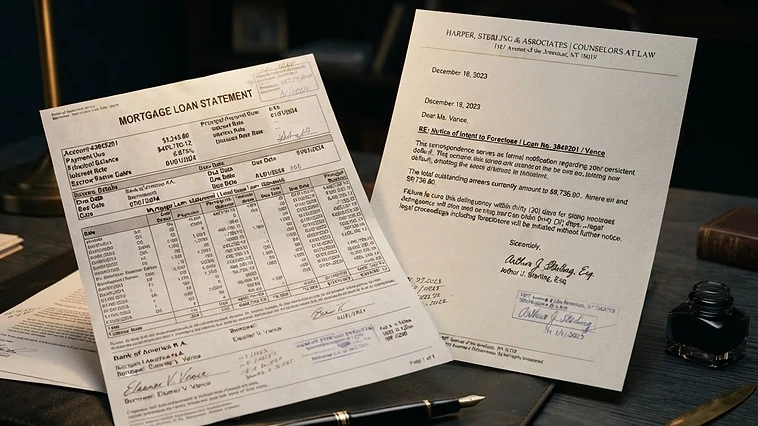 Close-up of mortgage documents and a legal letter on a dark desk illuminated by a gold lamp.

Dual Tracking: A Predatory Tactic Still in Use
One of the most egregious servicing abuses is "dual tracking." This occurs when a mortgage servicer simultaneously negotiates a loan modification or loss mitigation option with the homeowner while actively pushing forward with the foreclosure process in court.
Federal law, specifically under RESPA regulations (Sections 1024.41(f) and (g)), strictly prohibits dual tracking. Servicers are prevented from initiating or advancing foreclosure when a complete loss mitigation application is pending. Despite this clear prohibition, dual tracking remains a rampant issue.
Recent legal battles, such as the Supreme Court petition in Jeanie Reese v. Select Portfolio Services (SPS), highlight the devastating impact of dual tracking Jeanie Reese v. Select Portfolio Services (SPS), Inc., No. 25-5704 — Supreme Court of the United States Petition. In cases involving dual tracking, homeowners are often lulled into a false sense of security, believing their home is safe because they are negotiating a modification, only to find out that a foreclosure sale date has been scheduled. Documenting every interaction with your servicer is essential to proving dual tracking and stopping a wrongful foreclosure sale.
Statute of Limitations and the Foreclosure Abuse Prevention Act (FAPA)
Another major development in foreclosure defense involves the statute of limitations. In many states, lenders have a specific number of years to foreclose on a property after accelerating the loan (demanding the full balance). For years, lenders would manipulate the system by "de-accelerating" the loan just before the statute of limitations expired, only to re-file the foreclosure later.
New York recently cracked down on this practice with the Foreclosure Abuse Prevention Act (FAPA). In March 2026, a New York Appellate Division threw out mortgage foreclosure actions brought by Fannie Mae and U.S. Bank, ruling that the lenders waited too long to file and that FAPA prevented them from reviving stale foreclosures FAPA blocks Fannie Mae, U.S. Bank from reviving stale foreclosures | Mortgage Professional.
While FAPA is specific to New York, the legal principle is gaining traction nationwide. Homeowners and their advocates are increasingly challenging foreclosures based on statute of limitations violations. If your loan was accelerated years ago and the bank dismissed the case only to file a new one recently, you may have a strong statute of limitations defense.
How to Spot Mortgage Servicing Errors in Your Account
To effectively defend against foreclosure, you must learn to read your mortgage statements like a forensic auditor. Servicing errors are incredibly common, especially when a loan is transferred from one servicer to another. Here are the most common errors to look for:
- Misapplied Payments: Servicers often place partial payments into a "suspense account" rather than applying them to the principal and interest. Over time, this can trigger a false default.
- Escrow Shortages and Overcharges: Servicers frequently miscalculate property taxes and insurance premiums, leading to massive, unexplained increases in your monthly payment.
- Phantom Fees: Look for vague charges labeled as "corporate advances," "property inspection fees," or "legal fees." Servicers often charge these fees illegally while you are in the loss mitigation process.
- Robo-Signing and Fraudulent Assignments: Ensure that the entity suing you actually owns the loan. Many foreclosures are still filed using fraudulent or backdated assignments of mortgage.
By raising the right affirmative defenses—such as servicer errors, standing issues, and violations of state or federal mortgage servicing laws—you might be able to delay a sale date, force a favorable settlement, or even have the foreclosure action dismissed entirely Foreclosure Defense: Key Defenses to Mortgage Foreclosure.
Why the Foreclosure Defense Survival Playbook Helps
Facing foreclosure is terrifying, but you do not have to fight this battle blind. The banks rely on homeowners being overwhelmed, confused, and uneducated about their rights. That is exactly why the Foreclosure Defense Survival Playbook was created.
This comprehensive, 530-page educational book is designed specifically for homeowners who are behind on payments or actively fighting a foreclosure lawsuit. It breaks down complex legal concepts into plain, easy-to-understand language. Inside the Playbook, you will learn how to:
- Audit your mortgage documents to uncover the exact servicing errors, phantom fees, and RESPA violations discussed in this article.
- Draft and send effective Qualified Written Requests (QWRs) to force your servicer to produce the evidence you need.
- Understand court procedures and evidence organization, so you know what to expect if you have to face the bank's attorneys in court.
- Conduct basic legal research to find the laws and precedents that apply to your specific situation.
Don't let the banks use "foreclosure normalization" to steal your home without a fight. Equip yourself with the knowledge to hold them accountable. Order your copy of the Foreclosure Defense Survival Playbook today and take the first step toward taking back control of your home and your future.


Order The Playbook
Get the Foreclosure Defense Survival Playbook
530 pages of structured, educational guidance covering mortgage documents, foreclosure procedures, evidence organization, and legal research — the same foundation this article draws from.