Foreclosure Defense
Recent Mortgage Servicing Abuses: How Homeowners Are Fighting Back in Court
Recent lawsuits and CFPB enforcement actions highlight a disturbing trend of mortgage servicing abuses, but educated homeowners are fighting back.

Disclaimer: This article is for educational purposes only and does not constitute legal advice. If you are behind on your payments or facing foreclosure, consult with a qualified attorney to understand your specific legal options.
The 2026 Foreclosure Surge and the Return of Servicing Errors
The threat of foreclosure is one of the most terrifying experiences a homeowner can face. Unfortunately, for hundreds of thousands of Americans, that threat is becoming a reality. According to recent data released in July 2026, foreclosure filings surged by 21% in the first half of the year. As the volume of defaults increases, the mortgage servicing industry is once again buckling under the pressure.
When mortgage servicers get overwhelmed, homeowners pay the price. High volumes of delinquent accounts often lead to sloppy record-keeping, misapplied payments, and a resurgence of the "robo-signing" behaviors that plagued the housing crisis over a decade ago. A mortgage servicer is the company that manages your loan account, processes your monthly payments, and handles loss mitigation or foreclosure proceedings. They are often not the entity that actually owns your loan. This separation between the loan owner and the loan servicer creates a chaotic environment where paperwork is lost, communication breaks down, and homeowners are pushed toward foreclosure illegally.
Recent events in the summer of 2026 show that these servicing abuses are not a thing of the past. However, they also show that homeowners are not powerless. Over the past few weeks, significant legal and regulatory actions have highlighted the ongoing abuses in the mortgage servicing industry—and demonstrated exactly how educated homeowners are fighting back to protect their property rights.
Pro Se Homeowner Sues Major Servicers Over Fatal Flaws
One of the most inspiring recent examples of homeowner pushback occurred on July 21, 2026, when a homeowner filed a federal lawsuit in the Eastern District of Pennsylvania against a chain of major servicing-side companies. The defendants in this lawsuit include PHH Mortgage Corporation, Flagstar Bank, Freedom Mortgage Corporation, Pingora Loan Servicing, and Mortgage Electronic Registration Systems, Inc. (MERS).
What makes this case particularly notable is that the homeowner filed the lawsuit pro se—meaning they are representing themselves without an attorney. The allegations in the lawsuit read like a textbook example of modern mortgage servicing abuses. The homeowner claims that the servicers stalled on answering critical questions about the account, left the homeowner completely in the dark about who actually owned the loan, and aggressively moved the property into foreclosure while an active dispute remained open.
This tactic—moving forward with foreclosure while a homeowner is actively disputing the debt or negotiating a resolution—is a massive red flag. Furthermore, the inclusion of MERS in the lawsuit highlights a persistent issue in foreclosure defense: the obfuscation of the chain of title. MERS is a private electronic registry created by the mortgage industry to track ownership and servicing rights. However, its use often makes it incredibly difficult for a homeowner to determine who actually holds the promissory note and has the legal standing to foreclose. When a homeowner demands to see the original documents and the servicer stalls, it often indicates that the paperwork is flawed, missing, or improperly assigned.
 Homeowner reviewing mortgage servicing documents and foreclosure notices with a magnifying glass.

CFPB Cracks Down on Illegal Foreclosure Actions
Homeowners are not the only ones taking action against mortgage servicers this summer. Federal regulators are also stepping in. On June 25, 2026, the Consumer Financial Protection Bureau (CFPB) announced a major enforcement action against Fay Servicing for engaging in illegal foreclosure actions and violating a previous law enforcement order.
The CFPB's action is a stark reminder that mortgage servicers frequently violate federal laws designed to protect homeowners. When a servicer is placed under a consent order or enforcement action, it means regulators have found systemic, widespread abuses in their business practices. For Fay Servicing, the CFPB found that the company was taking illegal steps to foreclose on homes, stripping borrowers of their rights to fair treatment under federal law.
For a homeowner facing foreclosure, this news is critical. It proves that you cannot simply take your mortgage servicer's word as absolute truth. If a massive corporation is being penalized by the federal government for illegal foreclosure practices, it is entirely possible that they are making illegal, undocumented, or fraudulent moves on your specific account. This is why auditing your mortgage documents and holding the servicer accountable is a mandatory step in any foreclosure defense strategy.
Understanding Your Rights: Dual Tracking and Phantom Fees
To defend your home, you must understand the specific tactics that mortgage servicers use to accelerate foreclosures. Two of the most common abuses are "dual tracking" and the assessment of "phantom fees."
Dual Tracking: This occurs when a mortgage servicer ostensibly negotiates a loss mitigation option with you (such as a loan modification, forbearance, or repayment plan) while simultaneously moving forward with the foreclosure process in court. Dual tracking is strictly prohibited under the Real Estate Settlement Procedures Act (RESPA). If you have submitted a complete loss mitigation application, federal law generally requires the servicer to halt the foreclosure process until they have fully evaluated your application and provided a written decision. The recent pro se lawsuit against PHH and Flagstar heavily features allegations that mirror dual tracking—moving the loan along to foreclosure while disputes and questions remained unresolved.
Phantom Fees: When you fall behind on your payments, your account becomes a profit center for the servicer. They may begin tacking on default-related fees, such as property inspection fees, corporate advances, excessive late fees, and inflated attorney costs. Often, these fees are completely invalid or grossly exaggerated. If you do not actively challenge these fees, they are added to your total loan balance, making it mathematically impossible for you to ever catch up.
Homeowners have powerful tools under RESPA to fight back. By sending a properly formatted Notice of Error (NOE) or a Request for Information (RFI) to the servicer's designated address, you legally force them to investigate your account, correct errors, and provide you with the documentation you need to defend yourself. If they fail to respond adequately, they open themselves up to federal lawsuits and financial damages.
The Importance of the Chain of Title and Assignments
Another critical area of foreclosure defense highlighted by recent news is the "chain of title." In order to legally foreclose on your home, the plaintiff (usually a bank or a trust) must prove that they have legal "standing." This means they must prove they actually own your specific promissory note and mortgage.
During the securitization boom, mortgages were bought, sold, and transferred between dozens of different entities. To prove standing, the foreclosing party must produce a clear, unbroken chain of assignments from the original lender all the way to the current plaintiff. Because of the chaotic nature of the mortgage industry, these assignments are frequently missing, fabricated, backdated, or signed by known "robo-signers"—individuals who sign thousands of legal documents a day without ever verifying the information within them.
If you are behind on your payments, you must demand that the servicer produce the original, wet-ink promissory note and a flawless chain of assignments. If the assignments are fraudulent or the chain of title is broken, the foreclosing party may not have the legal right to take your home. This is exactly why the homeowner in the July 2026 lawsuit targeted MERS and the various servicers: to force them to prove exactly who owned the debt and whether they had the legal authority to act.
Why the Foreclosure Defense Survival Playbook Helps
Facing a foreclosure can feel like standing in front of a freight train, but recent lawsuits and CFPB enforcement actions prove that mortgage servicers are deeply flawed and frequently violate the law. You do not have to be a victim of servicing abuses, robo-signing, or illegal dual tracking.
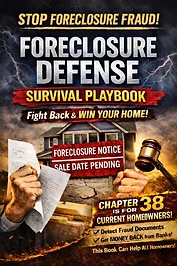
The Foreclosure Defense Survival Playbook is a comprehensive, 530-page educational resource designed specifically for homeowners who are behind on payments or actively fighting foreclosure. This book breaks down complex legal concepts into plain language, teaching you how to audit your mortgage documents, spot fraudulent assignments, and identify illegal phantom fees. It provides deep, educational insights into court procedures, evidence organization, and legal research, empowering you to understand exactly how pro se homeowners are standing up to massive banks in federal and state courts.
If you want to understand your rights, decode the confusing paperwork sent by your servicer, and learn how to hold these financial institutions accountable, you need the right knowledge. Order the Foreclosure Defense Survival Playbook today and take the first step toward understanding your mortgage, organizing your evidence, and fighting for your home.

Order The Playbook
Get the Foreclosure Defense Survival Playbook
530 pages of structured, educational guidance covering mortgage documents, foreclosure procedures, evidence organization, and legal research — the same foundation this article draws from.