Foreclosure Defense
Recent Court Rulings and CFPB Actions Expose Mortgage Servicing Abuses
Recent federal crackdowns and bankruptcy court filings reveal ongoing mortgage servicing abuses, including forged assignments and ignored loss mitigation requests.
Disclaimer: The following article is for educational purposes only and does not constitute legal advice. If you are facing foreclosure, you should consult with a qualified attorney in your jurisdiction.
For homeowners facing the terrifying prospect of foreclosure, the battle often feels incredibly one-sided. Banks and mortgage servicers present an image of absolute authority, armed with stacks of complex legal documents and teams of aggressive attorneys. However, recent developments in federal courts and enforcement actions by the Consumer Financial Protection Bureau (CFPB) reveal a very different reality. Behind the curtain, the mortgage servicing industry is still plagued by systemic abuses, forged documents, illegal fees, and blatant violations of homeowner rights.
In just the past week, new court filings and regulatory reports have highlighted that the deceptive practices of the 2008 financial crisis—such as robo-signing, fraudulent assignments, and ignored loss mitigation requests—are not relics of the past. They are happening right now. For homeowners who are behind on payments or actively fighting foreclosure, understanding these recent developments is critical. Knowledge is your best defense against a system designed to steamroll the uninformed.
Recent Court Battles Expose Ongoing Robo-Signing and Forged Deeds
One of the most significant recent developments comes from a New York Bankruptcy Court, where a homeowner is actively fighting back against some of the largest players in the mortgage industry. In a case filed in March 2025, a Chapter 7 debtor brought a massive lawsuit against The Bank of New York Mellon (BNY), Litton Loan Servicing, Ocwen Loan Servicing, and Mortgage Electronic Registration Systems (MERS) Case 1-24-01097-jmm Doc 35 Filed 03/13/25 Entered 03/13/25 14:39:45.
The allegations in this case strike at the very heart of foreclosure defense: the homeowner alleges that the defendants engaged in widespread fraud to secure a judgment of foreclosure. Specifically, the lawsuit claims that the bank utilized an illegal mortgage assignment, a forged deed, and "robo-signers" to manufacture standing to foreclose Case 1-24-01097-jmm Doc 35 Filed 03/13/25 Entered 03/13/25 14:39:45.
Robo-signing occurs when bank employees or third-party contractors sign thousands of legal documents—such as affidavits and mortgage assignments—without verifying the accuracy of the information or having personal knowledge of the facts, often forging signatures or signing outside the presence of a notary. While the banks claim they cleaned up their act after the National Mortgage Settlement, cases like this demonstrate that questionable documents are still being pushed through the courts.
For homeowners, this is a crucial educational point. You cannot assume that the documents filed against you are legitimate. When a trust like BNY Mellon attempts to foreclose, they must prove they legally own your specific note and mortgage. If the assignment transferring your mortgage into their trust was forged, backdated, or signed by a known robo-signer, their legal standing to take your home can be fiercely challenged.
CFPB Enforcement Actions Target Servicing Abuses and Ignored Requests
While homeowners are fighting in the courts, federal regulators are also cracking down on mortgage servicers for violating federal laws designed to protect borrowers. The CFPB has recently escalated its enforcement actions against servicers who fail to properly handle loss mitigation requests and who deceive homeowners about their loan status.
According to recent industry reports from March 2025, the CFPB has entered into multiple consent orders with loan servicing companies for egregious violations of the Real Estate Settlement Procedures Act (RESPA) and the Consumer Financial Protection Act (CFPA) CFS 2024 YIR: Mortgage Origination and Servicing. In one major action, the CFPB penalized Sutherland Global Services and NOVAD Management Consulting for systematically failing to respond to thousands of homeowner requests for loan payoff statements, short sales, and deeds-in-lieu of foreclosure CFS 2024 YIR: Mortgage Origination and Servicing.
Even worse, the CFPB found that these companies were falsely telling homeowners they were in default and ignoring the homeowners' desperate attempts to contest the inaccurate information CFS 2024 YIR: Mortgage Origination and Servicing. The companies were forced to pay $11.5 million in consumer redress and $5 million in civil penalties. In another recent action, the CFPB targeted Fay Servicing, labeling them a "repeat offender" for improper foreclosure practices CFS 2024 YIR: Mortgage Origination and Servicing.
What does this mean for you? It means that when your servicer "loses" your loan modification application, fails to respond to your Notice of Error, or sends you a default notice with inflated numbers, it is not just a clerical error. It is often part of a systemic pattern of servicing abuse. Under RESPA, servicers have strict timelines they must follow when you submit a complete loss mitigation application. If they dual-track you—meaning they proceed with foreclosure while simultaneously reviewing your application for assistance—they are breaking federal law.
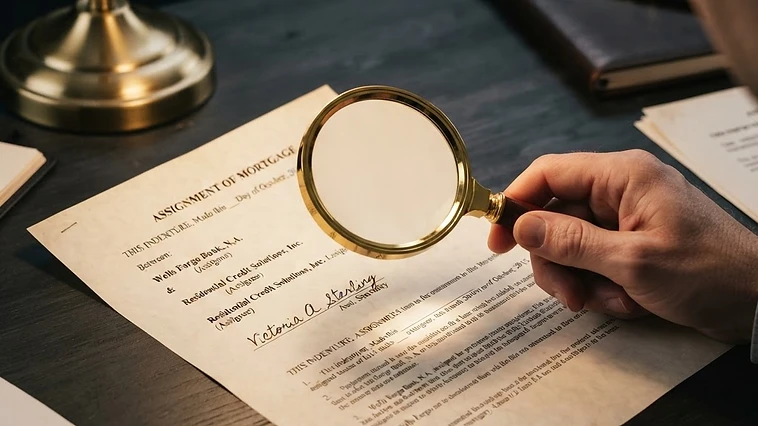 A magnifying glass inspecting a signature on a mortgage assignment document to detect robo-signing and fraud.

The Weaponization of "Junk Fees" and Improper Default Notices
Another major area of recent regulatory focus is the assessment of illegal "junk fees" by mortgage servicers. When a homeowner falls behind on payments, the servicer often begins piling on fees that make it nearly impossible to catch up.
Recent supervisory highlights from the CFPB reveal that examiners found numerous instances of mortgage servicers charging illegal fees, such as prohibited property inspection fees, and sending deceptive loss mitigation eligibility notices to consumers. Servicers were caught charging late fees that exceeded the amounts allowed in the original mortgage agreements and failing to waive existing fees after a homeowner successfully completed a loan modification.
This is a critical area for foreclosure defense. When a bank files a foreclosure complaint, they must state the exact amount owed. If that amount is artificially inflated by illegal property inspection fees, improper late charges, or corporate advance fees that violate the terms of your original promissory note, the bank's entire claim can be called into question. Homeowners must learn to demand a complete, itemized payment history and scrutinize every single charge added to their account after the date of default.
How to Audit Your Mortgage Documents for Fraud
Given the recent news of forged deeds, illegal assignments, and servicing abuses, homeowners must take a proactive approach to their defense. You cannot rely on the bank to tell the truth, and you cannot rely on the court to automatically catch fraud. You must become the auditor of your own mortgage file.
First, you need to obtain your complete collateral file. This includes the original promissory note (and any allonges or endorsements), the mortgage or deed of trust, and every single assignment that allegedly transferred your loan from the original lender to the current foreclosing party.
When reviewing these documents, look for the following red flags:
- The Chain of Title: Does the chain of assignments make sense? If your loan was securitized into a Wall Street trust (like a BNY Mellon or U.S. Bank trust), the trust's Pooling and Servicing Agreement (PSA) usually required all loans to be transferred into the trust by a specific closing date, often back in 2006 or 2007. If the assignment transferring your mortgage to the trust is dated 2023, years after the trust closed, that assignment may be void under New York trust law.
- Robo-Signers: Look at the signatures on your assignments. Search the names of the individuals who signed them online. Many of these individuals were low-level employees who signed thousands of documents a day as "Vice Presidents" of MERS or various banks. If a known robo-signer executed your assignment, you have grounds to challenge its authenticity.
- Missing Endorsements: The promissory note is the actual debt. To enforce the note, the foreclosing party must usually possess the original note, and it must be properly endorsed (either to them specifically or endorsed in blank). If the bank produces a note with no endorsements, or if an endorsement suddenly appears on a document that was previously filed without one, you may have uncovered manufactured evidence.
Why the Foreclosure Defense Survival Playbook Helps
Reading about these recent court cases and CFPB enforcement actions can be overwhelming. You might be wondering, "How do I actually find these documents? How do I spot a forged assignment? How do I force my servicer to answer my RESPA letters?"
This is exactly why the Foreclosure Defense Survival Playbook was created.
This comprehensive, 530-page educational manual is designed specifically for homeowners who are behind on payments or actively fighting foreclosure. It takes the complex, intimidating world of mortgage law and breaks it down into plain, understandable language.
The Playbook teaches you how to:
- Audit your mortgage documents to uncover the exact types of robo-signing, illegal assignments, and standing issues highlighted in recent federal bankruptcy cases.
- Draft powerful RESPA Qualified Written Requests (QWRs) and Notices of Error to force your servicer to produce your payment history and stop the assessment of illegal junk fees.
- Organize your evidence like a forensic investigator, ensuring you have the proof needed to challenge the bank's claims.
- Understand court procedures and legal research, empowering you to navigate the system whether you are working with an attorney or defending yourself pro se.
The banks have spent billions of dollars building a system designed to intimidate you into walking away from your home. Don't let them win by default. Equip yourself with the knowledge to fight back, hold these servicers accountable for their abuses, and protect your most valuable asset. Order the Foreclosure Defense Survival Playbook today and take the first step toward leveling the playing field.


Order The Playbook
Get the Foreclosure Defense Survival Playbook
530 pages of structured, educational guidance covering mortgage documents, foreclosure procedures, evidence organization, and legal research — the same foundation this article draws from.