Foreclosure Defense
Recent Mortgage Servicing Abuses: How Homeowners Can Fight Back Against Foreclosure
Recent enforcement actions highlight ongoing mortgage servicing abuses. Learn how to spot servicer errors, document violations, and defend your home from foreclosure.

Disclaimer: The information provided in this article is for educational purposes only and does not constitute legal advice. If you are facing foreclosure, please consult with a qualified attorney in your jurisdiction.
The Rise in Servicing Abuses and Foreclosure Activity
Across the United States, homeowners are facing a renewed wave of aggressive foreclosure tactics and mortgage servicing abuses. Recent data and enforcement actions reveal that the institutions trusted to manage mortgage accounts are frequently making devastating errors—or intentionally violating homeowner protections. For example, recent reports highlight that Select Portfolio Servicing (SPS) agreed to a $4.6 million settlement with the California Attorney General to resolve allegations that the company violated critical foreclosure protection rules put in place during the pandemic National Mortgage News.
This settlement is not an isolated incident. It represents a systemic issue within the mortgage servicing industry where profit margins are prioritized over accurate record-keeping and homeowner rights. At the same time, foreclosure inventory has been rising to multi-year highs, and the spread of delinquencies—particularly among FHA loans—has reached its widest point in years. For homeowners who are behind on payments, understanding these industry-wide failures is the first step in mounting a successful foreclosure defense. When servicers cut corners, they leave behind a trail of documentary evidence that educated homeowners can use to challenge the foreclosure process.
Understanding Mortgage Servicing Violations
Mortgage servicers are the companies that collect your monthly payments, manage your escrow account, and handle loss mitigation requests. Unfortunately, they are notorious for operational failures. One of the most common and destructive violations is "dual tracking." Dual tracking occurs when a mortgage servicer continues to push forward with foreclosure proceedings while simultaneously negotiating a loan modification or other loss mitigation option with the homeowner. Despite federal regulations designed to prevent this practice, it remains a persistent threat.
Another frequent abuse involves the misapplication of payments and the assessment of unauthorized fees. Servicers may apply a homeowner's payment to inflated late fees or unnecessary property inspection fees before applying it to the principal and interest. This creates a cascading effect, pushing the account further into default even when the homeowner is making payments. Furthermore, when mortgages are sold or transferred between servicers, critical documents and payment histories are often lost or corrupted. This "robo-signing" era legacy means that the entity attempting to foreclose may not even have the legal standing or accurate accounting required to do so.
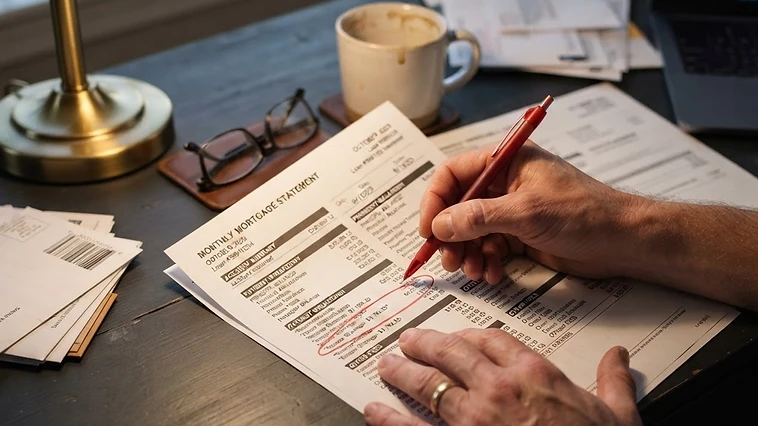 Homeowner reviewing mortgage documents for servicer errors and foreclosure defense evidence.

The Threat of "Zombie Foreclosures" and Abandoned Properties
Adding to the complexity of the current housing landscape is the rise of "zombie foreclosures." Recent reports indicate that zombie properties—homes left vacant by owners who fled after receiving a foreclosure notice, only to have the bank cancel the foreclosure without notifying them—have risen quarter over quarter in 38 states and the District of Columbia National Mortgage News.
This phenomenon traps homeowners in a legal and financial nightmare. Because the title remains in the homeowner's name, they are still legally responsible for property taxes, homeowner association (HOA) fees, and municipal code violations, even though they no longer live in the home and believed the bank had taken possession. This highlights a critical lesson for anyone facing foreclosure: never abandon your property simply because you received a notice of default. Staying in your home forces the bank to follow the strict legal procedures required to complete a foreclosure, giving you time to investigate their claims, demand proof of standing, and explore your defense options.
How Homeowners Can Spot Servicer Fraud and Errors
Defending against foreclosure requires a proactive approach to uncovering servicer errors. The most powerful tool at a homeowner's disposal is the Request for Information (RFI) and Notice of Error (NOE) under the Real Estate Settlement Procedures Act (RESPA). By sending a formally drafted RFI to your servicer, you legally compel them to provide a complete payment history, copies of the original promissory note, the deed of trust, and all assignments of the mortgage.
Once you receive these documents, you must conduct a forensic review. Look for unexplained fees, payments that were received but not credited, and discrepancies in the chain of title. Often, the assignments of the mortgage—the documents that transfer the right to foreclose from one bank to another—are fabricated, backdated, or signed by individuals who lack the authority to do so. If the foreclosing party cannot prove they own your loan, they may lack the legal standing to take your home. Documenting every phone call, saving every piece of mail, and meticulously organizing your evidence are non-negotiable steps in building a robust defense.
Building Your Defense: Evidence and Documentation
In the realm of foreclosure defense, evidence is everything. The courts operate on documentation, not emotion. To effectively challenge a foreclosure, you must build a comprehensive evidentiary file. This includes your original closing documents, every monthly statement, correspondence with the servicer, and proof of all payments made.
When you identify a violation—such as the servicer failing to offer loss mitigation options required by federal law or breaching the terms of a pandemic forbearance agreement—you must document it clearly. In many jurisdictions, homeowners can raise these servicing abuses as affirmative defenses or counterclaims in a judicial foreclosure proceeding. Even in non-judicial foreclosure states, documented evidence of servicer fraud can be used to file a lawsuit seeking an injunction to stop the foreclosure sale. The key is to transition from a passive participant in the foreclosure process to an active, educated defender of your property rights.
Why the Foreclosure Defense Survival Playbook Helps
Navigating the treacherous waters of mortgage servicing abuses, dual tracking, and complex legal procedures is overwhelming for any homeowner. The banks rely on this confusion to push foreclosures through the system unchallenged. This is exactly why the "Foreclosure Defense Survival Playbook" is an indispensable resource for anyone behind on their mortgage.
This comprehensive 530-page educational guide demystifies the foreclosure process, breaking down complex legal concepts into plain, actionable language. It teaches you how to dissect your mortgage documents, spot the exact servicing errors discussed in recent enforcement actions, and organize your evidence like a seasoned professional. Whether you are trying to negotiate a loan modification, demand a forensic accounting of your loan, or prepare for pro se litigation, the Playbook provides the knowledge you need to level the playing field. Don't let servicer abuses cost you your home. Order the Foreclosure Defense Survival Playbook today and take the first step toward fighting back and securing your financial future.


Order The Playbook
Get the Foreclosure Defense Survival Playbook
530 pages of structured, educational guidance covering mortgage documents, foreclosure procedures, evidence organization, and legal research — the same foundation this article draws from.