Foreclosure Defense
Mortgage Servicing Abuses: How Recent Enforcement Actions Impact Your Foreclosure Defense
Recent multi-million dollar settlements expose systemic mortgage servicing abuses. Learn how to identify these errors and use them to defend your home.
Disclaimer: The following article is for educational purposes only and does not constitute legal advice. If you are facing foreclosure, you should consult with a qualified attorney to understand your specific legal rights and options.
In recent weeks, the landscape of foreclosure defense has shifted dramatically. Major news outlets have reported a massive spike in foreclosure activity across the United States, with some markets experiencing a surge in distressed properties. For homeowners who are behind on payments or already facing the threat of losing their homes, the pressure can feel insurmountable. However, behind the scenes of this foreclosure wave, a different story is unfolding—one of systemic mortgage servicing abuses, regulatory crackdowns, and homeowners successfully fighting back.
Recent enforcement actions and multi-million dollar settlements have exposed the dark underbelly of the mortgage servicing industry. From failing to provide adequate information about forbearance plans to illegally charging late fees and violating dual-tracking laws, banks and servicers are making critical errors. For the educated homeowner, these errors are not just frustrations; they are powerful tools for foreclosure defense.
The Current Foreclosure Climate: A Perfect Storm for Homeowners
The economic aftershocks of recent years have created a perfect storm for homeowners. Inflation, rising interest rates, and economic instability have led to an increase in late mortgage payments. As homeowners struggle to keep up, mortgage servicers—the companies responsible for collecting your monthly payments and managing your loan account—are becoming overwhelmed.
When servicers are overwhelmed, they make mistakes. We are currently witnessing a resurgence of the same sloppy practices that defined the 2008 foreclosure crisis. While the blatant "robo-signing" of the past (where bank employees forged thousands of foreclosure documents a day without reading them) has evolved, modern servicing abuses are just as damaging. Today's abuses are often hidden in complex accounting errors, automated software glitches, and a blatant disregard for federal and state homeowner protection laws.
For a homeowner in default, understanding that the bank is not infallible is the first step in mounting a successful defense. The institution threatening to take your home must follow strict legal procedures. When they fail to do so, the law provides mechanisms for you to challenge their right to foreclose.
Recent Enforcement Actions Expose Widespread Servicing Abuses
If you believe your mortgage servicer has treated you unfairly, recent news proves you are not alone. State attorneys general and federal agencies like the Consumer Financial Protection Bureau (CFPB) have been actively pursuing enforcement actions against major financial institutions for violating homeowner rights.
A prime example is the recent $4.6 million settlement involving a major mortgage servicer over pandemic-era foreclosure violations. Investigations revealed that the company failed to give homeowners adequate information about forbearance plans. Worse, they sent mortgage statements to borrowers who were on approved forbearance plans, wrongly stating that late fees would be charged for missed payments.
Furthermore, the servicer failed to ensure that homeowners seeking foreclosure prevention alternatives received adequate support from a "single point of contact"—a strict requirement under laws like the California Homeowner Bill of Rights (HBOR) and federal mortgage servicing rules.
This settlement is a glaring reminder that servicers routinely violate the law. They misrepresent account balances, fail to honor modification agreements, and push homeowners toward foreclosure even when the homeowner is actively trying to save their property. These enforcement actions provide a roadmap for homeowners. The very abuses regulators are punishing are the exact same defenses you can raise in your own foreclosure case.
Recognizing the Most Common Mortgage Servicing Errors
To defend your home, you must first know what to look for. Mortgage servicing errors can be subtle, often buried in the fine print of your monthly statements or lost in the shuffle of customer service transfers. Here are the most common abuses homeowners are currently facing:
1. Dual Tracking
Dual tracking is one of the most egregious and illegal practices in the mortgage industry. It occurs when a mortgage servicer continues to move forward with the foreclosure process (such as filing a notice of default or scheduling a sheriff's sale) while simultaneously negotiating a loan modification or other loss mitigation option with the homeowner. Federal law under the Real Estate Settlement Procedures Act (RESPA), as well as various state laws, strictly prohibit dual tracking. If you are actively being reviewed for a modification, the foreclosure machine must be paused.
2. Misapplied Payments and Suspense Accounts
Have you ever sent a payment only to be told you are still in default? Servicers frequently misapply payments. Instead of crediting your payment toward your principal and interest, they may place your funds into a "suspense account." Once a partial payment is in a suspense account, the servicer may treat your loan as if no payment was made at all, triggering unwarranted late fees and pushing you closer to foreclosure.
3. Phantom Fees and Corporate Advances
When a loan goes into default, servicers often begin charging the account for "property preservation" or "corporate advances." These can include fees for drive-by property inspections, inflated landscaping costs, or legal fees. Often, these fees are unreasonable, unauthorized by the mortgage contract, or entirely fabricated. Over time, these phantom fees inflate the total amount required to reinstate the loan, making it impossible for the homeowner to catch up.
4. The "Single Point of Contact" Runaround
Federal rules require servicers to assign a single point of contact to assist delinquent borrowers. This person or team is supposed to help you navigate loss mitigation. Instead, homeowners frequently report calling their servicer only to speak to a different representative every time. Documents are "lost," applications are repeatedly marked "incomplete," and the homeowner is forced to start the process over and over again until the clock runs out and the home is sold.
How Servicer Abuses Can Become Powerful Foreclosure Defenses
Understanding that your servicer made a mistake is only half the battle; the other half is using that mistake to defend your home in court. Foreclosure is a legal process, and in a court of equity, the party bringing the lawsuit (the bank) must have "unclean hands." If the bank has violated federal or state laws, their right to foreclose can be challenged, delayed, or even dismissed.
When you raise an affirmative defense based on servicing abuses, you are essentially telling the judge: "The plaintiff does not have the right to take my home because they failed to comply with the legal prerequisites to foreclosure."
For example, if you can prove that the servicer engaged in dual tracking, you can file a motion to halt the foreclosure sale. If you can demonstrate that the servicer misapplied your payments or charged illegal fees, you can challenge the accuracy of the debt they claim you owe. In many jurisdictions, if the bank cannot provide an accurate accounting of the debt, they cannot obtain a judgment of foreclosure.
Furthermore, violations of RESPA or the Truth in Lending Act (TILA) can give rise to counterclaims. This means you can actually sue the lender for damages within the foreclosure action. The threat of a well-documented counterclaim is often enough to force a stubborn bank to the negotiating table to offer a favorable loan modification.
Gathering Evidence and Building Your Case
To successfully leverage these defenses, you need evidence. You cannot simply walk into a courtroom and tell the judge that the bank made a mistake; you must prove it with a meticulous paper trail.
 Homeowner organizing mortgage statements and financial evidence for a foreclosure defense case.

The most powerful tool at your disposal for gathering this evidence is a Request for Information (RFI) or a Notice of Error (NOE) sent under RESPA guidelines. By sending a properly formatted, certified letter to your servicer's designated address, you can legally force them to provide a complete payment history, copies of all loan documents, and a detailed breakdown of all fees assessed to your account. Under federal law, the servicer has a strict timeline (usually 30 days) to respond to these requests. If they fail to respond adequately, that failure itself becomes another violation and another layer of your defense.
Homeowners must become their own best advocates. This means keeping a detailed log of every phone call with the bank, including the date, time, name of the representative, and what was discussed. It means saving every piece of mail, every notice, and every mortgage statement. It means organizing your financial life so that when the time comes to present your case, your evidence is undeniable.
Why the Foreclosure Defense Survival Playbook Helps
Facing a foreclosure is terrifying, but ignorance is your greatest enemy. The banks rely on the fact that the average homeowner does not understand mortgage documents, court procedures, or their legal rights. They expect you to be intimidated by the legal jargon and to simply walk away.
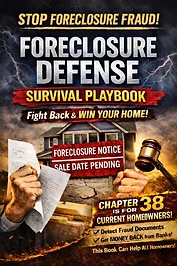
The Foreclosure Defense Survival Playbook is designed to level the playing field. This comprehensive, 530-page educational guide is the ultimate resource for homeowners who are behind on payments and ready to fight back.
Inside the Playbook, you will learn exactly how to decode complex mortgage documents and spot the servicing errors discussed in this article. It provides step-by-step guidance on how to organize your evidence, draft powerful RESPA Request for Information letters, and understand the mechanics of pro se litigation and court procedure. You will learn how to conduct legal research, challenge the bank's standing, and force the servicer to prove every single penny they claim you owe.
You do not have to be a victim of mortgage servicing abuses. By educating yourself, you can transform from a passive defendant into an empowered homeowner. If you are ready to understand your rights, hold your mortgage servicer accountable, and fight for your home, order the Foreclosure Defense Survival Playbook today and take the first step toward taking your power back.

Order The Playbook
Get the Foreclosure Defense Survival Playbook
530 pages of structured, educational guidance covering mortgage documents, foreclosure procedures, evidence organization, and legal research — the same foundation this article draws from.