Mortgage Servicing
Mortgage Servicing Abuses: Fighting Dual Tracking and Junk Fees in Foreclosure
Recent regulatory crackdowns highlight rampant mortgage servicing abuses, including illegal junk fees and dual tracking. Learn how to protect your home.

Disclaimer: This article is for educational purposes only and does not constitute legal advice. If you are facing foreclosure, consult with a qualified attorney in your jurisdiction.
If you are behind on your mortgage payments or actively fighting a foreclosure, you might feel like the bank holds all the cards. However, recent enforcement actions and court battles reveal a different reality: mortgage servicers frequently make massive, illegal errors. From charging unauthorized "junk fees" to engaging in prohibited "dual tracking," servicing abuses are rampant in the United States.
Understanding these abuses is the first step in defending your home. When you know what to look for in your mortgage statements and loss mitigation letters, you can hold your servicer accountable, challenge their standing, and potentially stop a wrongful foreclosure in its tracks.
The Rising Tide of Mortgage Servicing Abuses
Mortgage servicers are the companies that collect your monthly payments, manage your escrow account, and handle loss mitigation requests (like loan modifications). They are not usually the entity that owns your loan. Because they make money through fees and volume, servicers are heavily incentivized to cut corners.
Recent reports from federal watchdogs highlight a disturbing trend: servicers are routinely violating federal laws designed to protect homeowners. These violations are not just minor clerical errors; they are systemic practices that strip equity from distressed homeowners and push families into unnecessary foreclosures. For homeowners defending themselves in court, these servicing errors can become powerful evidence. If a servicer cannot prove the accuracy of the debt they claim you owe, or if they have violated federal servicing rules, their foreclosure case can be severely undermined.
CFPB Crackdown: Junk Fees and Deceptive Notices
The Consumer Financial Protection Bureau (CFPB) has recently intensified its focus on mortgage servicers charging illegal "junk fees." In recent supervisory highlights and enforcement actions, the CFPB uncovered widespread practices where servicers charged homeowners for unnecessary or prohibited services.
One of the most common abuses involves property inspection fees. When a homeowner falls behind on payments, the servicer will often send someone to drive by the house to ensure it is still occupied and maintained. While some investor guidelines allow for these inspections, the CFPB found that servicers were repeatedly charging homeowners for inspections that were explicitly prohibited by those very guidelines. These fees, often $15 to $20 a pop, are added to the homeowner's balance month after month, artificially inflating the amount needed to cure the default.
Furthermore, the CFPB discovered that servicers were sending deceptive loss mitigation notices. In some cases, homeowners received letters stating they had been approved for a repayment plan or loan modification when, in reality, no final decision had been made. This deceptive practice lulls homeowners into a false sense of security, causing them to miss critical deadlines to appeal or submit additional documentation, ultimately accelerating the foreclosure process.
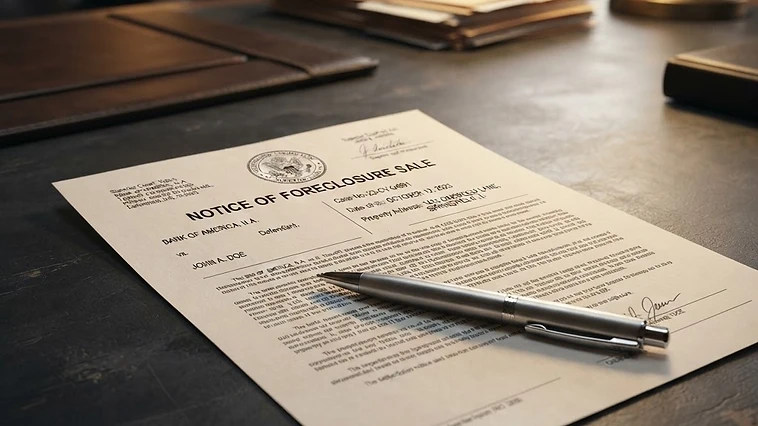 Close-up of a foreclosure notice and mortgage documents on a dark desk

The Dangers of "Dual Tracking" in Foreclosure
Perhaps the most dangerous servicing abuse is "dual tracking." Dual tracking occurs when a mortgage servicer simultaneously moves forward with foreclosure proceedings while the homeowner is actively being evaluated for a loan modification or other loss mitigation option.
Federal law, specifically the Real Estate Settlement Procedures Act (RESPA) and its implementing Regulation X, strictly prohibits dual tracking. Under 12 C.F.R. § 1024.41, if a homeowner submits a complete loss mitigation application more than 37 days before a foreclosure sale, the servicer must halt the foreclosure process until the application is fully evaluated, the homeowner rejects the offer, or the homeowner fails to perform under a trial modification.
Despite these clear rules, dual tracking remains a massive problem. Recent petitions to the U.S. Supreme Court have highlighted cases where homeowners were deprived of their right to present evidence of fraud and dual tracking, leading to the wrongful foreclosure of long-held family homes. Servicers often blame "computer glitches" or a lack of communication between their loss mitigation department and their foreclosure attorneys. But for the homeowner, the result is the same: the terrifying prospect of losing their home while they are playing by the rules and trying to negotiate a solution. Documenting every interaction, saving every letter, and sending all correspondence via certified mail are critical steps in proving a dual tracking violation.
New Bankruptcy Protections for Homeowners
In response to ongoing servicing abuses, the legal system is slowly adapting to offer homeowners more protection. For example, major changes to Federal Rule of Bankruptcy Procedure 3002.1 are set to take effect, providing significant new rights for homeowners trying to save their homes through Chapter 13 bankruptcy.
Historically, servicers would often assess hidden fees—like late charges, inspection fees, or attorney's fees—during a bankruptcy case without notifying the homeowner. When the homeowner finally completed their 3-to-5-year bankruptcy plan, thinking they were caught up, the servicer would suddenly demand thousands of dollars in undisclosed fees, threatening foreclosure all over again.
The updated Rule 3002.1 strictly requires mortgage creditors to disclose any changes in monthly payments and any fees or expenses incurred during the bankruptcy case. Furthermore, the new changes broaden the rule's coverage to include reverse mortgages and home equity investment (HEI) loans. These transparency rules are a direct response to the predatory accounting practices of mortgage servicers and provide a vital shield for homeowners fighting to keep their properties.
How to Spot Servicer Errors in Your Mortgage Documents
To fight back against servicing abuses, you must become an auditor of your own mortgage file. You cannot simply take the bank's word for what you owe. Here are key areas to scrutinize:
- The Payment History: Request a complete, life-of-loan payment history from your servicer. Look for unexplained fees, corporate advances, or property inspection charges. Check how your payments were applied—servicers often illegally apply payments to late fees first, rather than principal and interest, triggering a cascade of artificial defaults.
- Notices of Error and Requests for Information: Under RESPA, you have the right to send a formal "Notice of Error" (NOE) or "Request for Information" (RFI) to your servicer. They are legally required to acknowledge receipt and conduct an investigation. Failure to properly respond to an NOE or RFI is a federal violation that can be raised in your defense.
- Loss Mitigation Timelines: Keep a meticulous log of when you submitted your loan modification application and when the servicer acknowledged it. Compare these dates against any foreclosure notices filed in court. If a foreclosure motion was filed while your application was pending, you may have a strong dual tracking defense.
Why the Foreclosure Defense Survival Playbook Helps
Facing a foreclosure is terrifying, especially when the company managing your loan is actively breaking the rules. The banks rely on homeowners feeling overwhelmed, confused, and powerless. They expect you to give up. But you don't have to.
The Foreclosure Defense Survival Playbook is a comprehensive, 530-page educational resource designed specifically for homeowners who are behind on payments or already in foreclosure. This book demystifies the complex world of mortgage documents, foreclosure procedures, and legal research.
Inside the Playbook, you will learn exactly how to audit your payment history to uncover illegal junk fees, how to draft and send RESPA Requests for Information to force your servicer to show their hand, and how to organize your evidence to expose dual tracking and servicing fraud. It breaks down complex court procedures into plain, understandable language, empowering you to stand up to the banks and demand accountability.
Don't let a mortgage servicer steal your home through illegal fees and deceptive practices. Equip yourself with the knowledge you need to fight back. Order the Foreclosure Defense Survival Playbook today and take the first step toward saving your home.


Order The Playbook
Get the Foreclosure Defense Survival Playbook
530 pages of structured, educational guidance covering mortgage documents, foreclosure procedures, evidence organization, and legal research — the same foundation this article draws from.