Foreclosure Defense
Recent Mortgage Servicing Abuses: How to Spot Junk Fees, Dual Tracking, and Foreclosure Errors
Recent federal reports and court rulings highlight a surge in mortgage servicing abuses, including illegal junk fees and dual tracking. Learn how to spot these errors and defend your home.
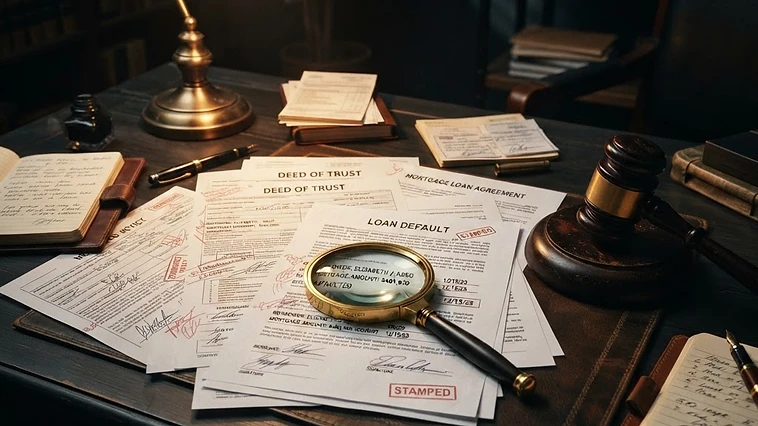
Disclaimer: The following article is for educational purposes only and does not constitute legal advice. If you are facing foreclosure, you should consult with a qualified attorney in your jurisdiction.
For homeowners struggling to keep up with their monthly mortgage payments, the threat of foreclosure is a terrifying reality. However, recent federal investigations and appellate court rulings have revealed a disturbing trend: mortgage servicers are frequently making egregious errors, assessing illegal junk fees, and violating federal laws designed to protect homeowners. Understanding these recent developments is critical for anyone facing foreclosure, as these servicing abuses can often form the basis of a strong foreclosure defense.
In this comprehensive guide, we will explore the latest findings from the Consumer Financial Protection Bureau (CFPB), recent court rulings regarding rejected payments and procedural errors, and how you can audit your own mortgage documents to uncover potential fraud or servicing abuses.
The Rise of Mortgage Servicing Errors and Junk Fees
When you fall behind on your mortgage, your loan servicer is supposed to work with you to explore loss mitigation options. Unfortunately, recent reports indicate that many servicers are using a homeowner's financial distress as an opportunity to pad their own pockets. According to the CFPB's recent Supervisory Highlights, federal examiners have uncovered widespread unfair, deceptive, and abusive acts or practices (UDAAP) within the mortgage servicing industry.
One of the most prevalent abuses involves the assessment of "junk fees." Examiners found that mortgage servicers have been illegally charging homeowners for unnecessary property inspections. In many cases, these inspections were explicitly prohibited by investor guidelines (such as those set by Fannie Mae), yet servicers billed the homeowners anyway.
Additionally, servicers have been caught assessing improper late fees. In some instances, these fees exceeded the maximum amount allowed by the original promissory note or state law. In other cases, servicers continued to charge late fees even after a homeowner had entered into a loss mitigation agreement, a direct violation of the Real Estate Settlement Procedures Act (RESPA). For a homeowner in foreclosure, these illegal fees artificially inflate the reinstatement amount, making it nearly impossible to catch up on the loan and save the home.
Dual Tracking: When the Bank Negotiates and Forecloses Simultaneously
One of the most dangerous practices in the mortgage industry is "dual tracking." Dual tracking occurs when a mortgage servicer continues to push forward with foreclosure proceedings—such as scheduling a sheriff's sale or filing a foreclosure complaint—while simultaneously negotiating a loan modification or other loss mitigation option with the homeowner.
Federal law, specifically RESPA Section 1024.41, strictly prohibits dual tracking. If a homeowner submits a complete loss mitigation application more than 37 days before a foreclosure sale, the servicer must halt the foreclosure process until the application is fully evaluated.
Despite these clear federal regulations, dual tracking remains a massive problem. Recent court filings, such as the Supreme Court petition in Reese v. Select Portfolio Servicing, highlight how homeowners are still fighting against servicers who violate the Homeowner Bill of Rights and RESPA dual-tracking prohibitions. When a servicer violates Section 1024.41, that violation can often be raised as an affirmative defense in a judicial foreclosure proceeding, or used as grounds to seek an injunction to stop a non-judicial foreclosure sale. Documenting every interaction, saving every letter, and sending applications via certified mail are crucial steps in proving a dual tracking violation.
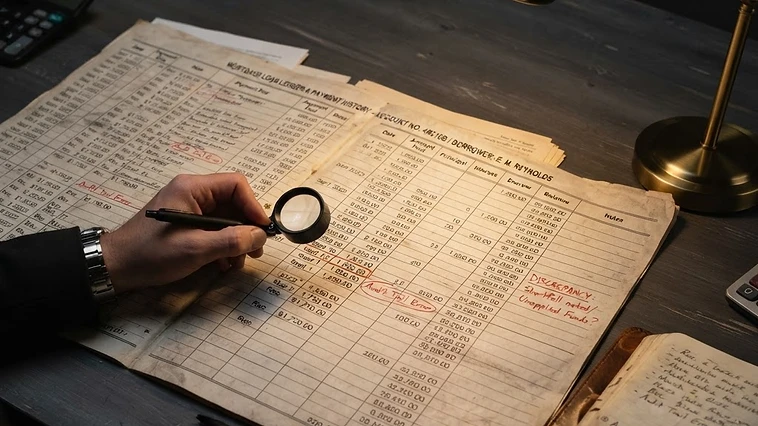 Close-up of a mortgage payment history ledger under a warm gold desk lamp, illustrating the search for servicing errors and junk fees.

Rejected Payments and Phantom Defaults
Another alarming trend involves servicers manufacturing defaults by refusing to accept valid payments from homeowners. A recent case out of the Seventh Circuit Court of Appeals, Freeman v. Ocwen Loan Servicing, LLC, perfectly illustrates this nightmare scenario.
In that case, a homeowner fell behind on her mortgage, filed for bankruptcy, and successfully cured her pre-petition mortgage default through her Chapter 13 bankruptcy plan. She made all required payments. However, her mortgage servicer inaccurately reported her loan as delinquent in their internal systems. Because the computer system showed a default, the servicer began rejecting her monthly mortgage payments. This manufactured "phantom default" led the bank to file a second, entirely unjustified foreclosure action against her.
This type of servicing abuse is incredibly common. Servicers often use automated software platforms that are prone to data entry errors, especially when a loan is transferred from one servicer to another (a process known as an assignment). If the new servicer fails to properly onboard the payment history, they may reject payments, misapply funds to unearned corporate advances instead of principal and interest, and wrongfully initiate foreclosure. Homeowners must meticulously track their payment histories, bank statements, and canceled checks to prove that payments were made or wrongfully rejected.
Statute of Limitations and Procedural Defenses
Foreclosure defense is not just about proving that the bank made a math error; it is also about holding the bank to the strict procedural rules of the court. Recent rulings have shown that when banks fail to follow the rules, they can lose their right to foreclose entirely.
For example, in the recent New York appellate case U.S. Bank N.A. v. Pursoo, the court denied the bank's attempt to foreclose due to significant issues surrounding the service of legal documents and the strict timelines involved in foreclosure actions. If a bank fails to properly serve a homeowner with a summons and complaint, the court lacks personal jurisdiction, and any resulting default judgment is void.
Furthermore, the statute of limitations is becoming a powerful weapon for homeowners. In states like New York, the Foreclosure Abuse Prevention Act (FAPA) has severely limited a bank's ability to manipulate the statute of limitations. Once a bank accelerates a loan (demands the full balance due immediately), the clock starts ticking. If the bank voluntarily dismisses the case, they can no longer easily "de-accelerate" the loan to reset the clock. If the statute of limitations expires, the bank is permanently barred from foreclosing, and the homeowner may even be able to file a quiet title action to have the mortgage stripped from the property entirely.
How to Audit Your Mortgage Documents and Spot Fraud
To successfully defend against foreclosure, you must learn to think like a forensic auditor. The bank's lawyers will present the court with a neat, tidy narrative claiming you simply failed to pay. It is your job to dig into the evidence and uncover the servicing abuses, junk fees, and procedural errors that tell the real story.
First, you must demand a complete payment history from your servicer. Under RESPA, you have the right to send a Notice of Error (NOE) or a Request for Information (RFI) to your servicer. They are legally required to respond and provide you with the requested documents, including a detailed ledger of every payment made, every fee assessed, and every corporate advance charged to your account.
When you receive the payment history, look for the following red flags:
- Unexplained Corporate Advances: Are there charges for property inspections, BPOs (Broker Price Opinions), or legal fees that you do not recognize?
- Misapplied Payments: Did the servicer take your monthly payment and apply it to late fees or escrow shortages instead of principal and interest, thereby triggering a false default?
- Suspense Account Abuse: Did the servicer place your partial payments into an unapplied "suspense" account and refuse to credit your loan, while simultaneously charging you late fees?
- Robo-Signing: Look at the assignments of mortgage and affidavits submitted by the bank. Are they signed by known robo-signers? Were they notarized years after the trust closing date?
By meticulously organizing your evidence and understanding the rules of discovery, you can force the bank to prove every single charge. Often, when faced with a homeowner who knows how to demand the underlying evidence, the bank's case begins to crumble.
Why the Foreclosure Defense Survival Playbook Helps
Facing a massive financial institution in court can feel like an impossible battle, especially when they are armed with high-priced attorneys and complex legal maneuvers. But you do not have to fight this battle blind.
The Foreclosure Defense Survival Playbook is a comprehensive, 530-page educational resource designed specifically for homeowners who are behind on payments or already in foreclosure. This Playbook demystifies the complex world of mortgage documents, foreclosure procedures, and legal research. It teaches you exactly how to audit your payment history to spot the illegal junk fees and phantom defaults discussed in this article.
Inside the Playbook, you will learn how to organize your evidence, draft effective Requests for Information under RESPA to uncover dual tracking, and understand the procedural rules that can stop a bank dead in its tracks. It empowers you with the knowledge to hold your mortgage servicer accountable and fight for your home. Do not let the bank steal your property through fraud and servicing abuses. Order the Foreclosure Defense Survival Playbook today and take the first step toward leveling the playing field and saving your home.


Order The Playbook
Get the Foreclosure Defense Survival Playbook
530 pages of structured, educational guidance covering mortgage documents, foreclosure procedures, evidence organization, and legal research — the same foundation this article draws from.