Foreclosure Defense
Recent Court Rulings Expose Mortgage Servicing Abuses: How Homeowners Are Fighting Back
Recent federal and state court rulings highlight widespread mortgage servicing abuses, offering homeowners new legal precedents to defend against foreclosure.

Disclaimer: The following article is for educational purposes only and does not constitute legal advice. If you are facing foreclosure, consult with a qualified attorney in your jurisdiction.\n\nWhen you fall behind on your mortgage payments, the sheer volume of letters, notices, and legal threats from your mortgage servicer can feel overwhelming. Many homeowners assume that the bank holds all the cards and that foreclosure is an inevitable outcome. However, recent court rulings across the United States are proving otherwise. From federal judges enforcing the Real Estate Settlement Procedures Act (RESPA) to state appellate courts striking down stale foreclosures under new abuse prevention laws, the legal landscape is shifting. Homeowners who understand their rights, scrutinize their mortgage documents, and hold their servicers accountable are successfully fighting back against servicing abuses, robo-signing, and wrongful foreclosure practices.\n\nIn this comprehensive guide, we will explore the most recent legal developments regarding mortgage servicing abuses and homeowner rights. By understanding how courts are interpreting federal consumer protection laws and state-specific foreclosure statutes, you can better organize your evidence, challenge fraudulent practices, and mount a robust foreclosure defense.\n\n## The Power of Qualified Written Requests Under RESPA\n\nOne of the most potent tools available to homeowners facing mortgage servicing abuses is the Real Estate Settlement Procedures Act (RESPA). Specifically, 12 U.S.C. Section 2605 outlines the rules for the servicing of mortgage loans and the administration of escrow accounts. A critical component of this law is the Qualified Written Request (QWR). A QWR is a formal written correspondence sent by the borrower to the servicer that requests information about the account or asserts that an error has been made.\n\nRecently, a federal judge in New York issued a significant decision in a lawsuit involving borrowers' allegations that their mortgage servicer inadequately responded to a QWR and imposed duplicative, unauthorized charges. The borrowers brought claims under RESPA and other federal consumer protection laws. The servicer attempted to dismiss the claims, arguing that the borrowers' requests did not meet the strict statutory requirements of a QWR. However, the court's ruling underscored that when a borrower provides sufficient information to identify the account and clearly states the reasons for their belief that the account is in error, the servicer has a strict legal obligation to investigate, correct errors, and respond within specific statutory timeframes.\n\nThis ruling is a crucial reminder for homeowners: you have the right to demand an accounting of your loan. If you suspect that your servicer has misapplied payments, charged illegal fees, or engaged in dual tracking (moving forward with foreclosure while simultaneously reviewing a loan modification application), sending a properly drafted QWR can force the servicer to show their hand. If they fail to comply, their RESPA violations can become a powerful defense in a foreclosure action, potentially leading to statutory damages and the derailment of the foreclosure process.\n\n## Defeating Stale Claims: The Foreclosure Abuse Prevention Act (FAPA)\n\nAnother major victory for homeowners recently occurred in New York, highlighting the importance of the statute of limitations in foreclosure defense. On March 11, 2026, the New York Appellate Division, Second Department, threw out mortgage foreclosure actions brought by two of the largest entities in the industry: Fannie Mae and U.S. Bank. The court ruled that the lenders had waited too long to file their foreclosure actions, rendering their claims stale and legally unenforceable.\n\nThis monumental decision was anchored in the Foreclosure Abuse Prevention Act (FAPA), a state law enacted in late 2022 designed to stop lenders from manipulating the statute of limitations. Before FAPA, lenders would frequently accelerate a loan (demanding the full balance due), let the six-year statute of limitations nearly expire, and then unilaterally "de-accelerate" the loan to reset the clock. This abusive practice kept homeowners in a perpetual state of legal limbo, facing the threat of foreclosure for decades.\n\nFAPA explicitly blocks this loophole, and the recent appellate rulings confirm that courts will strictly enforce it. The court rejected the lenders' attempts to bypass the law, ruling that once the statute of limitations expires, the right to foreclose is permanently extinguished. For homeowners, this emphasizes a critical defense strategy: always audit the timeline of your foreclosure. If your loan was accelerated years ago and the lender failed to prosecute the case within the statutory timeframe, you may have a complete defense to the foreclosure action. Understanding the procedural history of your case and the specific statute of limitations in your state is paramount.\n\n## Pre-Foreclosure Contact Requirements and Dual Tracking\n\nBefore a lender can legally initiate a foreclosure, they must comply with strict pre-foreclosure requirements mandated by both state and federal law. A recent tentative ruling from the Fresno Superior Court in California (Department 503) highlights how homeowners can use these requirements to halt illegal foreclosure activity. In this case, the homeowner alleged that the defendants violated California Civil Code Section 2923.55.\n\nUnder this statute, a mortgage servicer, mortgagee, or trustee cannot legally record a Notice of Default (the first formal step in a non-judicial foreclosure) until they have contacted the borrower in person or by telephone to assess their financial situation and explore options to avoid foreclosure. The law requires this contact to occur more than 30 days before the Notice of Default is recorded. If the servicer fails to make this contact, or fails to exercise due diligence in attempting to reach the borrower, the foreclosure is procedurally defective.\n\nFurthermore, federal regulations enforced by the Consumer Financial Protection Bureau (CFPB) strictly prohibit "dual tracking." Under 12 C.F.R. Section 1024.41, a servicer cannot initiate or advance the foreclosure process if the borrower has submitted a complete loss mitigation application. Recent petitions to the Supreme Court have highlighted cases where homeowners alleged severe fraud and dual tracking by servicers who rushed foreclosure proceedings while the homeowner was actively seeking alternatives. Documenting every interaction with your servicer is essential to proving that they violated these pre-foreclosure contact and dual tracking laws.\n\n## Debt Collection Violations by Mortgage Servicers\n\nMortgage servicers are often subject to the Fair Debt Collection Practices Act (FDCPA), a federal law that prohibits debt collectors from using abusive, unfair, or deceptive practices. A recent ruling by the Fourth Circuit Court of Appeals in Palazzo v. Bayview Loan Servicing examined the intersection of mortgage servicing, bankruptcy, and debt collection laws.\n\nIn this case, a homeowner in Chapter 13 bankruptcy proceedings received various documents from his mortgage servicer concerning his mortgage obligation. The homeowner alleged that these communications violated the FDCPA. The court had to determine whether the servicer's letters, which included purported disclaimers, constituted unlawful efforts to collect a debt. The ruling reinforced that courts will look past boilerplate disclaimers to determine the true nature of the communication. If a servicer uses deceptive language, misrepresents the amount owed, or harasses a homeowner, they can be held liable under the FDCPA.\n\nFor homeowners defending against foreclosure, FDCPA violations can serve as both a shield and a sword. By filing counterclaims against the servicer for illegal debt collection practices, homeowners can gain significant leverage in settlement negotiations or loan modification reviews. It requires a meticulous review of every letter, statement, and notice sent by the servicer to identify false representations or illegal threats.\n\n## How to Organize Your Evidence Against Servicing Abuses\n\nTo successfully leverage these legal precedents, you must treat your foreclosure defense like a forensic investigation. The bank relies on the assumption that you will not read the fine print, that you will not keep records, and that you will not challenge their authority. Proving servicing abuses, RESPA violations, or statute of limitations expirations requires impeccable organization and a deep understanding of the discovery process.\n\n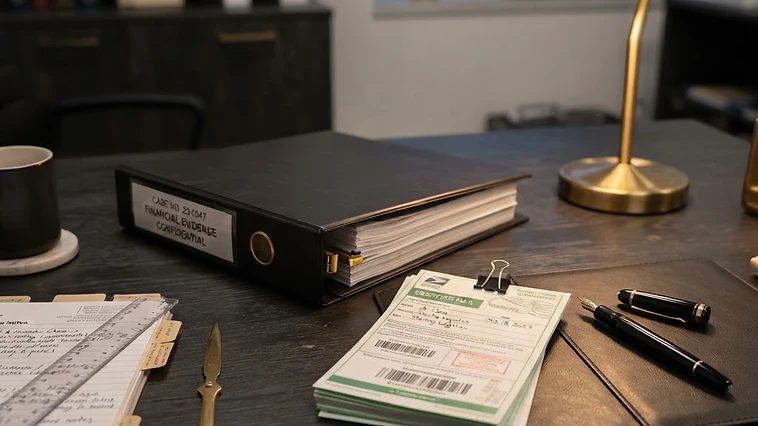 Organized binder of mortgage evidence and certified mail receipts on a dark desk\n\nStart by creating a comprehensive communication log. Record the date, time, and name of every representative you speak with at the servicing company. Never send original documents to your servicer; always send copies via certified mail with a return receipt requested. This creates an undeniable paper trail proving that the servicer received your Qualified Written Requests, loss mitigation applications, and dispute letters.\n\nNext, audit your mortgage documents. Request a complete payment history and compare it against your own bank statements. Look for unexplained fees, corporate advances, or property inspection charges that were applied to your account without justification. If your mortgage has been transferred multiple times, scrutinize the assignments of the deed of trust. Robo-signing—the practice of mass-producing forged or fraudulently executed mortgage assignments—remains a prevalent issue. If the entity trying to foreclose on you cannot prove they legally own the note and mortgage, they lack the legal standing to take your home.\n\n## Why the Foreclosure Defense Survival Playbook Helps\n\nNavigating the complex web of federal regulations, state statutes, and recent court rulings can be incredibly daunting for a homeowner facing the loss of their property. The legal system is adversarial, and mortgage servicers employ armies of attorneys to push foreclosures through the courts as quickly as possible. You cannot rely on the bank to tell you your rights, and you cannot expect the judge to investigate the servicer's abuses on your behalf. You must become your own best advocate.\n\nThis is exactly why the "Foreclosure Defense Survival Playbook" is an indispensable resource for any homeowner behind on payments or actively fighting foreclosure. This comprehensive, 530-page educational manual breaks down complex legal concepts into plain, actionable language. It teaches you how to dissect your mortgage documents, identify fatal flaws in the bank's chain of title, and spot the exact servicing abuses that recent court rulings have condemned.\n\nThe Playbook provides step-by-step guidance on how to draft effective Qualified Written Requests under RESPA, how to organize your evidence for court, and how to understand the rules of civil procedure and discovery. Whether you are looking to hold your servicer accountable for dual tracking, challenge a stale foreclosure under laws like FAPA, or simply buy enough time to secure a loan modification, this book gives you the knowledge you need to level the playing field. Don't face the banks unarmed. Order the Foreclosure Defense Survival Playbook today and take the first step toward saving your home.



Order The Playbook
Get the Foreclosure Defense Survival Playbook
530 pages of structured, educational guidance covering mortgage documents, foreclosure procedures, evidence organization, and legal research — the same foundation this article draws from.