Mortgage Servicing
Recent CFPB Crackdowns and Court Rulings Expose Mortgage Servicer Abuses: What Homeowners Need to Know
Recent federal crackdowns and court rulings have exposed widespread mortgage servicing abuses, including illegal junk fees and deceptive foreclosure notices.
Disclaimer: The following article is for educational purposes only and does not constitute legal advice. If you are facing foreclosure, consult with a qualified attorney in your jurisdiction.
For homeowners struggling to make monthly mortgage payments, the threat of foreclosure is a terrifying reality. Unfortunately, the stress of financial hardship is often compounded by the very companies tasked with managing these loans. Recent federal enforcement actions, supervisory reports, and appellate court rulings have shined a glaring spotlight on widespread abuses within the mortgage servicing industry. From illegal "junk fees" to deceptive loss mitigation notices and sloppy legal procedures, mortgage servicers are increasingly being held accountable for practices that push vulnerable homeowners closer to losing their homes.
If you are behind on your mortgage or actively fighting a foreclosure, understanding these recent developments is critical. Knowledge is your first line of defense. By learning how federal regulators and courts are cracking down on servicer misconduct, you can better identify errors in your own loan file, challenge improper fees, and demand the fair treatment you are entitled to under the law.
The CFPB's Crackdown on Mortgage Servicer "Junk Fees"
The Consumer Financial Protection Bureau (CFPB) has recently intensified its focus on the residential mortgage servicing market, specifically targeting illegal and unnecessary charges known as "junk fees." According to the Federal Register :: Supervisory Highlights, Issue 33, Spring 2024, federal examiners uncovered numerous instances where mortgage servicers assessed improper fees that directly harmed consumers.
One of the most egregious practices identified was the charging of prohibited property inspection fees. In many cases, servicers ordered and charged homeowners for property inspections that were explicitly prohibited by investor guidelines. When a homeowner is already struggling to catch up on arrears, adding hundreds of dollars in illegal inspection fees to their account balance only accelerates the path to foreclosure.
Additionally, examiners found that servicers were charging improper late fees that exceeded the maximum amounts allowed by the homeowners' loan agreements or state laws. These junk fees inflate the total amount required to reinstate the loan, making it artificially difficult for homeowners to cure their default. For homeowners defending against foreclosure, auditing the payment history for these types of illegal fees is a crucial step in challenging the bank's claimed amount due.
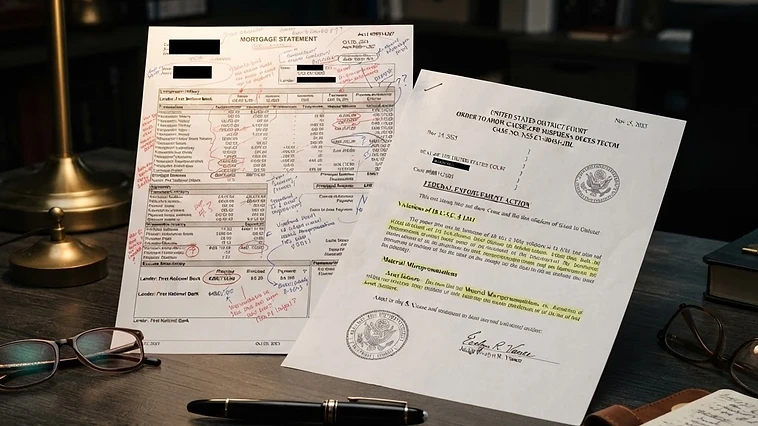
 Magnifying glass inspecting mortgage loss mitigation documents and foreclosure notices

Deceptive Loss Mitigation Notices and Foreclosure Abuse
Beyond junk fees, federal regulators have also exposed severe violations regarding how servicers handle loss mitigation—the process where homeowners apply for loan modifications, forbearance, or other alternatives to foreclosure.
The CFPB's supervisory examinations revealed that some servicers engaged in unfair, deceptive, and abusive acts or practices (UDAAP) by sending highly misleading notices to homeowners. In some instances, servicers sent notices to homeowners in default stating that they had been approved for a repayment option when, in reality, no final decision had been made. This deceptive practice lulls homeowners into a false sense of security, causing them to stop pursuing other foreclosure defense strategies under the mistaken belief that their home is safe.
Enforcement actions have also targeted servicers who completely ignore homeowner requests for help. As highlighted in the CFS 2024 YIR: Mortgage Origination and Servicing | Goodwin report, the CFPB recently entered into consent orders with loan servicing companies, including Sutherland Global Services and NOVAD Management Consulting, for systematically failing to respond to thousands of homeowner requests. These requests included pleas for loan payoff statements, short sales, and deeds-in-lieu of foreclosure. The CFPB also accused these companies of falsely telling homeowners they were in default and ignoring their attempts to contest the inaccurate information.
When servicers fail to process loss mitigation applications properly or ignore requests for payoff statements, they violate the Real Estate Settlement Procedures Act (RESPA). Homeowners can use these RESPA violations as powerful leverage in foreclosure defense litigation.
Courts Reject Sloppy Service of Process by Foreclosure Mills
It is not just federal regulators who are pushing back against mortgage industry abuses; state appellate courts are also holding foreclosing plaintiffs to strict legal standards. A recent ruling out of New York demonstrates that courts will not tolerate sloppy legal work by foreclosure mills.
In the case detailed in Court rules on mortgage foreclosure case involving service issues | LAWS.com News, the Appellate Division of the Supreme Court of the State of New York ruled against a foreclosing plaintiff (ARCPE 1, LLC) regarding the service of process. The plaintiff claimed to have served the homeowner with the foreclosure summons and complaint, but the homeowner proved she was out of the country at the time.
When the plaintiff asked the court for an extension of time to serve the documents properly, the appellate court denied the request. The judges ruled that the plaintiff exhibited a "lack of diligence" and failed to demonstrate reasonable efforts to serve the defendant. This ruling is a vital reminder for homeowners: you have the right to demand that the bank strictly follow all procedural rules. If a foreclosure mill cuts corners on service of process, standing, or evidence authentication, you can and should challenge them in court. Failing to properly serve a lawsuit can result in the entire foreclosure case being dismissed.
New Proposed Rules to Streamline Homeowner Assistance
Recognizing the systemic failures in the current loss mitigation process, the CFPB is actively working to change the rules. According to the CFPB Proposes Rules to Help Homeowners Avoid Foreclosure, the Bureau has proposed new regulations designed to make it easier for struggling homeowners to get help.
Under the current rules, servicers are generally prohibited from evaluating a borrower for assistance until they receive a "complete application"—a massive stack of financial documents, tax returns, and bank statements. If even one signature is missing, the servicer can halt the review process, leading to endless delays and "document churn" while the foreclosure clock keeps ticking.
The CFPB's new proposal would force mortgage servicers to focus on helping borrowers rather than rushing to foreclose. The proposed changes would reduce these rigid paperwork requirements, giving servicers the flexibility to review borrowers for assistance options individually and quickly. This means a servicer could potentially offer a loan modification or payment pause without forcing the homeowner to jump through impossible bureaucratic hoops first. While these rules are still in the proposal stage, they signal a strong federal mandate that servicers must prioritize foreclosure prevention over aggressive debt collection.
How to Spot Servicing Abuses in Your Own Mortgage Statements
Reading about federal enforcement actions is one thing, but applying this knowledge to your own situation is what truly matters. If you are facing foreclosure, you must become an auditor of your own mortgage file. Here are a few ways to spot the abuses regulators are currently targeting:
- Scrutinize the Corporate Advances: Look closely at the "fees and charges" section of your monthly mortgage statement. Do you see recurring charges for "property preservation," "BPO" (Broker Price Opinion), or "inspection fees"? If you are living in the home and maintaining it, these fees may be illegal junk fees.
- Demand a Detailed Payment History: You have the right under RESPA to send a Notice of Error (NOE) or Request for Information (RFI) to your servicer. Demand a complete, life-of-loan payment history. Check to see if your payments were placed into a "suspense account" instead of being applied to your principal and interest.
- Keep Every Letter: If your servicer sends you a letter stating you are approved for a trial modification, keep it safe. If they later try to foreclose, claiming you were never approved, that letter is your primary evidence of their deceptive practices.
- Check the Court Docket: If you are in a judicial foreclosure state, monitor your court docket. Did the bank file an affidavit claiming they served you with lawsuit papers on a day you were at work or out of town? Challenge their proof of service immediately.
Why the Foreclosure Defense Survival Playbook Helps
Navigating the treacherous waters of mortgage servicing abuses, junk fees, and foreclosure litigation is incredibly overwhelming. The banks have teams of lawyers and automated systems designed to steamroll unrepresented homeowners. To fight back effectively, you need to understand their playbook—and you need a playbook of your own.
This is exactly why the Foreclosure Defense Survival Playbook is an indispensable resource for any homeowner fighting to save their property. This comprehensive, 530-page educational guide breaks down the complex world of mortgage documents, securitization, and court procedure into plain, understandable language.
The Playbook teaches you how to organize your evidence, draft powerful discovery requests to uncover illegal junk fees, and research the legal precedents that hold sloppy foreclosure mills accountable. It empowers you to spot the exact RESPA violations and deceptive loss mitigation tactics that federal regulators are currently cracking down on. You don't have to face the banks blindly. Equip yourself with the knowledge to demand transparency, challenge fraudulent documents, and defend your rights in court. Order your copy of the Foreclosure Defense Survival Playbook today and take the first step toward leveling the playing field.


Order The Playbook
Get the Foreclosure Defense Survival Playbook
530 pages of structured, educational guidance covering mortgage documents, foreclosure procedures, evidence organization, and legal research — the same foundation this article draws from.