Foreclosure Defense
September 2026 Enforcement Actions Expose Surge in Mortgage Modification Scams and Servicing Abuses: What Homeowners Must Know
A wave of recent federal indictments highlights the return of multi-million-dollar mortgage modification scams and institutional loan fraud, making homeowner vigilance more critical than ever.

If you are a homeowner who has fallen behind on your mortgage payments or is already facing foreclosure, the barrage of paperwork, phone calls, and legal threats can feel entirely overwhelming. Desperation often sets in, making struggling homeowners prime targets for predatory schemes and aggressive servicing practices.
Recent events in late September 2026 have proven that mortgage fraud, loan modification scams, and servicing abuses are not just relics of the 2008 financial crisis—they are happening right now. In just the past few weeks, the U.S. Department of Justice (DOJ) and the Consumer Financial Protection Bureau (CFPB) have taken major actions against sophisticated multi-state mortgage fraud rings and multi-million-dollar modification scams that directly led to families losing their homes.
Disclaimer: The information provided in this article is for educational purposes only and does not constitute legal advice. If you are facing foreclosure, you should consult with a qualified attorney or legal professional in your jurisdiction.
Understanding the mechanics of these recent enforcement actions is critical. By learning how these modern frauds operate, you can protect your property, identify servicing errors, and build a stronger defense against foreclosure.
The Resurgence of the Mortgage Modification Scam
When a homeowner misses a few payments, their phone often starts ringing with unsolicited offers for "guaranteed" loan modifications. In September 2026, the U.S. Attorney's Office for the Southern District of New York unsealed an indictment against the operators of a staggering $15 million mortgage modification scheme that preyed precisely on this vulnerability.
According to the indictment, the operators targeted homeowners who were financially struggling and behind on their mortgages. The scam was brutally effective in its simplicity: the operators falsely promised clients that they could negotiate heavily reduced mortgage balances and forgive arrearages. However, the most damaging aspect of the scheme was the instruction given to the homeowners. The scammers explicitly directed clients to stop making their monthly mortgage payments to their legitimate lenders and to pay the scam company monthly "fees" instead.
Homeowners were led to believe that these fees were being held in a trust or being used to pay down their principal balance. In reality, the money was pocketed by the operators. Because the homeowners had stopped paying their actual servicers, many of their homes were pushed into expedited foreclosure.
How to Protect Yourself from Modification Fraud
If you are seeking a loan modification, remember these fundamental rules to avoid falling victim to a similar trap:
- Never Pay Upfront Fees: Under federal law (the Mortgage Assistance Relief Services (MARS) Rule), it is illegal for a company to charge you an upfront fee before they have provided you with a written offer from your lender that you have accepted.
- Never Stop Communicating with Your Servicer: While it is incredibly stressful to talk to your bank, you should never ignore them based on a third party's advice.
- Do Not Reroute Your Payments: A legitimate housing counselor or attorney will never tell you to make your actual mortgage payment directly to them instead of your servicer.
Institutional Fraud: Fabricated Documents Still Plague the System
While modification scams target the borrower directly, institutional mortgage fraud quietly undermines the integrity of the entire real estate market, eventually trickling down to affect property values and foreclosure proceedings.
In September 2026, two massive mortgage fraud schemes were targeted by federal prosecutors. In Texas, a federal grand jury indicted four individuals for a $7.3 million scheme that flooded lenders with fabricated employment documents, fake W-2s, and altered bank statements to push through unqualified FHA and VA loans. Meanwhile, in Chicago and Connecticut, a separate multi-state investigation exposed a $44 million scheme involving back-to-back property sales. Investors allegedly used intermediaries to artificially inflate purchase prices, securing massive federally backed loans with zero money down.
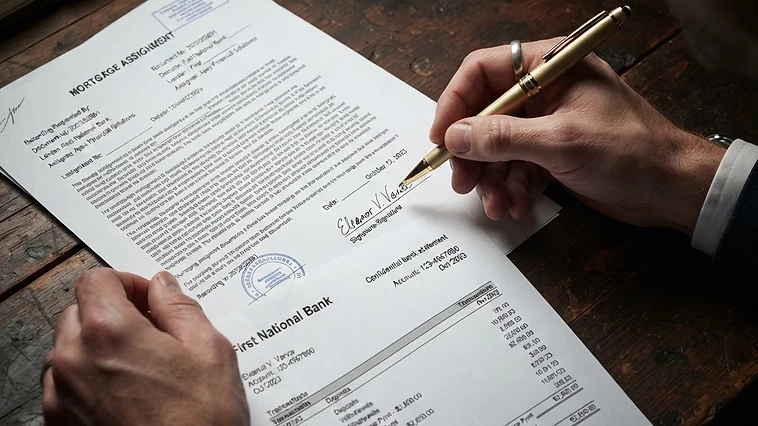 Homeowner investigating mortgage documents and loan modification paperwork for potential fraud and servicing errors.

Why does this matter to a homeowner in default? It matters because it proves that the mortgage industry is still highly susceptible to forged documents, fabricated evidence, and systemic oversight failures. If loan officers and investors can routinely push fake bank statements and inflated appraisals through the system, it raises serious questions about the accuracy of the documents being used to foreclose on your home.
In foreclosure defense, the authenticity of documents is paramount. If a bank is trying to take your home, they must prove they have the legal standing to do so, which requires a pristine, unbroken chain of title and accurate accounting. The recent wave of fraud indictments underscores why homeowners must aggressively audit their own mortgage files for fabricated assignments, improper notarizations, and robo-signed documents.
CFPB Scrutiny: Protecting Yourself from Dual Tracking
As foreclosure rates creep back toward pre-pandemic levels in late 2026, the Consumer Financial Protection Bureau (CFPB) has renewed its focus on mortgage servicing procedures—specifically the practice of "dual tracking."
Dual tracking occurs when a mortgage servicer moves forward with foreclosure proceedings (the legal track) while simultaneously negotiating a loan modification or loss mitigation option with the homeowner (the assistance track). This practice is incredibly dangerous because it lulls the homeowner into a false sense of security, believing they are safe from losing their home because they are "working with the bank," only to wake up and find their property has been sold at auction.
Federal regulations under the Real Estate Settlement Procedures Act (RESPA), specifically Regulation X, strictly prohibit dual tracking. If you submit a complete loss mitigation application at least 37 days before a scheduled foreclosure sale, the servicer must halt all foreclosure actions until they have fully evaluated your application and provided you with a decision.
Recent industry reports from the CFPB's 2026 regulatory agenda indicate a massive tightening of these rules. Servicers are facing renewed scrutiny for:
- Failing to acknowledge loss mitigation applications within the required five business days.
- Failing to evaluate complete applications within the required 30-day window.
- Inaccurately processing payments and mismanaging escrow accounts during the forbearance recovery period.
If you are submitting a modification application, send everything via certified mail with a return receipt. Keep a meticulous log of every phone call, noting the date, time, representative's name, and what was discussed. If your servicer files a notice of default or schedules a sale while your complete application is pending, they may be in violation of federal law—giving you powerful leverage to halt the foreclosure.
The Role of Chain of Title and Mortgage Assignments
When a loan is sold from one bank to another—or transferred into a Wall Street securitized trust—the mortgage (or deed of trust) must be legally assigned to the new entity. This is recorded in the county land records.
Historically, and continuing into 2026, servicers have struggled to maintain accurate chains of title. Because loans change hands so frequently, the paperwork is often lost, destroyed, or never properly executed. To fix this, servicers sometimes resort to "robo-signing"—having low-level employees rapidly sign thousands of affidavits and assignments without any actual knowledge of the facts contained within them.
If you are facing foreclosure, you must demand to see the original promissory note and the complete chain of assignments. If there is a break in the chain—for example, Bank A sold the loan to Bank C, but there is no assignment from Bank B in the middle—the foreclosing entity may lack the legal standing to take your property. Identifying these fatal flaws in the plaintiff's case is one of the most effective strategies in foreclosure defense.
Why the Foreclosure Defense Survival Playbook Helps
Navigating the treacherous waters of loan modifications, servicer abuses, and legal maneuvers is practically impossible without a roadmap. The banking industry relies on the fact that most homeowners do not understand their rights, do not know how to read a payment history, and will not challenge the validity of an assignment.
The Foreclosure Defense Survival Playbook is a comprehensive, 530-page educational resource designed to level the playing field. It takes complex, intimidating legal concepts and breaks them down into plain, understandable language for the everyday homeowner.
Here is how the Playbook equips you to fight back:
- Document Analysis: Learn exactly how to read your mortgage, promissory note, and chain of assignments to spot the very types of discrepancies, forged signatures, and robo-signing that federal regulators are cracking down on today.
- Servicing Abuses: Discover how to audit your payment history to uncover illegal junk fees, misapplied payments, and escrow mismanagement that could falsely inflate your default amount.
- Combating Dual Tracking: The Playbook provides step-by-step guidance on how to properly submit a loss mitigation application, build a paper trail, and hold your servicer accountable to CFPB guidelines if they illegally proceed with a foreclosure.
- Pro Se Empowerment: If you cannot afford an attorney, the Playbook teaches you the fundamentals of court procedure, evidence organization, and legal research, giving you the confidence to demand proof of standing and defend your home.
Do not let a servicer's intimidation tactics or a scammer's false promises cost you your home. Education is your best defense against a system that profits from your confusion. Order the Foreclosure Defense Survival Playbook today, take control of your case, and start fighting for your home with the knowledge and tools you need to survive.


Order The Playbook
Get the Foreclosure Defense Survival Playbook
530 pages of structured, educational guidance covering mortgage documents, foreclosure procedures, evidence organization, and legal research — the same foundation this article draws from.