Mortgage Documents
The Hidden Risks in Your Loan: Why Every Homeowner Needs a Mortgage Document Review Before Refinancing
Recent industry reports reveal a massive surge in refinance fraud and document forgery, making a proactive mortgage document review essential for every homeowner.
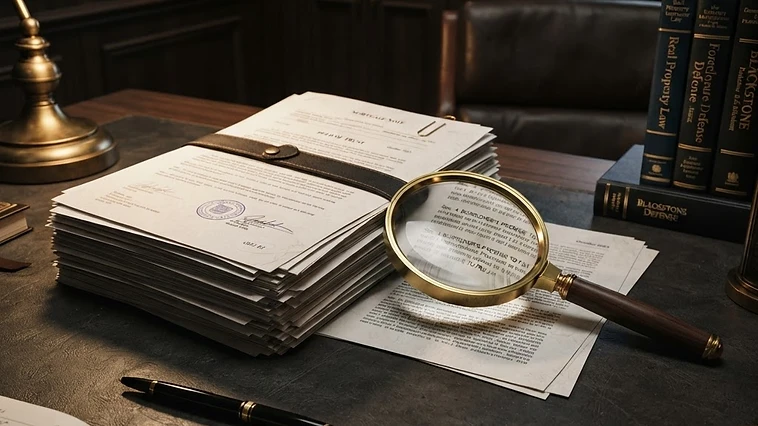
Disclaimer: The following article is for educational purposes only and does not constitute legal advice. If you have specific questions about your mortgage documents or suspect fraud, please consult with a qualified attorney.
If you are a homeowner who pays your mortgage on time every month, you might assume your loan file is in perfect order. You receive your monthly statements, you make your payments, and your balance slowly decreases. However, the reality of the modern mortgage industry is far more complex and, unfortunately, far more prone to error and deception. Recent industry data reveals a startling truth: even homeowners who are perfectly current on their payments are sitting on hidden title defects, forged signatures, and severe loan document errors.
Before you even consider signing new refinance paperwork, it is absolutely critical to conduct a thorough mortgage document review. The assumption that your original loan documents were executed flawlessly is a dangerous one, and failing to verify your paperwork can lead to catastrophic financial consequences down the road.
The Surging Epidemic of Refinance Fraud and Forgery
In recent days, the mortgage industry has been sounding the alarm over a massive spike in document-related crimes. According to a recent Milliman Inc. study commissioned by the American Land Title Association (ALTA), Refinance fraud and forgery claims soar, driving up title insurance losses. The report highlights that fraud and forgery claims tied to mortgage refinances now represent over 40% of all title insurer losses and expenses.
What makes this statistic so alarming for the average homeowner is that these are not issues caused by borrower default. These are systemic issues involving bad actors, sophisticated forgery rings, and institutional negligence. The average cost of fraud and forgery claims on refinances has skyrocketed to $207,000—nearly seven times higher than other claim types. Furthermore, defending against these claims costs an average of $70,000.
For a homeowner looking to refinance, this means the title to your home might already be clouded by fraudulent liens, improper assignments, or forged deeds that you know nothing about. Because these defects often cannot be detected through a simple public records search, a deep, forensic mortgage audit of your own file is the only way to ensure you actually hold clear title to your property.
How AI and Cyber Threats are Compromising Mortgage Documents
The threat landscape for mortgage fraud has evolved rapidly. We are no longer just dealing with sloppy paperwork from the 2008 financial crisis; we are facing highly sophisticated, technology-driven fraud. Recent reporting highlights how Mortgage fraud case shows AI's fake-document risk, demonstrating that artificial intelligence has made it incredibly easy for fraudsters to generate flawless fake deeds, income statements, and notary stamps.
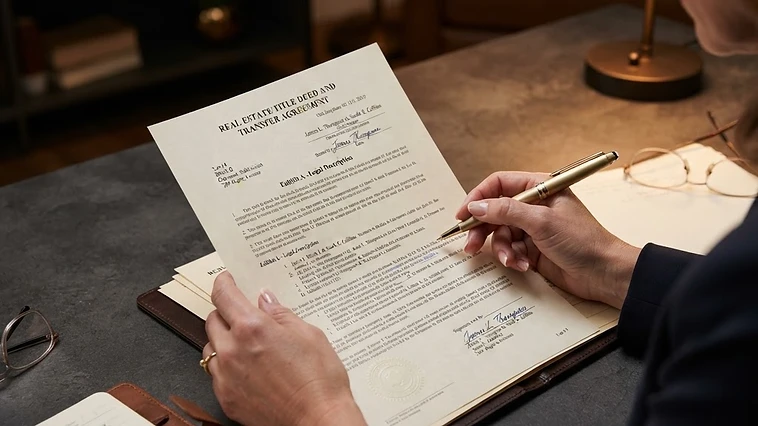 Hands reviewing mortgage refinance paperwork for loan document errors under warm desk lighting.

Additionally, the mortgage industry is currently grappling with a wave of severe data breaches. Major lenders and originators have recently settled class-action lawsuits after cyberattacks exposed the sensitive financial data of hundreds of thousands of borrowers. When your personal data is compromised, bad actors can easily file fraudulent deeds or take out unauthorized loans against your property's equity. If you are blindly signing refinance paperwork without first verifying the integrity of your current chain of title, you might be inadvertently ratifying a fraudulent transaction or rolling a defective loan into a new, legally binding contract.
Common Loan Document Errors Hiding in Plain Sight
When you sit down to perform a mortgage document review, you are looking for specific anomalies that indicate your loan was not handled properly. Even if you are not facing foreclosure, these loan document errors can severely complicate a future sale, a refinance, or your ability to pass the property to your heirs.
1. Broken Chains of Title and Missing Assignments
During the life of a typical mortgage, the loan is often sold multiple times on the secondary market. Each time the loan is sold, an Assignment of Mortgage (or Deed of Trust) must be properly executed and recorded in your local county records. Frequently, these assignments are missing, drafted incorrectly, or signed by "robo-signers" who lacked the legal authority to transfer the debt. If your chain of title is broken, the entity currently collecting your payments may not actually have the legal right to do so.
2. Notary and Signature Irregularities
Fraudulent notarizations are a hallmark of mortgage fraud. In many cases, documents are notarized days or weeks after they were allegedly signed, or they are notarized by individuals who were not present at the closing. If the notary stamp on your Deed of Trust or Mortgage is invalid, the entire recording of that document may be legally voidable.
3. MERS (Mortgage Electronic Registration Systems) Complications
MERS was created by the banking industry to bypass county recording fees by tracking loan transfers electronically. However, the use of MERS has created massive legal confusion regarding who actually owns the promissory note versus who holds the security instrument. A thorough mortgage audit will often reveal that MERS was used improperly in your transaction, potentially severing the link between your debt and the lien on your home.
4. Predatory Refinance and Servicing Disclosures
If you have refinanced in the past, you may have been a victim of predatory lending tactics without realizing it. Lenders often bury illegal fees, inflate appraisals, or fail to provide federally mandated disclosures (such as Truth in Lending Act or Real Estate Settlement Procedures Act disclosures). Reviewing your past refinance paperwork can uncover these violations, which can sometimes be used as leverage to negotiate better terms or force the lender to correct the record.
Why a Proactive Mortgage Document Review is Essential
Many homeowners operate under the false assumption that if they are current on their payments, their lender is treating them fairly and their documents are accurate. This is a dangerous complacency. The banking industry relies on the fact that 99% of borrowers will never actually read their loan file, let alone audit it for legal compliance.
By conducting a proactive mortgage document review, you take back control of your largest financial asset. You are not looking for a "free house"; you are demanding transparency and accuracy from institutions that have a long, documented history of systemic fraud.
If you are preparing to refinance, the new lender will require a title search. If that search uncovers a fraudulent lien or a broken chain of title from your current servicer, your refinance will be denied, and you will be left to clean up a legal mess that you did not create. By auditing your documents now, you can identify and resolve these issues before they derail your financial plans.
Furthermore, if you ever do face financial hardship in the future, knowing exactly what is in your loan file gives you a massive tactical advantage. You will already know if your servicer lacks standing, if your assignments are forged, or if your original closing documents violated federal law.
Why Auditing Your Mortgage Paperwork Matters
Even if you have never missed a payment and have excellent credit, you cannot afford to trust that your mortgage documents are flawless. The recent surge in refinance fraud, AI-generated forgeries, and title defects proves that the system is highly vulnerable. Every homeowner must take the time to audit their mortgage paperwork before refinancing, selling, or facing a potential future default.
This is exactly why the Foreclosure Defense Survival Playbook is an indispensable resource for every homeowner, not just those in distress. The Playbook provides a comprehensive, step-by-step guide on how to pull your county records, analyze your promissory note, spot forged signatures, and identify the exact loan document errors that banks hope you never find. It teaches you the forensic techniques used by professionals to uncover hidden mortgage fraud and title defects in the very documents your lender handed you. Don't wait for a crisis to discover that your home's title is compromised. Order the Foreclosure Defense Survival Playbook today, take control of your financial future, and ensure that your most valuable asset is truly protected.


Order The Playbook
Get the Foreclosure Defense Survival Playbook
530 pages of structured, educational guidance covering mortgage documents, foreclosure procedures, evidence organization, and legal research — the same foundation this article draws from.