Mortgage Documents
Is Your Mortgage Paperwork Accurate? The Hidden Risks of Refinance Fraud and Document Errors
Recent reports show a sharp increase in mortgage document defects. Learn why auditing your loan paperwork is crucial before refinancing.
Disclaimer: The following article is for educational purposes only and does not constitute legal advice. If you have specific concerns about your mortgage documents, please consult with a qualified attorney.
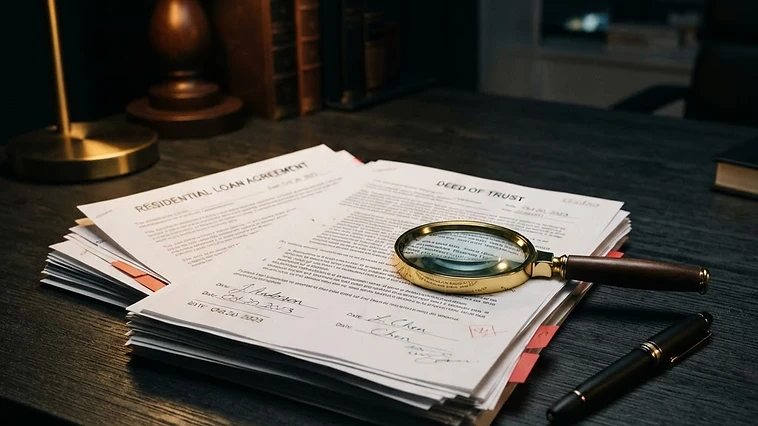
Many homeowners assume that as long as they make their monthly payments on time, their mortgage is in perfect standing. You receive your monthly statement, you pay it, and you go about your life. But what if the underlying paperwork—the actual legal contracts that tie your home to a lender—is riddled with errors, compliance defects, or even signs of mortgage fraud?
Recent industry reports reveal a troubling trend: the rate of critical defects in mortgage documents is rising, particularly in refinance transactions. Whether you are currently refinancing, considering a loan modification, or simply want to ensure your property rights are secure, conducting a thorough mortgage document review is no longer just for homeowners facing foreclosure. It is a vital protective measure for every current homeowner.
The Alarming Rise in Loan Document Errors
According to a recent Mortgage QC Industry Trends Report by ACES Quality Management, the mortgage industry's critical defect rate rose sharply to 1.71% in the first quarter of 2026, up from 1.38% in the previous quarter. This spike is largely driven by a resurgence in refinance activity and complex compliance challenges Mortgage critical defect rate rises to 1.71% in Q1 2026.
What does a "critical defect" mean for you? It means that in a significant percentage of loans audited, there were legal, regulatory, or compliance errors severe enough to affect the enforceability or validity of the loan. In fact, legal, regulatory, and compliance defects accounted for over 26% of all defects in the first quarter of 2026. Furthermore, as mortgage rates fluctuated and homeowners rushed to refinance, refinance defects increased to 38.57% of all defects.
These statistics highlight a crucial reality: lenders and servicers make mistakes. When loan originators are rushing to process high volumes of refinance paperwork, corners are often cut. Signatures may be improperly notarized, disclosures may be miscalculated, and the chain of title can become clouded. If you are a homeowner who is current on payments, you might not notice these loan document errors immediately. However, if you ever need to sell your home, refinance again, or if your loan is sold to a new servicer, these hidden defects can create massive legal headaches.
How Modern Technology is Fueling Mortgage Fraud
While administrative errors are common, intentional mortgage fraud is also evolving at an unprecedented pace. Legacy fraud detection methods were built for a world of paper documents and in-person meetings. Today, fraudsters and predatory lenders are utilizing advanced technology to manipulate documents and identities.
Industry experts note that mortgage fraud risk is evolving due to advanced techniques, including generative AI and synthetic identities Mortgage Fraud: Emerging Risks, Mitigation Strategies. AI-generated documents can now replicate the visual formatting, fonts, and metadata of legitimate financial records with enough fidelity to pass standard automated checks Detecting and Deterring Mortgage Fraud | Proof.
For the average homeowner, this means that the refinance paperwork you are asked to sign—or the documents recorded against your property in the county records—could be compromised. Predatory refinance schemes often bury abusive terms in complex documents, or involve third parties who manipulate the paperwork to extract hidden fees. Even if you are dealing with a seemingly reputable institution, the sheer volume of digital transactions and the involvement of third-party vendors increase the risk of unauthorized alterations to your loan documents.
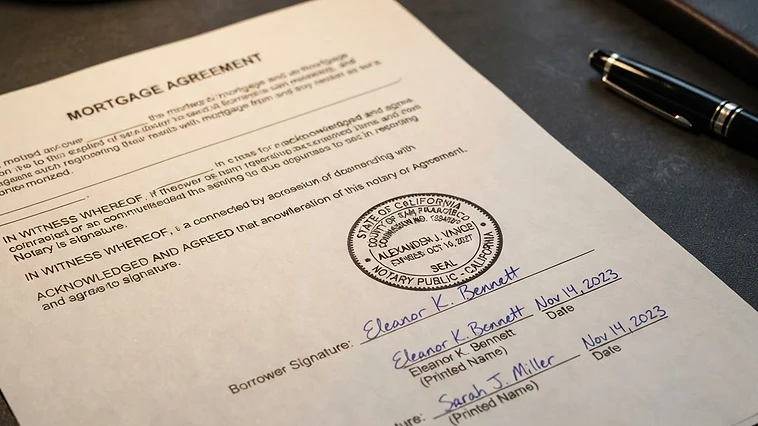 Close-up of mortgage refinance paperwork and notary stamp on a dark desk

What is a Mortgage Audit and Why Do You Need One?
A mortgage audit is a comprehensive, forensic examination of your loan documents, closing paperwork, and the subsequent history of your mortgage. The goal of a mortgage audit is to verify that all documents were executed legally, that the lender complied with all state and federal regulations (such as the Truth in Lending Act and the Real Estate Settlement Procedures Act), and that the chain of title remains unbroken.
Many homeowners mistakenly believe that a mortgage audit is only necessary if they are behind on payments and trying to fight off a foreclosure. This is a dangerous misconception. Conducting a mortgage document review while you are current on your payments puts you in a position of power.
When you audit your documents, you are looking for:
- Truth in Lending (TILA) Violations: Were the interest rates, APR, and total cost of the loan accurately disclosed to you at closing?
- RESPA Violations: Were there illegal kickbacks, inflated settlement charges, or improper escrow accounting?
- Chain of Title Issues: If your loan was sold or securitized, were the assignments of the mortgage properly executed and recorded in the county land records?
- Notary and Signature Irregularities: Was the notary actually present when the documents were signed? Are there signs of forged signatures or "robo-signing"?
- MERS Complications: If Mortgage Electronic Registration Systems (MERS) is listed as the nominee on your deed of trust, does the paperwork accurately reflect the true owner of your debt?
By identifying these issues early, you can demand corrections, potentially negotiate better terms, or protect yourself from future predatory actions by servicers.
Key Red Flags in Your Refinance Paperwork
If you are currently going through a refinance, or if you recently completed one, you must scrutinize your refinance paperwork with a critical eye. The rush to close loans often leads to sloppy paperwork, and in some cases, outright fraud. Here are several red flags to watch for during your mortgage document review:
1. Unexplained Fees and Inflated Costs Review your Closing Disclosure carefully. Compare it to the initial Loan Estimate you received. Are there sudden, unexplained increases in origination fees, appraisal fees, or title insurance costs? Predatory lenders often slip junk fees into the final refinance paperwork, hoping the borrower will be too overwhelmed to notice.
2. Missing or Incomplete Endorsements Your promissory note is the actual IOU that you signed. When a loan is sold from one lender to another, the note must be properly endorsed (signed over), much like a check. If your loan has been sold multiple times, but the note lacks the proper chain of endorsements, the current servicer may not have the legal standing to enforce the debt.
3. Fraudulent Assignments of Mortgage The mortgage (or deed of trust) is the document that gives the lender the right to foreclose if you don't pay. When the loan is sold, an Assignment of Mortgage must be recorded in the county records. A common loan document error involves assignments that are fabricated, backdated, or signed by individuals who lack the legal authority to do so (often referred to as "robo-signers").
4. Notary Fraud Notary irregularities are a massive issue in mortgage documents. Did the notary actually witness your signature? Is the notary stamp valid? In some cases, documents are altered after the borrower signs them, and a notary stamp is fraudulently applied to the altered document.
5. Servicing Disclosure Issues Federal law requires lenders to provide specific disclosures when the servicing of your loan is transferred. If you suddenly receive a notice to send your payments to a new company, but you never received the proper transfer disclosures from your old servicer, this is a major red flag. It could be a simple administrative error, or it could be a sign of a mortgage fraud scheme attempting to hijack your payments.
The Danger of Complacency: Why Current Homeowners Must Act
It is easy to be complacent when you are not facing financial distress. You might think, "I pay my mortgage every month, so why should I care if there is a technical error in the paperwork?"
The answer lies in the future. Mortgages are long-term contracts, often lasting 15 to 30 years. Over that time, your loan will likely be sold, transferred, or securitized multiple times. Every time the loan changes hands, the risk of document degradation increases.
Imagine you decide to sell your home in five years. The title company conducts a search and discovers a break in the chain of title due to a faulty assignment recorded years ago. Suddenly, you cannot sell your home until the issue is resolved, which could take months and cost thousands of dollars in legal fees.
Or, imagine you suffer an unexpected financial hardship—a job loss or a medical emergency—and you fall behind on payments. If you haven't audited your documents, you won't know if the entity threatening foreclosure actually has the legal right to do so. By the time you are in default, you are operating from a position of weakness, scrambling to find evidence while fighting off a ticking clock.
By conducting a mortgage document review now, while you are current and not under duress, you secure your property rights and ensure that the institutions holding your debt are held to the strict letter of the law.
Why Auditing Your Mortgage Paperwork Matters
Even if you have never missed a payment, auditing your mortgage paperwork is a critical step in protecting your most valuable asset. The recent data showing a 1.71% critical defect rate in the mortgage industry proves that you cannot blindly trust the documents handed to you by a lender or servicer. From compliance failures in refinance paperwork to sophisticated mortgage fraud, the risks are real and present.
This is exactly why the "Foreclosure Defense Survival Playbook" is an indispensable resource for every homeowner, not just those facing default. The Playbook provides a comprehensive, step-by-step guide to understanding your mortgage documents, organizing your evidence, and conducting your own mortgage audit. It teaches you how to spot the hidden loan document errors, notary irregularities, and chain of title defects that lenders hope you will overlook.
Don't wait until you are refinancing under pressure or facing a future financial crisis to find out if your loan documents are valid. Take control of your property rights today. Order the "Foreclosure Defense Survival Playbook" and learn how to audit your mortgage paperwork like a pro, ensuring your home remains truly yours.


Order The Playbook
Get the Foreclosure Defense Survival Playbook
530 pages of structured, educational guidance covering mortgage documents, foreclosure procedures, evidence organization, and legal research — the same foundation this article draws from.