Mortgage Documents
Hidden Errors in Your Loan: Why Every Homeowner Needs a Mortgage Document Review Before Refinancing
Even if you are current on your payments, hidden errors and fraud in your mortgage paperwork can derail a future refinance. Learn how to audit your loan documents today.
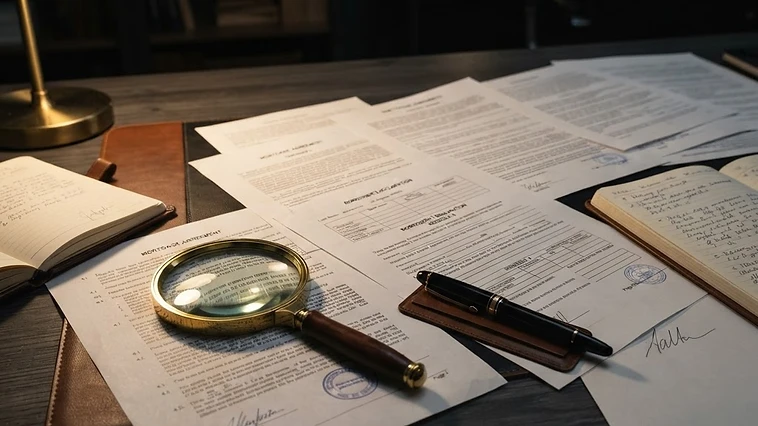
Disclaimer: The following article is for educational purposes only and does not constitute legal advice. If you require legal assistance, please consult a qualified attorney in your jurisdiction.
When you pay your mortgage on time every month, it is easy to assume that your loan file is in perfect order. You receive your monthly statements, you make your payments, and your balance slowly decreases. However, the reality of the modern mortgage industry is far more complex. Behind the scenes, loans are bought, sold, securitized, and transferred between servicers with alarming frequency. In this chaotic environment, loan document errors, missing assignments, and even outright mortgage fraud can easily slip into your file.
For homeowners who are current on their payments but considering a refinance, conducting a thorough mortgage document review is not just a good idea—it is an absolute necessity. You might think that because you are not facing foreclosure, your documents are pristine. Unfortunately, recent enforcement actions and court cases reveal that fraud and critical errors are rampant in the mortgage industry. Before you sign a new stack of refinance paperwork, you must ensure that your current documents are legally sound, properly recorded, and free of defects.
The Rising Threat of Mortgage Fraud in Recent News
Mortgage fraud is not a relic of the 2008 financial crisis; it is an ongoing and evolving threat. Recent news highlights just how sophisticated these schemes have become, often involving identity theft, falsified documents, and insider manipulation.
For example, a recent indictment in New York exposed a massive scheme where fraudsters stole the identities of legitimate homeowners to execute a fraudulent cash-out refinance. According to the FIVE INDICTED FOR IDENTITY THEFT AND MORTGAGE FRAUD SCHEME IN FLUSHING - OFFICE OF THE DISTRICT ATTORNEY QUEENS COUNTY, the defendants allegedly impersonated a husband and wife at a closing, using fake driver's licenses and Social Security cards to secure a $688,000 mortgage on a property they did not own. This type of predatory refinance fraud saddles innocent victims with unauthorized debt and creates massive title defects that can take years to untangle.
Furthermore, the rise of artificial intelligence has made it easier than ever for bad actors to generate convincing fake documents. As reported in Mortgage fraud case shows AI's fake-document risk | National Mortgage News, fraudsters have been caught fabricating pay stubs and employment records to push through loans that would otherwise fail underwriting standards. While this specific case involved borrowers trying to qualify for loans, the same technology can be used by rogue brokers or originators to alter your refinance paperwork without your knowledge.
Even government-backed loans are not immune. In a recent federal case, a law enforcement officer was charged with wire fraud for allegedly submitting falsified Veterans Affairs documents to secure a $478,000 mortgage, as detailed in DHS employee charged with wire and mortgage fraud | National Mortgage News. When loans are originated under false pretenses, it creates a chain reaction of regulatory risk, compliance failures, and potential title issues that can ultimately impact the homeowner.
Why Current Homeowners Need a Mortgage Document Review
If you are paying your mortgage on time, you might wonder why any of this matters to you. The answer lies in the chain of title and the legal enforceability of your loan. When you decide to refinance, the new lender will conduct a title search and review your existing mortgage documents. If they discover loan document errors, unrecorded assignments, or irregularities in the way your original loan was handled, your refinance could be delayed or denied entirely.
Conducting a proactive mortgage document review allows you to identify and correct these issues before they become a crisis. You are looking for discrepancies in how your loan was transferred, whether the promissory note was properly endorsed, and if the deed of trust or mortgage was legally recorded in your county's public records.
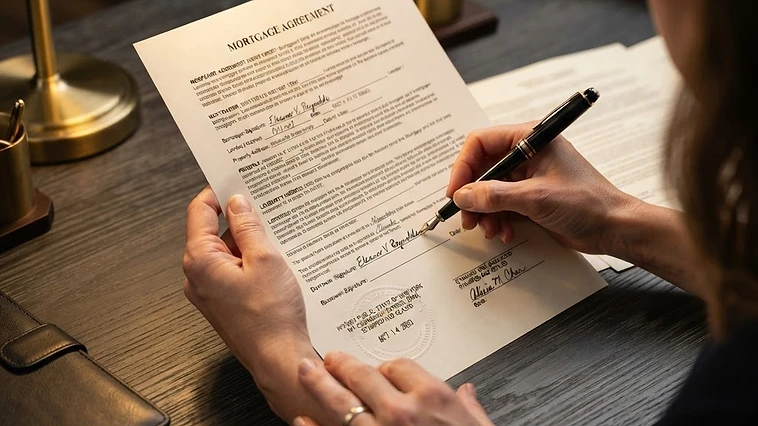 Close-up of hands reviewing mortgage refinance paperwork for loan document errors under warm gold lighting.

Many homeowners are shocked to discover that the entity they have been paying every month does not actually have the legal standing to enforce the debt due to broken chains of assignment. While this might not seem like an immediate problem while you are current on payments, it becomes a massive hurdle if you ever need a loan modification, want to sell the property, or attempt to refinance. A comprehensive mortgage audit is the only way to uncover these hidden defects.
Common Loan Document Errors to Watch For
When you sit down to review your mortgage file, you are not just looking for typos. You are looking for structural, legal, and procedural errors that compromise the integrity of the loan. Here are some of the most common issues uncovered during a mortgage audit:
-
Missing or Fraudulent Assignments: When your loan is sold from one bank to another, an Assignment of Mortgage must be executed and recorded. During the securitization boom, millions of these assignments were either never recorded, recorded years after the fact, or signed by "robo-signers" who had no legal authority to execute the documents. If your chain of assignments is broken, the current claimant may not have clear title to your loan.
-
Notary and Signature Irregularities: Fraudulent notarizations are a hallmark of sloppy mortgage servicing. Look closely at the notary stamps on your documents. Were the documents notarized in a state where you have never been? Are the dates of the signatures inconsistent with the date of the notary stamp? These irregularities can render the recorded documents legally void.
-
MERS Complications: The Mortgage Electronic Registration Systems (MERS) was created by the banking industry to bypass county recording fees by acting as a nominee for the lender. However, the use of MERS has created massive confusion regarding who actually owns the beneficial interest in the promissory note. If MERS is involved in your loan, your refinance paperwork requires extra scrutiny to ensure that any transfers executed by MERS were done legally and with proper corporate authority.
-
Predatory Refinance Terms and Hidden Fees: If you are currently in the process of refinancing, you must audit the new documents just as rigorously as the old ones. Predatory lenders often slip exorbitant fees, prepayment penalties, or mandatory arbitration clauses into the fine print. Always compare your final closing disclosure with the initial loan estimate to ensure no unauthorized changes were made.
How to Approach Your Refinance Paperwork
Refinancing is essentially paying off your old mortgage with a new one. This means you are dealing with two sets of documents: the release or satisfaction of the old loan, and the origination of the new loan. Both require your utmost attention.
Before you sign any new refinance paperwork, request a complete copy of your current loan file from your servicer. Under federal law, specifically the Real Estate Settlement Procedures Act (RESPA), you have the right to send a Qualified Written Request (QWR) or Request for Information (RFI) to your servicer demanding copies of your promissory note, mortgage, assignments, and a complete payment history.
Once you have these documents, compare them against the public records in your county recorder's office. Does the public record match what the servicer sent you? Are there liens on your property that you were unaware of? As highlighted by the recent identity theft cases, criminals can record fraudulent liens or mortgages against your property without your knowledge. A thorough mortgage audit will reveal these unauthorized encumbrances so you can take action to clear your title.
When reviewing the new refinance paperwork, take your time. Do not let a closing agent rush you through the signing process. Verify that the interest rate, loan term, and closing costs match exactly what was promised. Ensure that your name, property address, and legal description are perfectly accurate. A single transposed number in a legal description can cause a nightmare of title defects down the road.
Why Auditing Your Mortgage Paperwork Matters
Even if you are a current, on-time homeowner, you cannot afford to be complacent about your largest financial asset. Auditing your mortgage paperwork before refinancing or facing a future default is the ultimate defensive strategy. It protects your equity, ensures your title is clear, and shields you from the devastating impacts of mortgage fraud and institutional incompetence.
However, knowing that you need to review your documents is only half the battle; knowing exactly what to look for is where most homeowners struggle. That is exactly why the "Foreclosure Defense Survival Playbook" was created. This comprehensive, 530-page educational resource is not just for people facing foreclosure—it is the ultimate guide for any homeowner who wants to understand their mortgage documents, master evidence organization, and conduct a professional-level mortgage audit on their own file.
The Playbook teaches you step-by-step how to spot the hidden fraud, errors, and defects in the documents your lender or servicer handed you. It demystifies complex legal jargon, explains the intricacies of MERS and securitization, and empowers you to take control of your financial future. Do not wait until a hidden error derails your refinance or a fraudulent assignment threatens your home. Order the Foreclosure Defense Survival Playbook today, audit your mortgage paperwork, and secure your peace of mind.


Order The Playbook
Get the Foreclosure Defense Survival Playbook
530 pages of structured, educational guidance covering mortgage documents, foreclosure procedures, evidence organization, and legal research — the same foundation this article draws from.