Mortgage Documents
The Hidden Fraud in Your Loan File: Why Every Homeowner Needs a Mortgage Document Review Before Refinancing
Recent headlines highlight a surge in mortgage fraud and document errors. Learn why auditing your loan file is crucial even if you are current on your payments.
Disclaimer: The following article is for educational purposes only and does not constitute legal advice. Always consult with a qualified attorney regarding your specific legal situation.
You pay your mortgage on time every month. You have excellent credit, and you are currently considering refinancing to take advantage of better terms or to tap into your home's equity. Because you are in good standing with your lender, you might assume that your mortgage paperwork is flawless. Unfortunately, recent news and enforcement actions reveal a very different reality. The mortgage industry is currently grappling with a massive wave of document irregularities, AI-generated fraud, and systemic recording errors.
Even if you are not behind on your payments, conducting a thorough mortgage document review is one of the most critical steps you can take to protect your most valuable asset. Lenders and servicers frequently make mistakes, and the chain of title on your property might be compromised by hidden defects. In this article, we will explore recent developments in mortgage fraud, why loan document errors are so prevalent, and how a comprehensive mortgage audit can safeguard your financial future.
The Recent Surge in Mortgage Fraud and Document Errors
In October 2026, the mortgage industry saw a flurry of headlines that should put every homeowner on high alert. According to recent reports from the Baltimore Business Journal, lenders are currently suing home investors over a massive $10 million mortgage fraud scheme involving inflated appraisals and falsified loan documents. Simultaneously, financial technology companies like Ocrolus have been forced to roll out advanced AI fraud detection tools to all their mortgage customers just to combat the rising tide of tampered bank statements, fake pay stubs, and forged tax forms.
What does this mean for the average homeowner? It means that the systems designed to originate, record, and service mortgages are under immense stress and are highly susceptible to errors and manipulation. When lenders process thousands of loans at breakneck speed, corners are inevitably cut. Signatures are rushed, notaries fail to verify identities properly, and critical assignments are either lost or improperly recorded.
If you are preparing your refinance paperwork, you are stepping into a system where document accuracy is no longer guaranteed. The burden of proof ultimately falls on you to ensure that the contract you are signing—and the contract you are paying off—is legally sound and free of defects.
Why Current Homeowners Need a Mortgage Document Review
It is a common misconception that only homeowners facing foreclosure need to worry about the accuracy of their loan files. In reality, a mortgage document review is essential for anyone who holds a mortgage. When you refinance, your new lender will rely on the existing chain of title and the recorded documents from your original loan. If there are hidden loan document errors in your current file, those errors can complicate your refinance, cloud your title, or even expose you to predatory lending practices.
Consider the role of the Mortgage Electronic Registration Systems (MERS). MERS was created to track the ownership and servicing rights of mortgages, allowing loans to be bought and sold on the secondary market without the need to record every transfer at the local county clerk's office. However, this system has been plagued by inaccuracies. If your loan was transferred multiple times, there is a significant chance that the assignments were not properly executed.
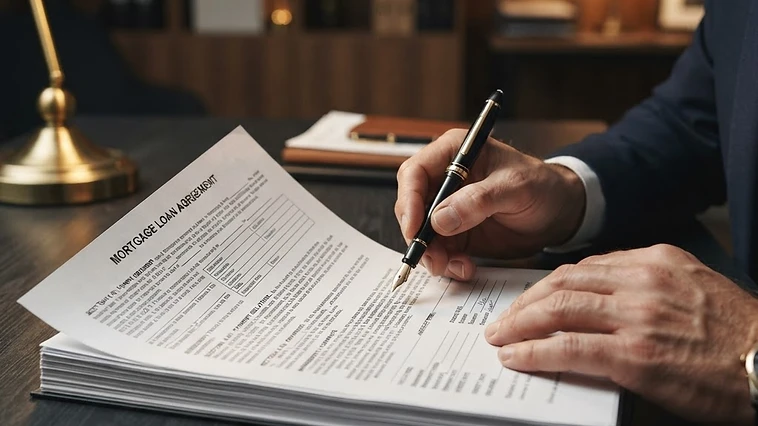 Close up of hands reviewing mortgage refinance paperwork for loan document errors.

When you audit your file, you are looking for these exact breaks in the chain of title. You are verifying that the entity claiming to hold your note actually has the legal right to do so. If they do not, you could be paying the wrong party, or you could face severe legal hurdles when trying to clear your title for a refinance or a future sale.
Spotting Refinance Fraud and Predatory Lending
Refinance fraud is not just about criminals stealing identities, though cases like the recent July 2026 indictment in Queens—where fraudsters took out a $688,000 cash-out mortgage on a home they didn't own—prove that identity theft is a real threat. For the average homeowner, refinance fraud often takes the form of predatory lending practices hidden deep within the fine print of the refinance paperwork.
Predatory lenders may slip in undisclosed fees, alter the terms of the loan at the last minute, or fail to provide the federally mandated servicing disclosures. They might inflate the appraisal value of your home to justify a larger loan amount, trapping you in a cycle of debt. A meticulous mortgage audit allows you to compare your initial Loan Estimate with your final Closing Disclosure, ensuring that every fee is justified and that the interest rate and loan terms match what you were promised.
Furthermore, notary and signature irregularities are shockingly common. In the rush to close, documents may be signed outside the presence of a notary, or the notary's commission may have expired. These seemingly minor technicalities can render a mortgage document legally invalid. By reviewing your paperwork with a critical eye, you can spot these red flags before they become insurmountable legal problems.
The Impact of AI on Mortgage Paperwork
As highlighted by National Mortgage News in late 2026, the rise of artificial intelligence has introduced a new layer of complexity to mortgage fraud. Bad actors are now using AI to generate highly convincing fake documents, from W-2s to property deeds. While this technology is often used by fraudsters to secure loans they don't qualify for, it also means that the overall integrity of public land records is being compromised.
For a homeowner, this underscores the absolute necessity of verifying every single document in your loan file. You cannot simply trust that the lender's digital records are accurate. You must obtain physical or certified copies of your promissory note, your deed of trust or mortgage, and all recorded assignments. You must cross-reference these documents to ensure that the signatures match, the dates align, and the corporate entities listed actually existed and had the authority to execute the transfers at the time they were signed.
How to Conduct a Basic Mortgage Audit
Conducting a mortgage audit requires patience, attention to detail, and a willingness to dig into the legal mechanics of real estate finance. Here are the foundational steps every homeowner should take when reviewing their refinance paperwork or existing loan file:
- Request Your Complete File: Contact your current mortgage servicer and request a complete copy of your collateral file, including the original promissory note, the mortgage or deed of trust, all riders, and a complete payment history.
- Check the Chain of Title: Visit your local county recorder's office (or their online portal) and pull every document recorded against your property. Look for the original mortgage and any subsequent assignments.
- Verify Assignments and Endorsements: Ensure that every time your loan was sold, an assignment was properly recorded. Check the promissory note for endorsements (stamps that transfer the note from one bank to another). Are the endorsements signed by authorized individuals? Are they dated correctly?
- Scrutinize Notary Acknowledgments: Look closely at the notary stamps on your documents. Did the notary actually witness the signature? Was their commission valid on the date of signing?
- Review Servicing Disclosures: Federal law requires lenders to provide specific disclosures when a loan is originated and when the servicing rights are transferred. Ensure you received these documents and that they contain accurate information.
By systematically reviewing these elements, you can identify the loan document errors that lenders hope you will overlook.
Why Auditing Your Mortgage Paperwork Matters
Even if you are current on your payments and have a perfect relationship with your bank, you cannot afford to be complacent about your loan file. The recent surge in mortgage fraud, AI-generated fake documents, and systemic recording errors proves that the banking industry's paperwork is fundamentally flawed. Auditing your mortgage paperwork matters because it is the only way to ensure that you truly own your home and that your title is clear of hidden defects.
Before you sign another stack of refinance paperwork, or before you ever face the threat of a future default, you must understand exactly what is in your file. That is exactly why the Foreclosure Defense Survival Playbook was created. This comprehensive, 530-page educational book is the ultimate resource for homeowners who want to take control of their financial destiny.
The Playbook teaches you step-by-step how to read complex mortgage documents, how to spot hidden fraud and notary irregularities, and how to organize your evidence like a pro. It demystifies the confusing world of MERS, assignments, and securitization, empowering you to hold lenders accountable for their mistakes. Don't wait until a minor paperwork error becomes a major legal nightmare. Order the Foreclosure Defense Survival Playbook today, audit your loan file, and secure the peace of mind that comes with knowing your home is truly protected.


Order The Playbook
Get the Foreclosure Defense Survival Playbook
530 pages of structured, educational guidance covering mortgage documents, foreclosure procedures, evidence organization, and legal research — the same foundation this article draws from.