Mortgage Documents
Is Your Mortgage Paperwork Accurate? How to Spot Hidden Fraud and Loan Document Errors Before You Refinance
Even if you are current on your mortgage payments, hidden document errors and refinance fraud could jeopardize your property rights. Learn how to audit your loan paperwork today.
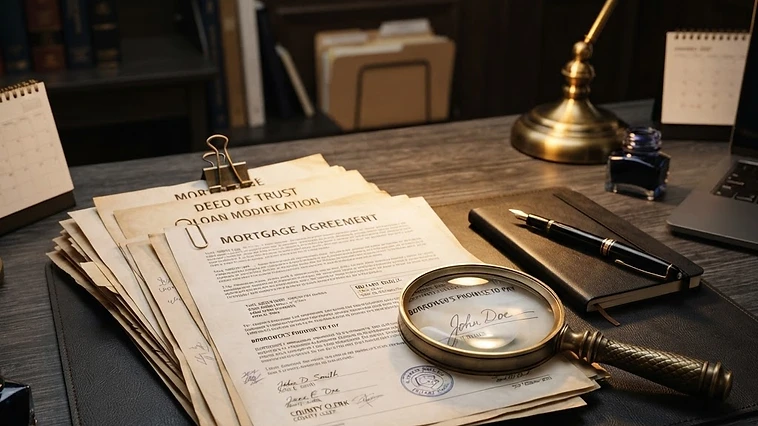
Disclaimer: This article is for educational purposes only and does not constitute legal advice. Always consult with a qualified attorney regarding your specific legal situation.
Many homeowners assume that because they make their mortgage payments on time every month, their loan documents are perfectly accurate. You receive your monthly statement, you pay the balance, and you assume the bank has properly recorded your deed, correctly applied your payments, and maintained a flawless chain of title. However, recent developments in the real estate and financial sectors reveal a troubling trend: mortgage fraud and loan document errors are increasingly common, even for borrowers who are completely current on their payments.
Whether you are considering a refinance, taking out a home equity line of credit, or simply want to ensure your property rights are secure, conducting a thorough mortgage document review is essential. The reality is that the mortgage industry is a high-volume business, and mistakes—or outright fraudulent practices—happen more often than most homeowners realize.
The Rise of AI and Fake Documents in Mortgage Fraud
In recent years, the technology used to process mortgages has advanced rapidly, but so has the technology used by bad actors. A recent report highlighted how artificial intelligence is being used to generate highly convincing fake documents, posing a significant risk to the integrity of mortgage files across the country. According to National Mortgage News, "Mortgage fraud case shows AI's fake-document risk", the trend has some bankers calling for enhanced auditing and underwriting scrutiny.
While instances of fake employment and income reporting on mortgage applications date back well before the AI age, the ease with which documents can now be altered means that your own property records could be compromised without your knowledge. Fraudsters can manipulate titles, forge signatures, or create phantom liens. Even institutional lenders and government-sponsored enterprises like Fannie Mae have acknowledged the difficulty in catching every fraudulent loan. In fact, Fannie Mae recently admitted that despite process improvements, they may face a higher risk of being unable to detect or prevent fraudulent lending transactions.
For the current homeowner, this means you cannot blindly trust that the paperwork filed at your local county recorder's office is accurate. A proactive mortgage audit is the only way to verify that the documents tied to your largest financial asset are legitimate and error-free.
Common Loan Document Errors Hiding in Plain Sight
When you sit down at the closing table, you are handed a massive stack of refinance paperwork. Most borrowers simply sign where the notary points, trusting that the title company and the lender have done their jobs correctly. Unfortunately, this is where many loan document errors are born.
According to First American, "Common Title Problems Covered by Title Insurance", some of the most frequent issues include unknown liens, errors in public records, missing owners, invalid deed signatures, and document errors. County clerks typically do not verify the accuracy of documents that are filed; they generally only require that the documents be in the proper form for recording. This means that a document with a forged signature, an incorrect legal description, or a missing notary stamp can easily become part of your property's official public record.
Furthermore, the Financial Crimes Enforcement Network (FinCEN) has noted in its reports on Mortgage Loan Fraud that prior lenders sometimes fail to release home equity loans in land record offices after receiving a mortgage pay-off. This causes the new lender’s loans to have a subordinate position and creates a clouded title for the homeowner. If you are planning to refinance, these hidden defects can delay your closing, cost you thousands of dollars in legal fees to clear up, or even prevent you from accessing your home's equity.
The Hidden Risks in Your Refinance Paperwork
Refinancing your home is often marketed as a simple, streamlined process to lower your interest rate or pull out cash. However, predatory refinance schemes and sloppy underwriting can introduce new errors into your chain of title.
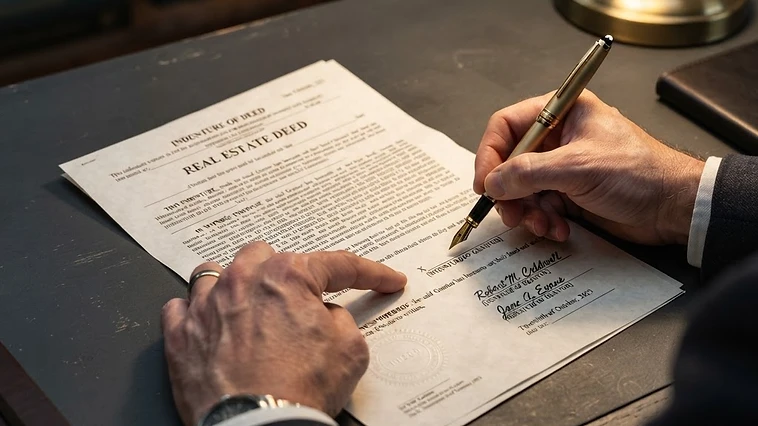 Close up of hands reviewing mortgage refinance paperwork on a dark desk under warm light

During the refinance process, your new lender relies on the existing public records to establish their lien position. If there are unresolved issues from your original purchase—such as an unrecorded mortgage, a missing assignment from the Mortgage Electronic Registration Systems (MERS), or a notary irregularity—these problems are often papered over rather than properly cured.
Borrowers must carefully review every number and piece of information on their new applications. As noted in recent industry guidance, your income, employer information, and debt obligations must be perfectly accurate. If a loan officer encourages you to inflate your income or sign a blank document, you are being pulled into a potential mortgage fraud scheme. Never sign a blank document or a document containing blank lines. Read and review all loan documents signed at closing, and if you suspect fraud, you have the right to withdraw your application at any time before closing.
How to Conduct a Proactive Mortgage Audit
If you are current on your payments, you are in the best possible position to conduct a mortgage document review. You have the luxury of time, and you are not operating under the stressful threat of an impending foreclosure. Here are the critical steps every homeowner should take to audit their mortgage paperwork:
- Gather Your Original Closing Documents: Locate the original stack of paperwork you received when you purchased or last refinanced your home. You need the Promissory Note, the Mortgage (or Deed of Trust), the Closing Disclosure (or HUD-1 Settlement Statement), and the Title Insurance Policy.
- Pull Your County Property Records: Visit your local county recorder's office (many have online portals) and pull every document recorded against your property since you bought it.
- Check for Missing Assignments: If your loan was sold (which happens to the vast majority of mortgages), there should be a recorded Assignment of Mortgage transferring the lien from your original lender to the new entity. Look for gaps in this chain. If MERS is involved, ensure that the rules regarding MERS assignments were properly followed.
- Scrutinize Signatures and Notary Stamps: Look closely at the signatures on the recorded documents. Do they match the names printed below them? Are the notary stamps clear, valid, and dated correctly? Invalid deed signatures and notary fraud are common title defects.
- Verify Lien Releases: If you have paid off a previous mortgage or a home equity line of credit, ensure that a Satisfaction of Mortgage or Release of Lien has been properly recorded. As FinCEN highlighted, unreleased liens are a major source of title issues.
By taking these steps, you can identify loan document errors before they become a crisis. If you find discrepancies, you can work with your title insurance company or a qualified attorney to quiet the title and correct the public record.
Why Auditing Your Mortgage Paperwork Matters
Even if you are a current, on-time homeowner, you must audit your mortgage paperwork before refinancing or facing a potential future default. The banking industry relies on the assumption that borrowers will not check their work. When you blindly trust the refinance paperwork or the original loan documents handed to you by a lender or servicer, you leave yourself vulnerable to hidden fraud, clouded titles, and predatory practices.
Understanding the complex web of mortgage documents, assignments, and county records can feel overwhelming, but you do not have to navigate it alone. The Foreclosure Defense Survival Playbook is your ultimate guide to taking control of your property rights. This comprehensive, 530-page educational resource teaches you exactly how to read your mortgage documents, spot hidden fraud, identify notary irregularities, and organize your evidence like a professional.
Don't wait until a title defect derails your refinance or a servicing error threatens your home. Equip yourself with the knowledge to audit your own files, demand accuracy from your lender, and protect your most valuable asset. Order your copy of the Foreclosure Defense Survival Playbook today and take the first step toward total confidence in your mortgage paperwork.


Order The Playbook
Get the Foreclosure Defense Survival Playbook
530 pages of structured, educational guidance covering mortgage documents, foreclosure procedures, evidence organization, and legal research — the same foundation this article draws from.