Mortgage Documents
Is Your Mortgage Paperwork Accurate? How to Spot Hidden Fraud and Loan Document Errors Before You Refinance
Even if you pay your mortgage on time, hidden errors and title defects in your loan documents can derail a refinance or expose you to fraud.
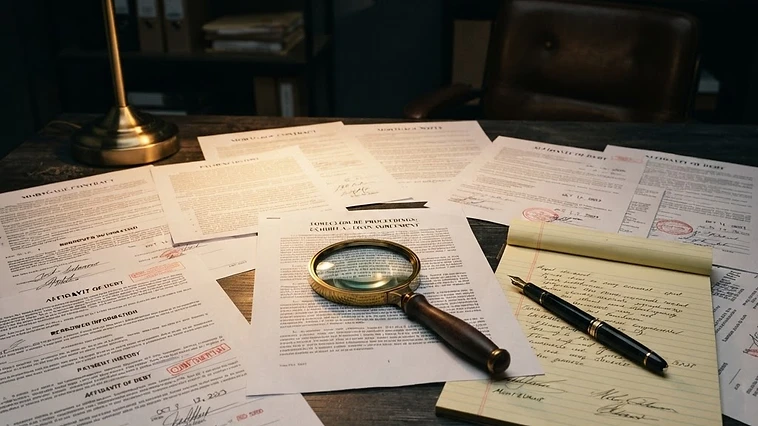
Disclaimer: The following article is for educational purposes only and does not constitute legal advice. If you have specific legal questions regarding your mortgage or real estate title, please consult a qualified attorney.
If you are a homeowner who pays your mortgage on time every month, you might assume that your loan file is in perfect order. You receive your monthly statements, you make your payments, and your balance slowly decreases. However, the reality of the modern mortgage industry is far more complex. Behind the scenes, loans are bought, sold, transferred, and securitized. During these transitions, critical paperwork is often lost, improperly endorsed, or even fraudulently altered.
For homeowners looking to take advantage of lower interest rates or tap into their home equity, a thorough mortgage document review is an absolute necessity. Before you sign a new stack of refinance paperwork, you must ensure that your current documents are legally sound. Recent developments in artificial intelligence and automated underwriting have introduced new risks into the mortgage ecosystem, making a personal mortgage audit more important than ever.
The Hidden Risks in Your Refinance Paperwork
When you apply for a refinance, your new lender will scrutinize your financial life. They will look at your income, your credit score, and your debt-to-income ratio. But they will also look at the title of your home and the legal standing of your current mortgage. If there are loan document errors in your original file, the refinance process can grind to a halt.
Common issues include missing promissory notes, unrecorded assignments, and defective notary acknowledgments. In many cases, the bank that currently services your loan may not actually hold the legal right to enforce the debt. If the chain of title is broken, your new lender may refuse to pay off the old loan, leaving you trapped in your current mortgage.
Furthermore, the rush to digitize mortgage records has led to a surge in sloppy record-keeping. Signatures are sometimes forged by "robo-signers"—low-level employees who sign thousands of legal documents a day without verifying their contents. While robo-signing was a massive scandal during the 2008 financial crisis, similar practices continue today under the guise of automated processing.
Recent Trends: AI and Mortgage Document Errors
In recent weeks, the mortgage industry has been grappling with the dual-edged sword of artificial intelligence. While AI can streamline the underwriting process, it also empowers bad actors to create highly convincing fake documents. According to recent reporting in Mortgage fraud case shows AI's fake-document risk, the proliferation of AI tools has made it easier than ever to generate fraudulent employment records, bank statements, and even property deeds.
This trend has forced lenders to adopt aggressive new fraud detection technologies. For example, recent industry updates highlight that Fraud detection now included for every Ocrolus mortgage customer, utilizing AI governance to flag edited text, irreconcilable balances, and unauthorized file modifications.
But what does this mean for the average homeowner? It means that the documents in your loan file are being subjected to intense algorithmic scrutiny. If a previous servicer or title company made a clerical error—or worse, used questionable software to "fix" a missing signature—these new AI detection tools might flag your legitimate loan as fraudulent. A proactive mortgage document review allows you to identify and correct these anomalies before they trigger a red flag in a lender's automated system.
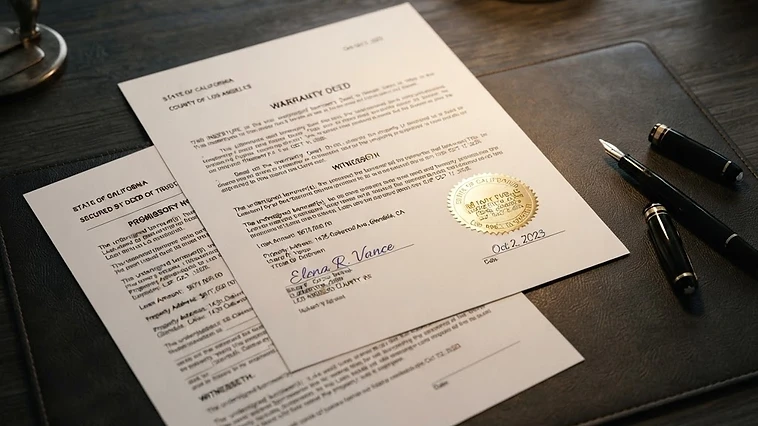 Close up of mortgage refinance paperwork and a notary seal on a dark desk

Title Defects, Phantom Liens, and Mortgage Fraud
Beyond clerical errors, homeowners must also be vigilant against outright mortgage fraud. The Federal Housing Finance Agency (FHFA) continually warns consumers about schemes that target home equity. One of the most insidious threats is title fraud, which often involves forged warranty or quitclaim deeds.
According to the FHFA's Fraud Prevention guidelines, fraudsters can execute and record a forged deed, effectively transferring the property without the true homeowner's knowledge. This is sometimes referred to as a "phantom sale." If you attempt to refinance your home and the title search reveals a fraudulent deed or an unexpected lien, you could be facing a lengthy and expensive legal battle to clear your name.
Even if you are not the victim of a targeted scam, your title could be clouded by "phantom liens"—old mortgages or home equity lines of credit (HELOCs) that were paid off years ago but never properly released by the lender. When you review your refinance paperwork, you must ensure that every previous debt attached to your property has a corresponding "Satisfaction of Mortgage" or "Release of Lien" recorded in the county land records.
How to Conduct a Basic Mortgage Audit
Conducting a mortgage audit doesn't necessarily require hiring an expensive forensic accountant, but it does require patience, attention to detail, and an understanding of what to look for. Here are the foundational steps for reviewing your loan file:
- Gather Your Original Documents: Locate the closing package from when you first purchased the home or last refinanced. You need the Promissory Note, the Mortgage (or Deed of Trust), the Closing Disclosure (or HUD-1 Settlement Statement), and the Title Insurance Policy.
- Request Your Complete Payment History: Contact your current mortgage servicer and request a comprehensive payment history ledger from the inception of the loan. Look for unexplained fees, unauthorized corporate advances, or misapplied payments.
- Check the County Land Records: Visit your local county recorder's office (many have online portals) and search for your property by your name and parcel number. Verify that your mortgage was properly recorded.
- Trace the Assignments: If your loan has been sold or transferred, there should be a recorded "Assignment of Mortgage" for each transfer. If your servicer claims to hold the loan, but the county records show it belongs to a defunct bank from ten years ago, you have a broken chain of title.
- Scrutinize Signatures and Notary Seals: Look closely at the signatures on your recorded documents. Do they look consistent? Are the notary dates accurate? In many cases of mortgage fraud, documents are notarized days or weeks after they were supposedly signed, rendering them legally invalid.
The Danger of MERS and Securitization
No discussion of loan document errors is complete without mentioning the Mortgage Electronic Registration Systems (MERS). MERS was created by the banking industry to bypass county recording fees when loans are bought and sold on the secondary market. Instead of recording an assignment every time a loan changes hands, MERS remains the "nominee" for the lender in the public records.
While MERS is legal, its record-keeping has historically been atrocious. If your mortgage includes MERS, it is highly likely that your loan was securitized—sliced up and sold to investors on Wall Street. Securitization introduces a massive amount of paperwork, and with it, a massive opportunity for errors. When you conduct your mortgage document review, pay special attention to any documents generated by MERS. Ensure that the individuals signing on behalf of MERS actually had the corporate authority to do so.
Why Auditing Your Mortgage Paperwork Matters
It is a common misconception that only homeowners facing foreclosure need to worry about loan document errors. In reality, every homeowner should treat their mortgage file like a ticking time bomb. You may be current on your payments today, but a sudden job loss, medical emergency, or economic downturn could change your circumstances overnight.
If you ever need to request a loan modification, or if you decide to refinance to lower your payments, the accuracy of your refinance paperwork will dictate your success. If your documents are riddled with errors, missing endorsements, or fraudulent signatures, you surrender your leverage to the bank.
This is exactly why the Foreclosure Defense Survival Playbook is an indispensable resource for every homeowner, regardless of their current financial standing. This comprehensive, 530-page educational manual is not just for those in default. It is a masterclass in mortgage mechanics, teaching you exactly how to read your loan documents, how to spot the hidden fraud that automated systems miss, and how to organize your evidence like a seasoned legal researcher.
Don't wait until a title defect ruins your refinance or a servicing error threatens your home. Take control of your largest financial asset today. Order the Foreclosure Defense Survival Playbook and learn how to audit your mortgage paperwork, protect your equity, and secure your peace of mind.


Order The Playbook
Get the Foreclosure Defense Survival Playbook
530 pages of structured, educational guidance covering mortgage documents, foreclosure procedures, evidence organization, and legal research — the same foundation this article draws from.