Mortgage Documents
The Hidden Dangers in Your Loan Documents: Why Every Homeowner Needs a Mortgage Audit Before Refinancing
Recent reports show a massive surge in refinance fraud and forgery claims. Learn why auditing your mortgage paperwork is critical even if you are current on your payments.
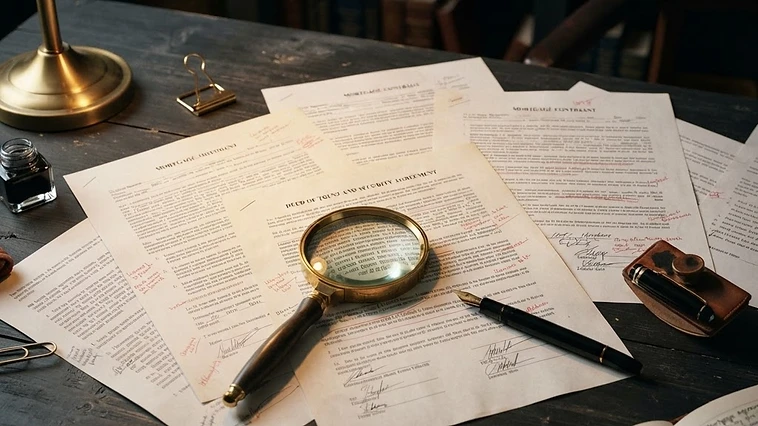
Disclaimer: The following article is for educational and informational purposes only and does not constitute legal advice. Always consult with a qualified attorney regarding your specific legal situation.
If you are a homeowner who pays your mortgage on time every month, you might assume that your loan documents are perfectly accurate and legally sound. However, recent industry reports and enforcement actions reveal a disturbing trend: the paperwork underlying your home loan may be riddled with hidden defects, forged signatures, and missing assignments. Whether you are planning to refinance to take advantage of better rates or simply want to ensure your property rights are secure, conducting a thorough mortgage document review is no longer just an option—it is a necessity.
Recent data highlights a shocking rise in mortgage fraud specifically targeting the refinance process. According to a recent industry analysis, Refinance fraud and forgery claims soar, driving up title insurance losses, fraud and forgery claims tied to mortgage refinances now represent over 40% of all title insurer losses and expenses. The average cost of these claims has skyrocketed to $207,000. This means that even if you are a responsible borrower, the very foundation of your homeownership could be compromised by errors or fraudulent activity that occurred during the origination, servicing, or previous refinancing of your loan.
The Surging Threat of Refinance Fraud and Forgery
When homeowners think of mortgage fraud, they often picture predatory lending tactics aimed at subprime borrowers or elaborate schemes involving abandoned properties. However, the landscape of real estate fraud has evolved significantly. Today, the most insidious threats often hide in plain sight within the refinance paperwork of current, paying homeowners.
Industry experts note that fraud and forgery are actually more common and more costly in refinance transactions compared to traditional purchase transactions. Because refinance deals often involve less scrutiny from buyers and sellers, bad actors—and sometimes even negligent institutions—can slip falsified documents, improper notarizations, and defective title assignments into the public record. The American Land Title Association (ALTA) study revealed that about 40% of refinance-related losses stem from issues that cannot be identified through a simple public records search. This hidden risk underscores the critical need for a comprehensive mortgage audit.
If you are preparing to refinance, you are essentially replacing your old mortgage with a new one. If the original loan documents contain fatal flaws—such as an unrecorded mortgage, a broken chain of title, or a forged signature on a critical assignment—those defects can complicate your refinance, cloud your title, or even expose you to future legal liabilities.
How Digital Closings and AI Fuel Loan Document Errors
As the mortgage industry has rapidly digitized, the convenience of electronic signatures and remote online notarization has come at a steep cost: a dramatic increase in vulnerability to sophisticated fraud schemes. The expansion of digital closing processes has made it easier for unscrupulous actors to manipulate documents without detection.
Furthermore, the rise of artificial intelligence has introduced new risks into the mortgage ecosystem. Recent reports, such as those highlighting how a Mortgage fraud case shows AI's fake-document risk, demonstrate how easily bad actors can generate fictitious paystubs, altered bank statements, and forged legal instruments. While these tools are often used by fraudsters to obtain loans illegally, the same technology can be used to fabricate assignments of mortgage or falsify notary stamps in your own loan file.
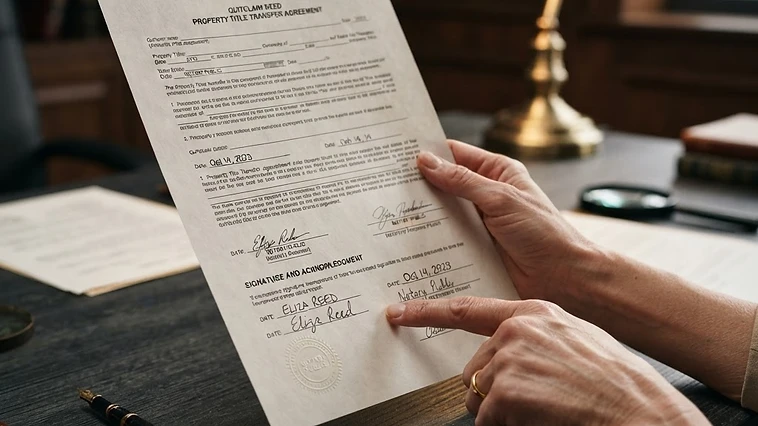 Close-up of a homeowner conducting a mortgage document review on a dark desk with gold lighting.

For the average homeowner, this means that the digital copies of the documents provided by your servicer might not accurately reflect the true legal standing of your loan. A meticulous mortgage document review is required to verify that the signatures are authentic, the dates align correctly, and the entities claiming to own your loan actually have the legal authority to do so.
Common Loan Document Errors to Watch For
When you sit down to review your refinance paperwork or audit your existing mortgage file, you must know what to look for. The Financial Crimes Enforcement Network (FinCEN) has documented numerous ways in which mortgage loan fraud and document errors manifest in residential real estate. Some of the most common loan document errors include:
-
Missing or Unrecorded Assignments: When your mortgage is sold from one lender to another, an Assignment of Mortgage must be properly executed and recorded in the county land records. Frequently, these assignments are missing, drafted years after the fact, or signed by individuals who lack the proper authority (often referred to as "robo-signers").
-
Forged Signatures and Notary Irregularities: It is alarmingly common to find forged signatures on loan documents. This can include a spouse's signature forged without their knowledge, or a loan closing service forging an applicant's signature to expedite the process. Additionally, notary stamps applied without the homeowner being physically present invalidate the document.
-
Failure to Release Prior Liens: In some cases, prior lenders fail to properly release home equity loans or previous mortgages in the land record offices after receiving a payoff. This causes the new lender's loan to have a subordinate position and clouds your title, making future refinancing incredibly difficult.
-
Appraisal and Title Defects: Fraudulent appraisal schemes, such as the recent Appraisal scam leads to $65M worth of defective loans, can artificially inflate property values or hide critical property defects. If your original loan was based on a defective appraisal, it could impact your equity and your ability to refinance.
The Importance of a Proactive Mortgage Audit
Many homeowners mistakenly believe that as long as they make their monthly payments, their mortgage servicer is handling the paperwork correctly. Unfortunately, the Consumer Financial Protection Bureau (CFPB) frequently issues warnings and proposed rules regarding mortgage servicing errors. Servicers are notorious for misapplying payments, failing to provide accurate escrow disclosures, and maintaining sloppy records.
Conducting a proactive mortgage audit allows you to take control of your financial future. By carefully examining your promissory note, mortgage or deed of trust, closing disclosure, and payment history, you can identify discrepancies before they derail your refinance application. If you discover that your servicer has been overcharging you for force-placed insurance, or that your title is clouded by an unrecorded assignment, you can take corrective action while you are still in a position of strength.
Do not wait for a crisis to examine your documents. The best time to uncover loan document errors is when you are current on your payments and not facing the immediate threat of foreclosure. A thorough review ensures that the lender you are paying actually has the legal right to collect those payments, and that your property title is clear of fraudulent encumbrances.
Why Auditing Your Mortgage Paperwork Matters
Even if you have never missed a payment and have excellent credit, auditing your mortgage paperwork is a vital step in protecting your most valuable asset. The recent surge in refinance fraud, coupled with the persistent issue of sloppy servicing and missing assignments, means that the documents sitting in your lender's vault may not be legally enforceable. If you attempt to refinance with a clouded title or defective loan documents, you could face significant delays, unexpected legal fees, or outright denial of your application.
Furthermore, if you ever do face financial hardship in the future, knowing exactly what is in your loan file is your first line of defense. You cannot effectively defend your home if you do not understand the evidence against you.
This is exactly why the "Foreclosure Defense Survival Playbook" is an indispensable resource for every homeowner. This comprehensive 530-page educational book is not just for those facing default; it is the ultimate guide for current homeowners who want to understand their mortgage documents, master evidence organization, and conduct a professional-level mortgage audit. The Playbook teaches you step-by-step how to spot fraud, identify fatal errors, and uncover hidden defects in the paperwork your lender or servicer handed you. Do not leave your property rights to chance. Order the Foreclosure Defense Survival Playbook today, audit your documents, and secure your peace of mind before you sign your next refinance contract.


Order The Playbook
Get the Foreclosure Defense Survival Playbook
530 pages of structured, educational guidance covering mortgage documents, foreclosure procedures, evidence organization, and legal research — the same foundation this article draws from.