Mortgage Documents
The Hidden Dangers in Your Mortgage Paperwork: Why Current Homeowners Must Audit Before Refinancing
Even if you are current on your mortgage payments, hidden document errors and title defects could derail your refinance or expose you to fraud.

Disclaimer: The following article is for educational and informational purposes only and does not constitute legal advice. Always consult with a qualified attorney regarding your specific legal situation.
If you are like most responsible homeowners, you pay your mortgage on time every month. You keep your property in good condition, you pay your property taxes, and you assume that the bank is keeping accurate records of your loan. However, recent investigations and enforcement actions reveal a troubling reality: the mortgage industry is rife with paperwork errors, missing assignments, and even sophisticated document fabrication.
Even if you are completely current on your payments, you cannot assume your loan file is pristine. When interest rates drop or your financial situation changes, you may decide to refinance. But before you sign a new stack of refinance paperwork, you must ask yourself: are my current mortgage documents actually correct? Conducting a thorough mortgage document review is not just for homeowners facing foreclosure; it is a critical protective measure for every homeowner. In an era where artificial intelligence makes document fabrication easier than ever, a proactive mortgage audit is your best defense against hidden liabilities.
The Hidden Risks in Your Refinance Paperwork
When you apply for a refinance, the new lender will scrutinize your property's title and your existing loan documents. If there are breaks in the chain of title, missing endorsements on your promissory note, or unrecorded assignments, your refinance could be delayed or denied entirely. Worse, you might discover that your loan was sold multiple times without proper documentation, leaving it unclear who actually owns your debt.
Recent reports highlight that mortgage fraud risk is evolving rapidly. According to industry experts, the rise of generative AI has increased the sophistication of document fabrication fraud. While much of this focuses on falsified income or asset documents at origination, the same technology can be used by bad actors to fabricate missing assignments or endorsements in a collateral file. As noted in recent industry analysis on Mortgage Fraud: Emerging Risks and Mitigation Strategies, incurable title defects that break the chain of title remain a significant risk in the mortgage market. If your current servicer relies on fabricated or legally deficient documents to prove ownership of your loan, you could be paying the wrong entity—a terrifying prospect even for homeowners who have never missed a payment.
Common Loan Document Errors to Watch For
When you sit down to review your mortgage paperwork, you might be overwhelmed by the sheer volume of pages. However, a careful mortgage document review often reveals glaring loan document errors that were overlooked at the closing table.
First, check your promissory note. Is it properly endorsed? When a loan is sold from your original lender to an investor, the note must be endorsed (signed over), much like a check. Blank endorsements or missing endorsements are incredibly common and can cloud the legal standing of your current servicer.
Second, examine your mortgage or deed of trust. Are the notary signatures and stamps legitimate? Notary irregularities, such as expired stamps or signatures from individuals who were not present at your closing, can invalidate the recording of the document.
Third, look for issues with the Mortgage Electronic Registration Systems (MERS). MERS was created to bypass county recording fees by acting as a nominee for the lender. However, MERS assignments are frequently executed by "robo-signers"—individuals who sign thousands of documents a day without verifying their accuracy. If your refinance paperwork includes a MERS assignment, it is highly susceptible to signature irregularities and authorization defects.
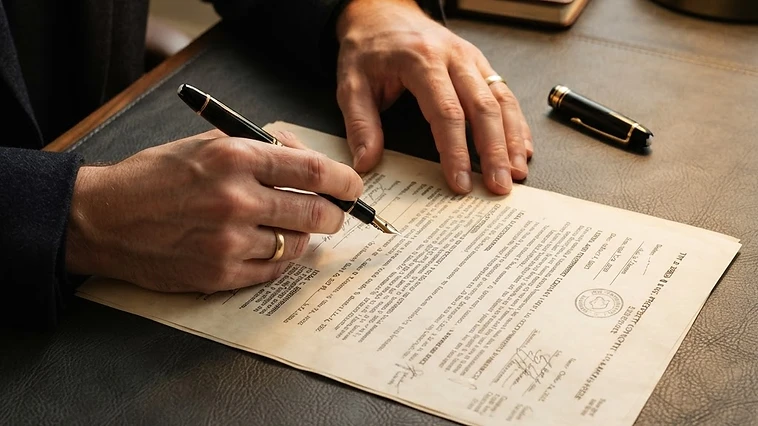 Homeowner conducting a mortgage document review to spot loan document errors.
How Servicing Transfers Create Mortgage Fraud Vulnerabilities
If you have had your mortgage for more than a few years, there is a high probability that your loan servicing has been transferred at least once. Every time your loan is boarded onto a new servicer's computer system, there is a risk of data corruption and document loss.
Federal regulations, specifically 12 CFR Part 1024 Subpart C -- Mortgage Servicing, require servicers to maintain accurate documents and data on each mortgage loan. They are legally obligated to provide accurate and timely disclosures and to investigate and correct errors asserted by borrowers. Despite these rules, servicing transfers frequently result in lost collateral files. When a servicer realizes they have lost the original note or the recorded mortgage, they may attempt to quietly replace it with a "lost note affidavit" or, in worst-case scenarios, a fabricated copy.
This is why a mortgage audit is essential. You must verify that your current servicer actually possesses the legally required, original documents that give them the right to collect your payments. If they do not, you are exposed to the risk of paying a party that has no legal claim to your property, which is a subtle but devastating form of mortgage fraud.
The Threat of Incurable Title Defects
Title defects are one of the most severe issues that can be uncovered during a mortgage document review. An incurable title defect means there is a flaw in the ownership history of your property that cannot be easily fixed with a simple affidavit or corrective deed.
For example, if a previous assignment of your mortgage was never recorded in the county land records, the chain of title is broken. When you go to refinance, the title company will run a search and discover this gap. The new lender will refuse to fund your refinance until the gap is closed. If the original lender went bankrupt during the 2008 financial crisis—a very common scenario—getting a corrective assignment may be nearly impossible.
By auditing your mortgage paperwork now, while you are current on your payments and not under the pressure of a looming foreclosure or a tight refinance lock period, you give yourself time to identify and address these title defects. You can demand that your servicer correct the public record before it becomes an emergency.
Conducting a Mortgage Document Review Before You Refinance
How do you actually perform a mortgage audit? It starts with gathering your documents. You need your original closing package, but more importantly, you need the documents your servicer currently holds.
Under the Real Estate Settlement Procedures Act (RESPA), you have the right to send a Qualified Written Request (QWR) or a Request for Information (RFI) to your mortgage servicer. You can legally demand a copy of your complete collateral file, including the promissory note, all endorsements, the mortgage or deed of trust, all assignments, and a complete payment history.
Once you receive these documents, compare them against your original closing paperwork and the county land records. Look for discrepancies in dates, forged signatures, unauthorized MERS assignments, and unexplained fees in your payment history. If you spot loan document errors, you can submit a Notice of Error (NOE) to your servicer, forcing them to investigate and correct the issue under federal law. Taking these steps ensures that your refinance paperwork will be based on a clean, legally sound foundation.
Why Auditing Your Mortgage Paperwork Matters
It is a common misconception that only homeowners who are behind on their payments need to worry about mortgage fraud or document defects. The truth is, the banking system's sloppy record-keeping affects everyone. Even if you are perfectly current on your loan, hidden errors in your file can destroy your ability to refinance, cloud your property's title, and expose you to predatory practices by unscrupulous servicers.
Auditing your mortgage paperwork matters because it puts you in control of your largest financial asset. You cannot trust the bank to police itself. You must be your own advocate, and that requires education and the right tools.
This is exactly why the "Foreclosure Defense Survival Playbook" is an indispensable resource for every homeowner, not just those facing default. This comprehensive 530-page guide teaches you step-by-step how to read your mortgage documents, how to spot the telltale signs of fraud and forgery, and how to organize your evidence like a professional. It empowers you to conduct a forensic review of your own loan file, ensuring that before you sign any new refinance paperwork, you know exactly what you are agreeing to and who actually holds your debt. Do not wait for a servicing error to threaten your home—order the Playbook today and take control of your mortgage.


Order The Playbook
Get the Foreclosure Defense Survival Playbook
530 pages of structured, educational guidance covering mortgage documents, foreclosure procedures, evidence organization, and legal research — the same foundation this article draws from.