Mortgage Documents
Is Your Mortgage Paperwork Accurate? The Hidden Risks of Document Errors and Fraud
Even homeowners who are current on their payments may have hidden errors or fraud in their mortgage documents. Discover why auditing your paperwork is essential before refinancing.
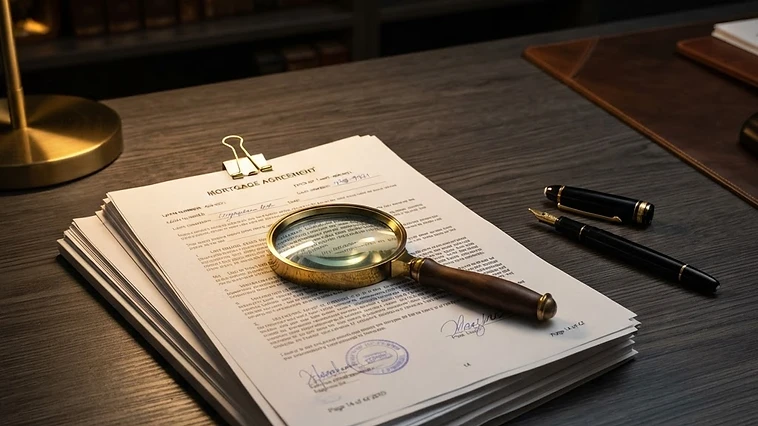
Disclaimer: The following article is for educational purposes only and does not constitute legal advice. If you need legal assistance, please consult a qualified attorney in your jurisdiction.
When you pay your mortgage on time every month, it is easy to assume that everything behind the scenes is functioning perfectly. You receive your statement, you make your payment, and your balance slowly decreases. However, the reality of the modern mortgage industry is far more complex—and far more prone to error. For current homeowners who are considering refinancing, reviewing their mortgage paperwork, or simply checking whether their loan documents are accurate, the risk of hidden document defects is a growing concern.
Recent developments in the financial sector highlight a disturbing trend: the proliferation of sophisticated mortgage fraud, AI-generated document fabrication, and systemic loan document errors. Even if you are not behind on your payments, conducting a thorough mortgage document review is a critical step in protecting your most valuable asset.
The Rising Tide of Mortgage Fraud and Document Fabrication
The landscape of mortgage lending is changing rapidly, and not always for the better. In recent weeks, industry watchdogs and technology providers have sounded the alarm about the increasing difficulty of verifying financial documents. According to recent reports, mortgage fraud is getting harder to spot as artificial intelligence changes how financial information is created and verified.
This isn't just a theoretical risk. In October 2026, major financial technology firms like Ocrolus announced that fraud detection is now included for every mortgage customer to combat tampered and AI-generated bank statements, pay stubs, and tax forms. While these tools are designed to protect lenders from fraudulent borrowers, the underlying issue affects homeowners directly: the mortgage ecosystem is flooded with fabricated documents, sloppy underwriting, and rushed paperwork.
Furthermore, law enforcement is actively pursuing bad actors within the industry. A recent crackdown on mortgage fraud in California resulted in the indictment of an attorney involved in foreclosure and mortgage fraud schemes. These enforcement actions prove that the professionals handling your paperwork—from originators to title agents—are not immune to making critical, sometimes intentional, errors that can cloud your property's title.
Why Your Refinance Paperwork Might Be Flawed
If you are planning to refinance to take advantage of better rates or to pull equity from your home, you will be required to sign a mountain of new refinance paperwork. But before you sign a new contract, you must understand the state of your current mortgage documents.
When a mortgage is sold and securitized—often changing hands multiple times between different servicers and trusts—the chain of title can become broken. Assignments of the deed of trust or mortgage are frequently drafted after the fact, sometimes by "robo-signers" who lack the legal authority to transfer the loan. If your current loan documents contain incurable title defects or fraudulent assignments, refinancing could inadvertently validate a legally flawed debt, or worse, entangle you in a title dispute.
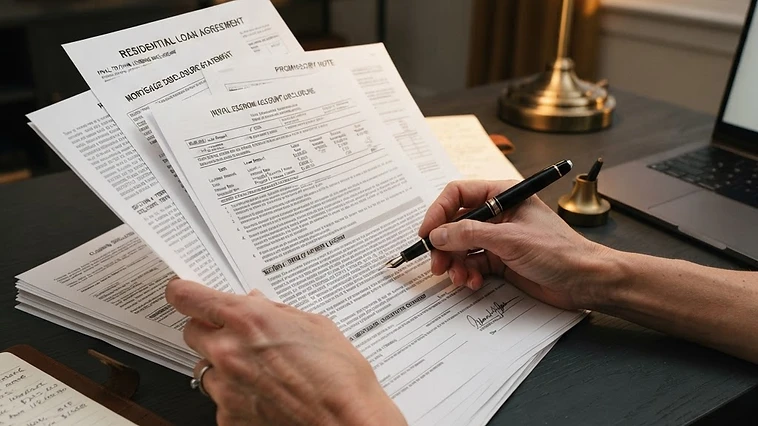 Homeowner conducting a mortgage document review on a dark desk

Industry experts at FTI Consulting have noted that emerging risks in mortgage fraud include incurable title defects that break the chain of title, as well as sophisticated document fabrication. If your original lender cut corners, your current servicer might not actually have the legal standing to enforce the loan. By blindly refinancing, you might be paying off a party that has no legal right to your money.
The Importance of a Proactive Mortgage Audit
You do not need to be in default to benefit from a mortgage audit. In fact, the best time to audit your documents is when you are current on your payments and not under the immediate threat of foreclosure. A comprehensive mortgage document review allows you to examine your file with a clear head.
During a mortgage audit, homeowners should look for several red flags:
- Missing or Altered Endorsements: The promissory note should be properly endorsed (signed over) from the original lender to the current holder. Blank endorsements or missing signatures are major red flags.
- Fraudulent Assignments: Check your county's land records. Are the assignments of your mortgage dated years after the trust that supposedly owns your loan was closed? Were they signed by known robo-signers?
- Inaccurate Servicing Disclosures: Did your servicer properly notify you when the servicing rights were transferred?
- Notary Irregularities: Are the notary stamps on your documents legitimate? In many fraud cases, documents are notarized without the signer being present, or the notary commission had already expired at the time of signing.
Discovering loan document errors now gives you leverage. If you find that your chain of title is broken, you may have grounds to challenge the validity of the lien, negotiate better terms, or ensure that any future refinance is handled with strict legal scrutiny.
Protecting Yourself from Predatory Practices
Even if your original loan was legitimate, the refinance process itself is fraught with peril. Predatory refinance schemes often target homeowners who have built up substantial equity. These schemes can involve inflated appraisals, hidden fees, and bait-and-switch loan terms.
As highlighted by recent consumer protection advisories regarding mortgage fraud in 2026, protection strategies include verifying all parties' credentials, researching property title history, and meticulously reviewing all documents before signing. You must treat your mortgage file like a forensic crime scene. Do not take the lender's word that "everything is standard."
Why Auditing Your Mortgage Paperwork Matters
It is a dangerous misconception that only homeowners facing foreclosure need to worry about the accuracy of their loan documents. Even current, on-time homeowners should audit their mortgage paperwork before refinancing or facing a potential future default. The banking industry has repeatedly demonstrated that it prioritizes speed and profit over accuracy and legal compliance. If you do not verify your own file, no one else will do it for you.
This is exactly why the Foreclosure Defense Survival Playbook is an indispensable resource for every homeowner. You don't need to be a lawyer to understand your own mortgage. The Playbook teaches you step-by-step how to spot fraud, errors, and defects in the documents a lender or servicer handed you. It empowers you to conduct a professional-level mortgage document review, organize your evidence, and understand the complex procedures that govern your property rights.
Don't wait until a servicer makes a mistake that threatens your home, and don't sign new refinance paperwork until you know exactly what is in your current file. Order the Foreclosure Defense Survival Playbook today, take control of your financial future, and ensure that your home remains truly yours.


Order The Playbook
Get the Foreclosure Defense Survival Playbook
530 pages of structured, educational guidance covering mortgage documents, foreclosure procedures, evidence organization, and legal research — the same foundation this article draws from.