Mortgage Documents
Is Your Mortgage Paperwork Accurate? Why Current Homeowners Must Audit Their Documents Before Refinancing
Discover why current homeowners should audit their mortgage documents for hidden errors, fraud, and defects before refinancing.
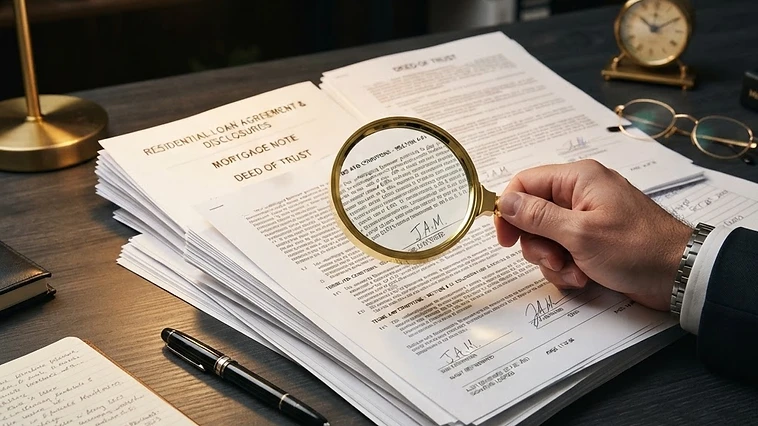
The Hidden Risks in Your Mortgage Paperwork
When you are current on your mortgage payments, it is easy to assume that your loan documents are perfectly accurate. You pay your bill every month, the servicer credits your account, and everything seems fine. However, the reality of the mortgage industry is far more complex. Recent enforcement actions and court rulings highlight a growing concern: mortgage document errors, refinance fraud, and hidden defects are prevalent, even for homeowners who have never missed a payment.
Before you consider refinancing or making any major changes to your home loan, it is crucial to conduct a thorough mortgage document review. This article explores the hidden risks in your mortgage paperwork and explains why a proactive mortgage audit is essential for protecting your most valuable asset.
Disclaimer: This article is for educational purposes only and does not constitute legal advice. If you have specific legal questions about your mortgage documents, please consult with a qualified attorney.
The Rise of Refinance Fraud and Document Fabrication
Mortgage fraud is not just a problem of the past; it is an evolving threat. With the rise of artificial intelligence and sophisticated digital tools, fraudsters are finding new ways to manipulate loan documents. A recent case highlighted by National Mortgage News demonstrated how individuals used fabricated pay stubs and fake employment records to push through mortgage applications. While this specific case involved loan origination, the same tactics can be used in predatory refinance schemes.
When you refinance, you are essentially taking out a new loan to pay off the old one. This process requires a massive amount of paperwork, including income verification, appraisals, and title documents. If any of these documents are falsified or contain errors, it can have severe consequences for the homeowner. For example, an inflated appraisal could lead you to borrow more than your home is worth, while hidden fees or undisclosed terms could trap you in a predatory loan.
Common Loan Document Errors to Watch For
Even without malicious intent, simple human error can plague mortgage paperwork. When reviewing your documents, keep an eye out for these common loan document errors:
- Incorrect Loan Terms: Ensure that the interest rate, loan duration, and monthly payment amount match what you agreed to. Check for hidden balloon payments or adjustable-rate clauses that were not disclosed.
- Title and Recording Defects: The chain of title must be clear and properly recorded. Errors in assignments or missing signatures can cloud your title, making it difficult to sell or refinance in the future.
- Notary and Signature Irregularities: Forged signatures, improper notarizations, or documents signed by unauthorized individuals (often referred to as "robo-signing") can invalidate crucial legal documents.
- Servicing Disclosure Issues: Your servicer must provide accurate disclosures regarding escrow accounts, fees, and payment application. Unexplained fees or misapplied payments are red flags.
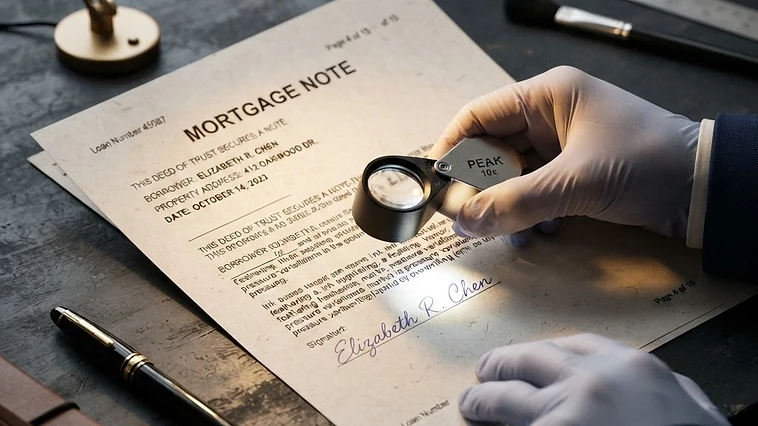 Close-up of a mortgage document being examined for signature irregularities under warm light.

The Role of MERS and Assignment Problems
The Mortgage Electronic Registration Systems (MERS) was created to streamline the tracking of mortgage ownership and servicing rights. However, its use has often led to confusion and legal disputes regarding who actually owns the loan. When a mortgage is sold or transferred multiple times, the assignments must be properly documented.
If you are refinancing, the new lender will need to verify that the old loan is properly paid off and that the lien is released. If there are gaps in the chain of assignments or if MERS records do not match county land records, it can delay your refinance or leave you vulnerable to future claims. Auditing your paperwork helps ensure that the entity claiming to hold your mortgage actually has the legal right to do so.
Why Auditing Your Mortgage Paperwork Matters
You might wonder, "If I'm paying my mortgage on time, why should I care about these errors?" The answer is simple: hidden defects in your mortgage paperwork can surface at the worst possible times. If you ever need to refinance, sell your home, or if you unexpectedly face financial hardship and default, these errors can be used against you or complicate your situation immensely.
Auditing your mortgage paperwork before refinancing or a future default empowers you to correct errors while you still have leverage. It ensures that you are not a victim of predatory lending or refinance fraud.
This is where the Foreclosure Defense Survival Playbook becomes your most valuable tool. Even if you are not facing foreclosure, the Playbook teaches you exactly how to spot fraud, errors, and defects in the documents a lender or servicer handed you. It provides the educational foundation you need to understand mortgage procedures, organize your evidence, and conduct a comprehensive mortgage audit. Don't wait for a crisis to discover that your loan documents are flawed—order the Playbook today and take control of your financial future.


Order The Playbook
Get the Foreclosure Defense Survival Playbook
530 pages of structured, educational guidance covering mortgage documents, foreclosure procedures, evidence organization, and legal research — the same foundation this article draws from.