Mortgage Documents
Is Your Mortgage Paperwork Accurate? Why Current Homeowners Must Audit Their Documents Before Refinancing
Discover why current homeowners should audit their mortgage documents for hidden errors, title defects, and fraud risks before refinancing.
The Hidden Risks in Your Mortgage Paperwork
When you pay your mortgage on time every month, it is easy to assume that your loan documents are perfectly accurate. However, recent investigations and court cases reveal a troubling reality: mortgage document errors, title defects, and even outright mortgage fraud are more common than most homeowners realize. Whether you are considering refinancing or simply want peace of mind, conducting a thorough mortgage document review is a critical step in protecting your most valuable asset.
Disclaimer: This article is for educational purposes only and does not constitute legal advice. Always consult with a qualified attorney for legal matters regarding your mortgage or property.
The Rise of AI and Fake Mortgage Documents
In recent years, the mortgage industry has seen a disturbing trend: the use of artificial intelligence to generate fake documents. A recent mortgage fraud case highlighted by National Mortgage News demonstrated how fraudsters used fabricated pay stubs and employment records to deceive lenders into issuing government-backed mortgages. While this specific case involved borrowers and brokers falsifying income, it underscores a broader issue: the ease with which documents can be manipulated in the digital age.
For the average homeowner, this means that the paperwork associated with your loan—whether it is the original origination file, a loan modification, or a recent refinance—could contain inaccuracies or fraudulent alterations that you are completely unaware of. If a bad actor can easily fake a pay stub, they can also forge signatures, alter assignments, or mishandle notary stamps on your critical property records.
Common Loan Document Errors and Title Defects
Even without malicious intent, simple human error can lead to significant problems in your mortgage paperwork. When loans are sold and transferred between servicers, or when they are bundled into mortgage-backed securities, the chain of title can become clouded.
Some of the most common issues found during a mortgage audit include:
- Missing or Defective Assignments: When your loan is sold, an assignment of mortgage must be properly recorded. Often, these documents are missing, signed by unauthorized individuals (robo-signing), or recorded years after the fact.
- Title Defects: A title defect can arise from unreleased prior mortgages, errors in the legal description of the property, or improper recording. As noted in recent court rulings, title insurance policies often have strict limitations on when they provide coverage, meaning the burden of a clouded title could fall on you.
- Notary Irregularities: Documents that require notarization, such as the mortgage or deed of trust, are sometimes notarized without the borrower present, or the notary commission may have been expired at the time of signing.
- Inaccurate Loan Balances and Fees: Servicing disclosure issues and improper application of payments can lead to inflated loan balances, making it difficult to refinance or sell your home.
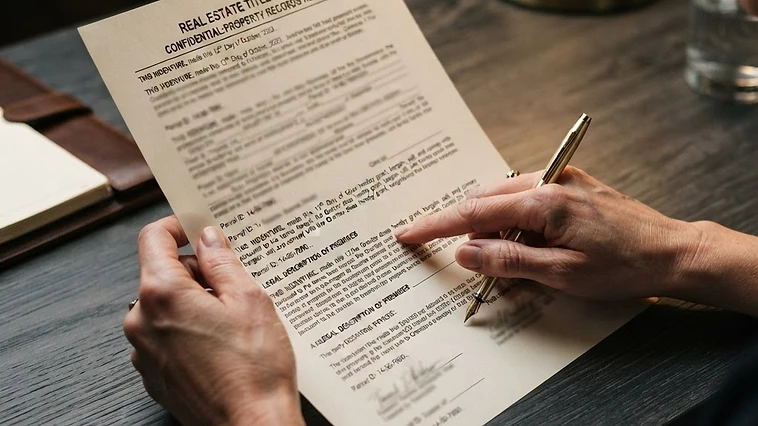 Close-up of hands reviewing mortgage and title documents with a pen on a dark desk.

The Danger of Predatory Refinance and Fraud
If you are a current homeowner looking to take advantage of lower interest rates or tap into your home equity, you are a prime target for predatory refinance schemes. Fraudsters often use aggressive tactics to push homeowners into refinancing into loans with hidden fees, adjustable rates that skyrocket, or terms that strip equity from the home.
Furthermore, the Financial Crimes Enforcement Network (FinCEN) has consistently reported on various forms of mortgage loan fraud, including material misrepresentations, forged documents, and unauthorized loan assumptions. If your original loan documents contain errors or fraudulent information, refinancing could inadvertently validate those errors, making them much harder to challenge later.
Why Auditing Your Mortgage Paperwork Matters
Even if you are current on your payments and have no intention of defaulting, you must audit your mortgage paperwork before refinancing or making any major financial decisions regarding your home. A proactive mortgage audit allows you to identify and correct loan document errors, title defects, and potential fraud before they become a crisis.
If you wait until you are facing financial hardship or a foreclosure threat to review your documents, you may find that the evidence you need has been lost, or that the statute of limitations to challenge certain defects has expired. By reviewing your refinance paperwork and original loan file now, you take control of your financial future.
The Foreclosure Defense Survival Playbook is your essential guide to navigating this complex process. It teaches you exactly how to spot fraud, errors, and defects in the documents your lender or servicer handed you. Don't wait for a problem to arise—order the Playbook today and learn how to protect your home with confidence.


Order The Playbook
Get the Foreclosure Defense Survival Playbook
530 pages of structured, educational guidance covering mortgage documents, foreclosure procedures, evidence organization, and legal research — the same foundation this article draws from.