Mortgage Documents
Is Your Mortgage Paperwork Hiding Fraud? Why Current Homeowners Must Audit Before Refinancing
Even if you are current on your mortgage payments, hidden document errors, forged signatures, and title defects could jeopardize your homeownership. Learn why auditing your mortgage paperwork is a critical step before refinancing.
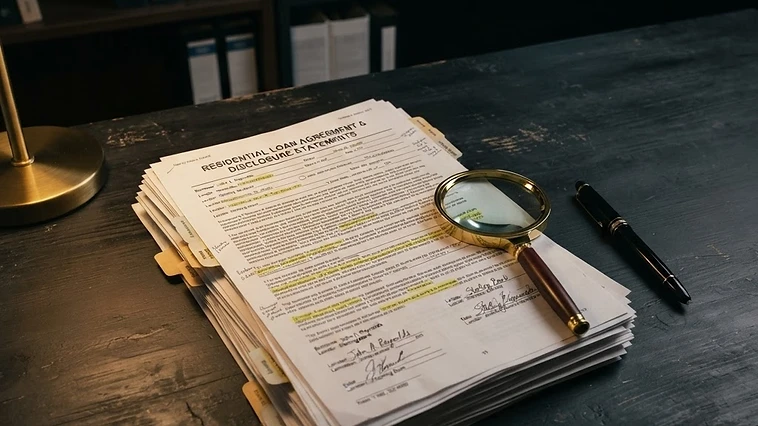
The Hidden Danger in Your Mortgage Paperwork
When you pay your mortgage on time every month, it is easy to assume that your loan documents are perfectly accurate. You receive your monthly statement, you make your payment, and your balance slowly decreases. However, recent industry data and enforcement actions reveal a troubling reality: mortgage document errors, title defects, and outright fraud are alarmingly common, even for homeowners who are not in default.
If you are considering refinancing to take advantage of better rates or to tap into your home equity, assuming your original paperwork is flawless can be a costly mistake. A recent study by Milliman Inc., commissioned by the American Land Title Association (ALTA), found that fraud and forgery claims tied to mortgage refinances have surged, now representing over 40% of all title insurer losses and expenses. The average cost of these fraud and forgery claims on refinances has climbed to $207,000—almost seven times higher than other claim types Refinance fraud and forgery claims soar, driving up title insurance losses.
Before you sign a new stack of refinance paperwork, you must conduct a thorough mortgage document review.
Disclaimer: This article is for educational purposes only and does not constitute legal advice. If you suspect fraud or need legal assistance, consult a qualified attorney.
Why Refinance Fraud is Surging
Refinancing is often viewed as a low-risk transaction by homeowners. You already own the home, and you are simply swapping one loan for another. Unfortunately, fraudsters and sloppy institutional practices thrive in this perceived safety.
According to ALTA, about 40% of refinance-related losses and expenses stem from issues that cannot be identified through standard public record searches Refinance fraud and forgery claims soar, driving up title insurance losses. This means that a simple title search might not uncover the hidden defects in your chain of title or the forged signatures buried in your loan file.
Furthermore, the rise of Artificial Intelligence (AI) has made document fabrication easier than ever. Bad actors can generate convincing paystubs, bank statements, and even forged deeds in minutes using widely available software Mortgage Fraud: Emerging Risks, Mitigation Strategies. While this is often used to secure loans fraudulently, it also means that if your identity or property information is compromised, fraudulent liens or phantom sales could be executed against your property without your immediate knowledge.
Common Loan Document Errors to Look For
When conducting a mortgage audit of your own files, you are looking for discrepancies between what you agreed to, what the law requires, and what is actually recorded in the county land records.
Here are some of the most common loan document errors and irregularities:
1. Unrecorded or Improperly Recorded Assignments
If your mortgage was sold (which happens to the vast majority of loans), there should be a clear, recorded assignment of the mortgage or deed of trust from the old lender to the new one. Often, these assignments are missing, recorded years late, or signed by individuals who lacked the authority to do so (a practice famously known as "robo-signing"). If the chain of title is broken, the current servicer may not have the legal standing to enforce the loan.
2. Forged Signatures and Notary Irregularities
It sounds shocking, but forged documents are a persistent issue. The Financial Crimes Enforcement Network (FinCEN) has noted instances where loan closing services forged applicants' signatures to expedite the process, or where borrowers forged co-owners' signatures Mortgage Loan Fraud. Check your closing documents carefully. Does the signature look exactly like yours? Was the notary actually present when you signed?
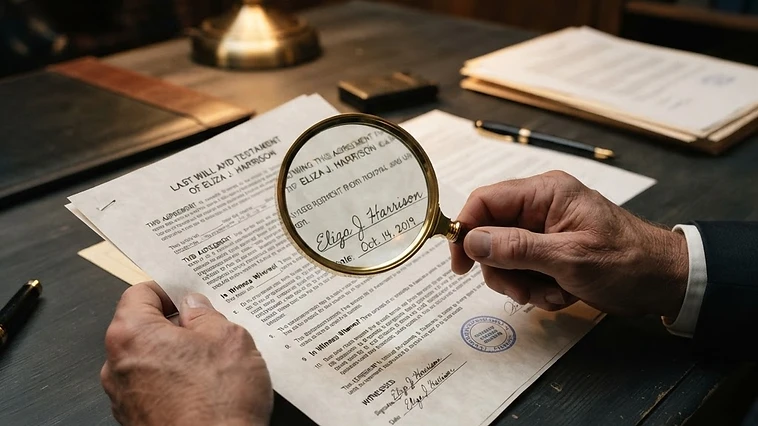 A magnifying glass inspecting a signature on a mortgage document, representing a mortgage document audit.

3. Failure to Release Prior Liens
If you have refinanced before, or paid off a home equity line of credit (HELOC), the prior lender is required to record a release or satisfaction of mortgage. FinCEN reports that prior lenders sometimes fail to release these liens in land record offices after receiving the payoff Mortgage Loan Fraud. If you try to refinance now, that old, unreleased lien will cloud your title and halt the process.
4. Inaccurate Principal Balances and Fee Padding
Servicers make mistakes. Misapplied payments, unauthorized property inspection fees, and incorrect interest rate calculations on adjustable-rate mortgages can artificially inflate your principal balance. If you refinance without auditing this, you will end up financing those junk fees into your new loan, paying interest on them for the next 30 years.
The Threat of Title Fraud and Phantom Sales
Even if your lender did everything right, external fraudsters might be targeting your property equity. The Federal Housing Finance Agency (FHFA) warns of "Phantom Sales" and forged deeds. A fraudster can execute and record a forged warranty or quitclaim deed, effectively transferring the property to themselves without your knowledge Fraud Prevention | FHFA.
Because you are current on your mortgage, you might not notice anything is wrong until you apply for a refinance and the title company informs you that you no longer legally own your home. Regularly checking your county's property records is a vital part of protecting your investment.
Why Auditing Your Mortgage Paperwork Matters
You might be thinking, "I pay my mortgage on time, so why should I care if the bank made a paperwork error?"
The answer is simple: leverage and protection.
If you are refinancing, you need to ensure you are not rolling fraudulent fees or incorrect balances into a new, larger loan. If you ever face a financial hardship in the future, knowing the defects in your loan documents can provide critical leverage against a lender attempting to foreclose.
Auditing your mortgage paperwork is about taking control of your largest financial asset. You cannot rely on the bank, the title company, or the servicer to catch these errors. As the recent data shows, the systems designed to protect consumers frequently fail, and the cost of defending against title fraud or forgery can be financially devastating Refinance fraud and forgery claims soar, driving up title insurance losses.
This is exactly why the Foreclosure Defense Survival Playbook is an essential resource, even for homeowners who are perfectly current on their payments. The Playbook provides a comprehensive, step-by-step guide on how to pull your county records, read your mortgage contract, spot notary fraud, and identify the hidden defects that lenders hope you never find. Don't wait until a refinance falls through or a financial crisis hits. Order the Playbook today and learn how to audit your mortgage documents like a pro.


Order The Playbook
Get the Foreclosure Defense Survival Playbook
530 pages of structured, educational guidance covering mortgage documents, foreclosure procedures, evidence organization, and legal research — the same foundation this article draws from.