Mortgage Documents
Is Your Mortgage Paperwork Hiding Fraud? Why Current Homeowners Must Audit Their Documents
Recent enforcement actions reveal a surge in mortgage document errors and refinance fraud, making it essential for current homeowners to audit their paperwork.
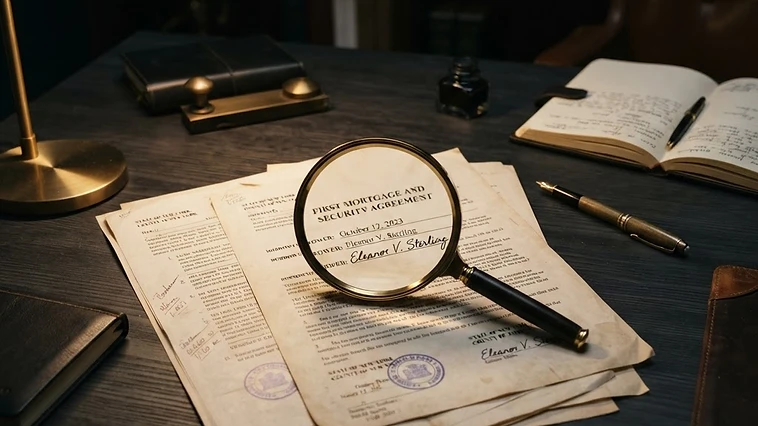
The Hidden Risks in Your Mortgage Paperwork
When you pay your mortgage on time every month, it is easy to assume that your loan documents are perfectly accurate. However, recent enforcement actions and industry reports reveal a troubling reality: mortgage document errors, title defects, and outright fraud are surging. Whether you are considering refinancing or simply want to ensure your home is protected, auditing your mortgage paperwork is a critical step for every homeowner.
Disclaimer: This article is for educational purposes only and does not constitute legal advice. Always consult with a qualified attorney regarding your specific legal situation.
The Rise of Refinance Fraud and Forgery
Recent data highlights a significant increase in fraud and forgery claims tied to mortgage refinances. According to a late 2025 study commissioned by the American Land Title Association (ALTA), fraud and forgery claims now represent over 40% of all title insurer losses and expenses Refinance fraud and forgery claims soar, driving up title insurance losses. The average cost of these claims on refinances has climbed to a staggering $207,000.
Even more concerning is that about 40% of refinance-related losses stem from issues that cannot be identified through standard public record searches. This means that hidden defects—such as forged signatures, improper notary stamps, or unrecorded assignments—could be lurking in your loan file without your knowledge.
AI and the New Era of Fake Documents
The landscape of mortgage fraud is evolving rapidly, driven by advancements in artificial intelligence. Fraudsters are now using AI to generate highly convincing fake documents, including pay stubs, bank statements, and tax returns. In a recent federal case in Florida, individuals pleaded guilty to a bank-fraud scheme that involved fabricating pay stubs to secure government-backed mortgages Mortgage fraud case shows AI's fake-document risk.
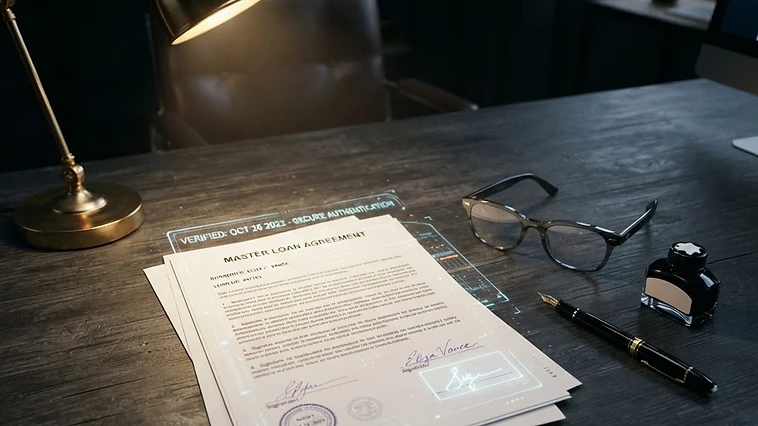 Mortgage documents being reviewed for errors and fraud on a dark desk with warm lighting.

While this specific case involved fraud to obtain a loan, the technology used to create these documents poses a broader threat. AI-generated documents can replicate visual formatting, fonts, and metadata with enough fidelity to pass standard automated checks Detecting and Deterring Mortgage Fraud | Proof. For homeowners, this means that the documents recorded against your property—such as assignments of mortgage or lien releases—could potentially be fabricated or altered without detection.
Common Loan Document Errors to Watch For
Even without malicious intent, administrative errors in mortgage paperwork are alarmingly common. When reviewing your mortgage documents, pay close attention to the following areas:
- Improper Signatures and Notarizations: Ensure that all signatures are genuine and that notary stamps are valid and properly executed. Forged co-owner signatures or improper use of power of attorney are frequent issues.
- Unrecorded or Missing Assignments: If your loan has been sold or transferred (which is common), there should be a clear chain of assignments recorded in the county land records. Missing or broken chains of title can create significant legal headaches.
- Failure to Release Prior Liens: When you refinance, the previous lender must properly record a release or satisfaction of the old mortgage. Failure to do so can leave a "cloud" on your title, making it appear as though you owe more debt than you actually do.
- Inaccurate Loan Terms: Verify that the interest rate, loan amount, and repayment terms match what you agreed to at closing.
Why Auditing Your Mortgage Paperwork Matters
You might wonder why a mortgage audit is necessary if you are current on your payments and not facing foreclosure. The answer lies in protecting your most valuable asset. Hidden errors or fraudulent documents can complicate future attempts to sell or refinance your home. In worst-case scenarios, incurable title defects can break the chain of title, leading to severe legal and financial consequences Mortgage Fraud: Emerging Risks and Mitigation Strategies.
Before you sign new refinance paperwork or if you simply want peace of mind, conducting a thorough mortgage document review is essential. You need to know exactly what is recorded against your property and whether the lender or servicer has maintained accurate, legally compliant records.
This is where the Foreclosure Defense Survival Playbook becomes an invaluable resource. Even for homeowners who are not behind on payments, the Playbook teaches you how to meticulously audit your mortgage paperwork, spot hidden fraud, identify administrative errors, and understand the complex web of mortgage servicing and assignments. Don't wait for a problem to arise—empower yourself with the knowledge to protect your home today. Order your copy of the Playbook and take control of your mortgage documents.

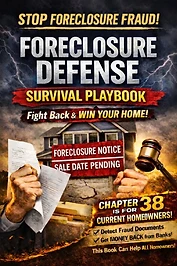
Order The Playbook
Get the Foreclosure Defense Survival Playbook
530 pages of structured, educational guidance covering mortgage documents, foreclosure procedures, evidence organization, and legal research — the same foundation this article draws from.