Mortgage Documents
The Hidden Risks in Your Refinance Paperwork: How to Spot Mortgage Document Errors and Fraud
Even if you pay your mortgage on time, your loan file could be riddled with hidden errors, title defects, or fraudulent documents that could derail a future refinance.

Disclaimer: The information provided in this article is for educational purposes only and does not constitute legal advice. If you require legal assistance, please consult a qualified attorney.
When you pay your mortgage on time every month, it is easy to assume that your loan file is in perfect order. You receive your monthly statements, you make your payments, and your balance slowly decreases. For most current homeowners, the inner workings of their mortgage file remain a mystery until they decide to sell or refinance. However, assuming that your loan documents are flawless can be a costly mistake. The reality is that the mortgage industry is highly complex, heavily securitized, and prone to systemic errors. Whether you are preparing to lower your interest rate, tap into your home equity, or simply want peace of mind, conducting a thorough mortgage document review is an essential step in protecting your most valuable asset.
In recent years, the real estate market has seen a alarming surge in sophisticated mortgage fraud, title defects, and loan document errors. These issues do not only affect homeowners who are facing foreclosure; they can quietly lurk in the files of borrowers who have never missed a payment. When you sit down to sign your refinance paperwork, you are essentially creating a new financial contract based on the foundation of your original loan. If that foundation is built on missing assignments, forged signatures, or fabricated financial data, you could be unknowingly compounding a legal mess. This article will explore the recent trends in mortgage fraud, explain why a proactive mortgage audit is necessary, and guide you through the process of verifying the accuracy of your loan documents.
The Rise of AI and Fabricated Loan Document Errors
The landscape of mortgage fraud is evolving rapidly, driven by advancements in technology. While the days of the 2008 financial crisis were characterized by "robo-signing" and mass-produced fraudulent assignments, today's threats are increasingly digital. A recent report from National Mortgage News on July 24, 2026, highlighted a disturbing trend: the use of Artificial Intelligence to generate highly convincing, fake financial documents. In a recent federal case in Florida, fraudsters were caught using AI to fabricate pay stubs and W-2s for borrowers to push loans through the underwriting process. The perpetrators used the names of legitimate businesses—such as a New York restaurant and a Florida auto repair firm—to report nonexistent wages, allowing unqualified borrowers to obtain massive loans.
While you may know that your own income is legitimate, this trend highlights a critical vulnerability in the mortgage origination process: third-party manipulation. Mortgage brokers, loan officers, and processing agents are often compensated on commission. In their rush to close a loan, unscrupulous actors might alter your refinance paperwork or original loan application without your knowledge. They might inflate your income, misrepresent your assets, or forge your signature on disclosure documents to ensure the loan is approved. If these loan document errors are discovered later by the lender or an investor, it could trigger a default clause or complicate your ability to refinance in the future.
This is why a comprehensive mortgage document review is not just about checking the spelling of your name; it is about verifying that the financial data submitted on your behalf is entirely accurate. When you request your complete loan file from your servicer, you must scrutinize the original Uniform Residential Loan Application (Form 1003) and all supporting income documentation. If you discover that a broker exaggerated your income or fabricated a document to secure your original loan, you need to be aware of this liability before you attempt to refinance.
Title Fraud and Stolen Identities in Real Estate
Beyond income fabrication, current homeowners face a growing threat from title fraud and identity theft. On July 22, 2026, the FBI's Eurasian Organized Crime Task Force in Los Angeles announced the arrests of multiple individuals involved in a massive title fraud scheme. According to the FBI and IRS-CI, the defendants stole the identities of elderly homeowners, fabricated financial documents, and used those stolen identities to secure high-value real estate loans. They moved millions of dollars through a maze of shell companies, effectively draining the equity from properties without the true owners' knowledge.
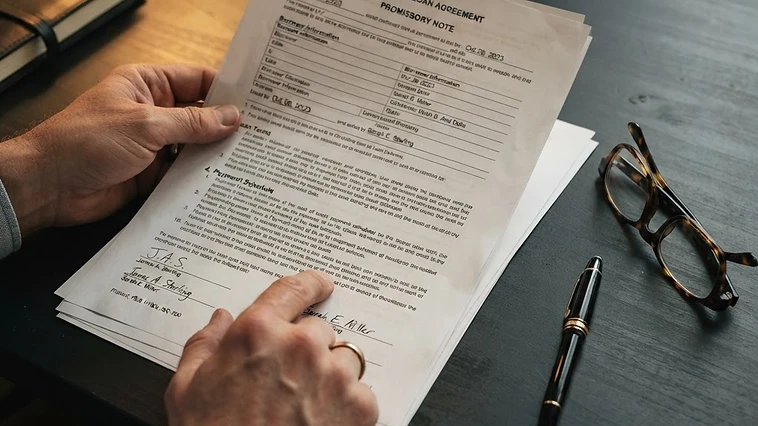 Close-up of hands reviewing mortgage loan documents on a dark desk with gold lighting.

While this specific case involved organized crime, title defects and unauthorized liens can occur in much more mundane ways. When a mortgage is sold and securitized, the right to collect the debt is often transferred multiple times. These transfers are supposed to be recorded in the county land records through a document called an Assignment of Mortgage (or Deed of Trust). However, during the securitization boom, lenders frequently failed to record these assignments properly, or they relied on the Mortgage Electronic Registration Systems (MERS) to track ownership privately.
If you are current on your payments but your chain of title is broken due to unrecorded assignments or fraudulent title transfers, you may encounter severe roadblocks when you try to refinance. A new lender will require a clean title search before approving your refinance paperwork. If the public records show that a defunct lender from ten years ago still holds the lien on your property, or if a fraudulent deed has been recorded against your home, your refinance will be denied until the title defect is cured. Conducting a mortgage audit allows you to identify these title issues early, giving you time to file a quiet title action or demand corrective documents from your servicer before you are under the pressure of a closing deadline.
Why Current Homeowners Need a Mortgage Audit
The term "mortgage audit" is often associated with foreclosure defense, but it is equally vital for homeowners who are in good standing. A mortgage audit is a forensic examination of your loan documents, payment history, and public land records to ensure that your lender has complied with all state and federal laws. For a current homeowner, the goal of an audit is preventative maintenance. You are looking for hidden liabilities that could cost you money, delay a real estate transaction, or expose you to predatory lending practices.
One of the most common issues uncovered during a mortgage document review is the misapplication of payments. Mortgage servicers manage thousands of accounts, and their automated systems are notorious for making errors. They may incorrectly assess late fees, miscalculate escrow requirements for taxes and insurance, or fail to credit principal payments accurately. Over the life of a 30-year loan, a seemingly minor accounting error can compound into thousands of dollars in overcharges. By auditing your payment history and comparing it against your original promissory note, you can ensure that your principal balance is accurate before you roll it into a new refinanced loan.
Furthermore, an audit helps you verify the legal standing of your current servicer. Just because a company sends you a monthly statement does not necessarily mean they have the legal authority to enforce the debt. By examining the endorsements on your promissory note and the assignments recorded in the county clerk's office, you can trace the chain of ownership. If there is a break in the chain, or if the documents appear to be "robo-signed" by individuals who lacked the authority to execute them, you have uncovered a significant defect. While you may choose to continue making your payments, knowing about these defects gives you immense leverage if a dispute ever arises.
Key Areas to Check in Your Refinance Paperwork
When you decide to move forward with a refinance, you will be presented with a mountain of new refinance paperwork. Before you sign on the dotted line, you must apply the same forensic scrutiny to these new documents as you did to your original loan file. Here are the critical areas you must review to protect yourself from mortgage fraud and loan document errors:
First, carefully examine the Closing Disclosure (CD). This document outlines the final terms of your loan, including the interest rate, monthly payment, and all closing costs. Compare the CD to the initial Loan Estimate you received when you applied. Are there unexpected junk fees? Has the interest rate changed? Predatory lenders often try to slip in hidden fees or alter the terms at the last minute, hoping that you will be too exhausted by the process to notice.
Second, review the Promissory Note and the Deed of Trust (or Mortgage). Ensure that the principal amount matches exactly what you agreed to borrow. Check the spelling of your name, the property address, and the legal description of the property. A single typo in the legal description can cloud your title for years. Additionally, pay close attention to any riders attached to the Deed of Trust, such as an Adjustable Rate Rider or a Planned Unit Development Rider, to ensure they accurately reflect your agreement.
Third, be vigilant about notary and signature irregularities. Never sign a blank document or a document that contains blank lines. In the past, fraudulent brokers have asked borrowers to sign blank pages, which were later attached to unfavorable contract terms. Ensure that the notary public is physically present when you sign the documents and that they properly record your identification in their journal. Notary fraud is a common mechanism used to execute forged deeds and unauthorized loan modifications.
Finally, scrutinize the Truth in Lending Act (TILA) and Real Estate Settlement Procedures Act (RESPA) disclosures. These federal laws require lenders to provide clear and accurate information about the cost of credit and the relationships between the various parties involved in the transaction. If you notice that your broker is receiving a massive, undisclosed kickback from the lender, or if the Annual Percentage Rate (APR) is calculated incorrectly, you may be the victim of a predatory refinance scheme.
Why Auditing Your Mortgage Paperwork Matters
Ultimately, your home is likely your largest financial asset, and the mortgage attached to it is your largest liability. Blindly trusting that your lender, servicer, and broker have executed every document flawlessly is a risk you cannot afford to take. Even if you are current on your payments and have excellent credit, the systemic issues within the mortgage industry—from AI-generated fraud to sloppy securitization practices—mean that loan document errors are incredibly common. Auditing your mortgage paperwork matters because it empowers you to take control of your financial destiny. It allows you to correct title defects before they derail a sale, recover overcharged fees from your servicer, and ensure that your new refinance paperwork is legally sound.
If you are ready to take a deep dive into your loan file but don't know where to start, the "Foreclosure Defense Survival Playbook" is your ultimate guide. This comprehensive, 530-page educational resource is not just for homeowners in distress; it is an indispensable tool for anyone who wants to understand the complex mechanics of mortgage documents, evidence organization, and legal research. The Playbook teaches you step-by-step how to perform a forensic mortgage document review, how to spot the telltale signs of fraud and forgery, and how to decode the confusing language hidden in your refinance paperwork. Don't wait until a crisis strikes or a refinance is denied due to a hidden error. Order the Foreclosure Defense Survival Playbook today, audit your documents, and secure your home's legal foundation.


Order The Playbook
Get the Foreclosure Defense Survival Playbook
530 pages of structured, educational guidance covering mortgage documents, foreclosure procedures, evidence organization, and legal research — the same foundation this article draws from.