Mortgage Documents
The Hidden Risks in Your Refinance Paperwork: Why Current Homeowners Must Audit Their Mortgage Documents
Recent industry reports reveal a shocking rise in mortgage document errors and refinance defects. Learn why auditing your loan paperwork is crucial even if you are current on your payments.
Disclaimer: The following article is for educational purposes only and does not constitute legal advice. If you need legal assistance, please consult a qualified attorney in your jurisdiction.
When you pay your mortgage on time every month, it is easy to assume that everything behind the scenes is functioning perfectly. You receive your monthly statement, you make your payment, and your balance slowly decreases. However, recent industry data and federal enforcement actions reveal a troubling reality: the mortgage industry is currently experiencing a significant spike in loan document errors, compliance failures, and even mortgage fraud. For homeowners who are considering refinancing or simply want to ensure their property rights are secure, conducting a thorough mortgage document review is no longer optional—it is a necessity.
Recent reports from mortgage quality control firms highlight a startling trend. According to the latest ACES Mortgage QC Industry Trends Report, the critical defect rate in the mortgage industry has been steadily rising, with refinance defect shares jumping dramatically to over 37% in recent quarters. This means that more than a third of recently reviewed refinance loans contained significant defects, ranging from income calculation errors to severe legal and regulatory compliance failures.
The Hidden Epidemic of Loan Document Errors
Many homeowners believe that loan document errors only affect those who are facing foreclosure. This is a dangerous misconception. Even if you are perfectly current on your payments, your mortgage file could be riddled with inaccuracies. The recent ACES reports indicate that as refinance activity shifts, lenders are struggling with compliance controls. Findings related to loan documentation and legal/regulatory compliance have surged, suggesting that the paperwork securing your home might not be as ironclad as you think.
Common loan document errors include misspelled names, incorrect property addresses, miscalculated interest rates, and missing signatures. While some of these might seem like minor clerical mistakes, they can have profound legal implications. For instance, an error in the legal description of your property or a missing assignment in the chain of title can cloud your ownership rights. If you decide to sell your home or refinance your mortgage, these defects can cause significant delays, cost you thousands of dollars in legal fees, or even derail the transaction entirely.
Furthermore, the Consumer Financial Protection Bureau (CFPB) consistently warns consumers to pay particular attention to their loan documents. They advise borrowers to double-check loan amounts, down payments, and all personal information. If an error is found, it must be corrected immediately by the lender or settlement agent. However, many homeowners sign their closing documents under pressure, trusting that the professionals have done their jobs correctly.
Why Current Homeowners Need a Mortgage Document Review
If you are a current homeowner who is not behind on payments, you might wonder why you should bother looking at your old mortgage paperwork. The answer lies in the concept of a mortgage audit. A mortgage audit is a comprehensive review of your loan origination documents, closing disclosures, and subsequent servicing records to ensure that everything complies with state and federal laws.
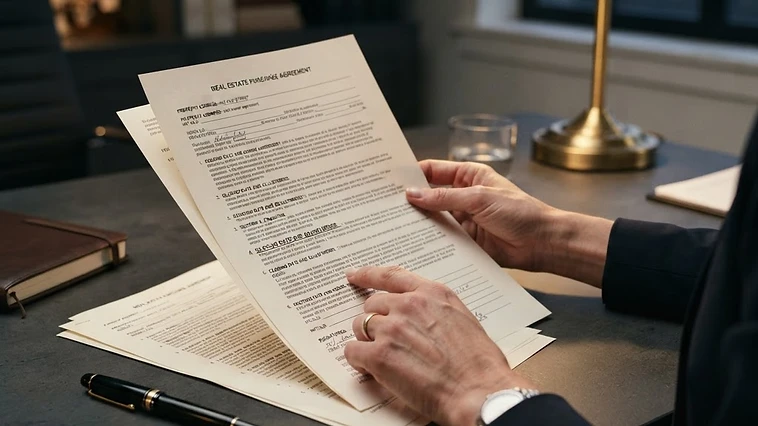 Hands reviewing mortgage refinance paperwork under a warm desk lamp

Conducting a mortgage document review before you apply for a refinance is a proactive measure. When you refinance, you are essentially taking out a new loan to pay off the old one. If the old loan has title defects, unrecorded assignments, or predatory terms that were never disclosed, rolling those issues into a new loan can complicate your financial situation. By auditing your documents now, you can identify and resolve these issues before they become a barrier to securing a better interest rate or accessing your home's equity.
Moreover, the landscape of mortgage servicing is notoriously complex. Loans are frequently bought, sold, and transferred between different financial institutions. Each time your loan changes hands, there is a risk that important documents will be lost or improperly recorded. A thorough review of your refinance paperwork and historical loan documents can help you verify that the entity currently collecting your payments actually has the legal right to do so.
Spotting Mortgage Fraud and Refinance Paperwork Defects
Mortgage fraud is not just something that happens in movies; it is a real and persistent threat in the real estate market. Recent enforcement actions by the Department of Housing and Urban Development's Office of Inspector General (HUD OIG) highlight ongoing schemes involving falsified financial documents. In October 2026, federal authorities charged individuals in Texas with submitting fraudulent loan applications supported by fake pay stubs and bank statements.
While these specific cases often involve borrowers or insiders committing fraud to secure loans, homeowners can also be victims of predatory lending and institutional mortgage fraud. This can include lenders inflating appraisals, charging undisclosed junk fees, or altering documents after they have been signed. Additionally, industry experts warn that the rise of artificial intelligence is making fraudulent documents harder to spot. According to recent reports from financial advisers, AI is being used to generate highly convincing fake documents, meaning that inconsistencies must be identified through careful, cross-referenced analysis rather than just looking for obvious visual flaws.
When reviewing your own files, you should be on the lookout for notary irregularities, such as documents that were notarized on dates when you were not present, or signatures that do not match your own. You should also scrutinize your closing disclosures to ensure that the fees you were charged match what was initially estimated, and that no unauthorized parties were paid out of your loan proceeds.
How to Conduct a Basic Mortgage Audit on Your Own Files
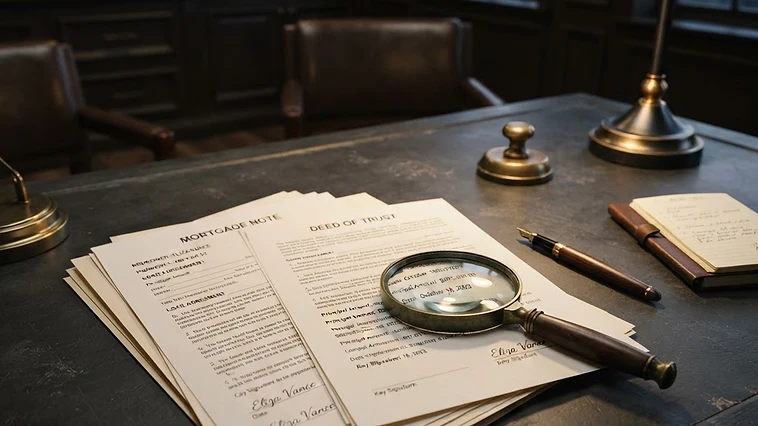
Performing a basic mortgage audit requires patience and attention to detail. Start by gathering all of the documents you received at closing. This should include your Promissory Note, the Mortgage or Deed of Trust, the Closing Disclosure (or HUD-1 Settlement Statement for older loans), the Truth in Lending disclosure, and your title insurance policy.
First, verify the basic facts. Are your name and the property address spelled correctly on every single document? Is the loan amount exactly what you agreed to? Next, look at the Promissory Note. Is it endorsed (signed over) to another entity? If your loan has been sold, there should be a clear chain of endorsements or a recorded Assignment of Mortgage in your county's land records.
Check your interest rate and payment calculations. Ensure that your initial interest rate matches the disclosures and that any adjustable-rate features were clearly explained and accurately documented. Finally, review the fees on your Closing Disclosure. Look for duplicate charges, unusually high origination fees, or payments to third parties that you do not recognize. If you find discrepancies, you have the right to demand answers from your lender or servicer.
Why Auditing Your Mortgage Paperwork Matters
Even if you are perfectly current on your payments and have a great relationship with your mortgage servicer, you cannot afford to be complacent about your legal documents. The recent surge in refinance defects and loan document errors proves that the banking industry frequently makes mistakes—mistakes that can jeopardize your most valuable asset. Auditing your mortgage paperwork matters because it is the only way to ensure that your property rights are fully protected before you attempt to refinance, sell, or face an unexpected financial hardship that leads to default.
This is exactly why the "Foreclosure Defense Survival Playbook" is an essential resource for every homeowner, not just those facing immediate legal trouble. The Playbook provides a comprehensive, step-by-step guide to understanding your mortgage documents, organizing your evidence, and conducting a professional-level mortgage audit on your own files. It teaches you exactly how to spot the hidden fraud, calculation errors, and title defects that lenders and servicers hope you will never notice. Don't wait until a minor paperwork error becomes a major legal nightmare. Order your copy of the Foreclosure Defense Survival Playbook today and take control of your financial future.


Order The Playbook
Get the Foreclosure Defense Survival Playbook
530 pages of structured, educational guidance covering mortgage documents, foreclosure procedures, evidence organization, and legal research — the same foundation this article draws from.