Mortgage Documents
The Hidden Risks in Your Refinance: Why Every Homeowner Needs a Mortgage Document Review
Recent industry reports reveal a shocking surge in mortgage document errors and compliance defects. Learn why auditing your loan file before refinancing is critical to protecting your home.

Disclaimer: The following article is for educational purposes only and does not constitute legal advice. Always consult with a qualified attorney regarding your specific legal situation.
If you are a homeowner who pays your mortgage on time every month, you might assume your loan file is in perfect order. You receive your monthly statements, you make your payments, and your balance slowly decreases. However, recent industry data and federal enforcement actions reveal a troubling reality: the mortgage industry is currently experiencing a significant spike in loan document errors, compliance failures, and even outright mortgage fraud.
For homeowners considering a refinance, or those simply wanting to ensure their property rights are secure, conducting a thorough mortgage document review is no longer just for those facing default. It is a necessary protective measure for every current homeowner.
The Alarming Rise in Loan Document Errors
Even if you have never missed a payment, the paperwork that governs your loan might be riddled with critical defects. According to the latest Mortgage QC Industry Trends Report from ACES Quality Management, the mortgage industry's critical defect rate recently surged to 1.71%, representing the largest quarterly jump in four years [5].
What exactly is going wrong? The data shows that legal, regulatory, and compliance defects accounted for a staggering 26.02% of all findings [7]. Furthermore, loan documentation errors increased significantly, indicating that lenders are struggling to properly collect, interpret, and record the paperwork that secures your home [5].
When you apply for a refinance, your new lender relies on the accuracy of your previous mortgage paperwork. If your original loan contains unrecorded assignments, missing signatures, or improper notary stamps, these defects can cloud your title and complicate your refinance paperwork. A proactive mortgage audit helps you identify these issues before they derail your financial plans.
How Mortgage Fraud Sneaks Into Your File
Mortgage fraud is not just a relic of the 2008 financial crisis; it is an ongoing threat that is becoming increasingly sophisticated. Recent federal indictments highlight how easily fraudulent documents can be slipped into loan files. For example, a federal grand jury recently indicted four individuals in a sweeping $7.3 million mortgage fraud scheme that involved flooding lenders with fabricated finance and employment information [4].
In another recent case, two individuals were charged with submitting fraudulent financial documents, including falsified pay stubs and bank statements, to multiple mortgage lenders [6]. While these specific cases involved individuals attempting to qualify unqualified borrowers, they underscore a broader systemic vulnerability: lenders and servicers are processing massive volumes of paperwork, and fraudulent or inaccurate documents frequently slip through the cracks.
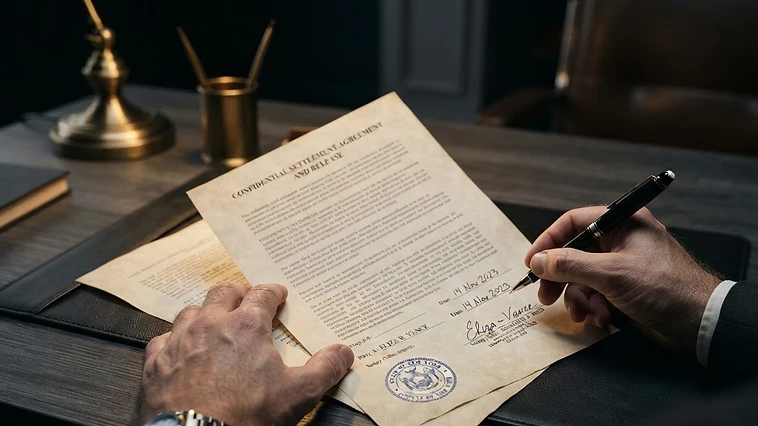 Close up of hands reviewing mortgage documents under a warm gold desk lamp on a dark charcoal desk.

Industry experts warn that fraudulent supporting information is becoming increasingly convincing, sometimes utilizing synthetic credentials and manipulated data [9]. If a bad actor, a sloppy broker, or an overwhelmed loan officer inserted inaccurate information into your file during origination or a previous modification, that hidden mortgage fraud could come back to haunt you during a routine refinance.
The Danger of AI and Sloppy Legal Work in Mortgage Servicing
As if human error and traditional fraud were not enough, the introduction of Artificial Intelligence into the legal and mortgage servicing sectors has created new risks for homeowners. In a recent high-profile case, a mortgage trustee was left without a brief in a foreclosure appeal after their legal counsel submitted a document containing fake case citations generated by AI [10].
The appellate court struck the entire brief, noting that the attorneys failed to verify the AI-assisted research [10]. While this specific incident occurred during a foreclosure appeal, it highlights a terrifying reality for all homeowners: the institutions managing your mortgage and handling your legal documents are increasingly relying on automated systems and AI tools that are prone to "hallucinations" and critical errors. If your servicer uses flawed automated systems to generate your payoff statements, assignments, or refinance paperwork, you could be the one paying the price for their technological negligence.
Why Being Current on Payments Doesn't Mean Your Refinance Paperwork is Safe
Many homeowners mistakenly believe that as long as they are current on their payments, their mortgage documents are flawless. This is a dangerous misconception. Servicing transfers, corporate mergers, and the use of electronic registries like MERS (Mortgage Electronic Registration Systems) often result in broken chains of title and missing promissory notes.
When you decide to refinance, the new lender will conduct a title search and require a clear chain of ownership. If your current servicer cannot produce the original note, or if there are gaps in the assignment history, your refinance could be delayed or denied. Furthermore, if you blindly sign new refinance paperwork without conducting a mortgage document review of your existing file, you might inadvertently waive your rights to challenge previous predatory lending practices or servicing errors.
Conducting Your Own Mortgage Audit Before You Refinance
To protect yourself, you must take a proactive approach to your mortgage paperwork. A comprehensive mortgage audit involves requesting your complete loan file from your servicer—often through a Qualified Written Request (QWR) or Request for Information (RFI) under RESPA—and meticulously reviewing every page.
You should be looking for:
- Inaccurate Balances: Ensure your payment history matches the servicer's records and that no junk fees have been illegally added to your principal.
- Missing Signatures and Notary Irregularities: Check your Deed of Trust or Mortgage for proper execution.
- Broken Chain of Title: Verify that every assignment of your mortgage was properly recorded in your county's public records.
- Truth in Lending Act (TILA) Violations: Ensure you received the correct disclosures regarding your interest rate and closing costs.
By identifying loan document errors early, you can force your servicer to correct the record before you enter into a new loan agreement.
Why Auditing Your Mortgage Paperwork Matters
Even if you are perfectly current on your payments, auditing your mortgage paperwork before refinancing or facing a future hardship is one of the most important financial steps you can take. The banking industry has proven time and again that it prioritizes speed and profit over accuracy. From surging critical defect rates to AI-generated legal errors, the system is stacked against the uninformed homeowner.
That is exactly why the Foreclosure Defense Survival Playbook is an essential resource for every homeowner, not just those in distress. This comprehensive 530-page guide teaches you exactly how to read your mortgage documents, spot hidden fraud, and identify the critical defects that lenders hope you will never notice. It provides step-by-step instructions on how to organize your evidence, conduct legal research, and hold your servicer accountable. Don't wait until a paperwork error threatens your home or derails your refinance. Order the Foreclosure Defense Survival Playbook today and take control of your most valuable asset.


Order The Playbook
Get the Foreclosure Defense Survival Playbook
530 pages of structured, educational guidance covering mortgage documents, foreclosure procedures, evidence organization, and legal research — the same foundation this article draws from.