Mortgage Documents
Hidden Loan Document Errors: Why Current Homeowners Must Audit Their Mortgages
Recent enforcement actions reveal a surge in mortgage document errors and servicing fraud. Even if you are current on your payments, auditing your loan documents is essential to protect your home and your equity.
Disclaimer: The following article is for educational purposes only and does not constitute legal advice. If you need legal assistance, please consult a qualified attorney in your jurisdiction.
You pay your mortgage on time every single month. You keep your property taxes current, maintain your homeowner's insurance, and take pride in your home. Because you are not behind on your payments, you likely assume that your mortgage documents are perfectly accurate and that your lender or servicer is handling your account flawlessly. Unfortunately, recent news and federal enforcement actions reveal a very different reality.
Across the United States, a shocking number of homeowners are discovering that their loan files are riddled with hidden loan document errors, servicing miscalculations, and even outright mortgage fraud. Whether you are considering a refinance, reviewing your current loan terms, or simply organizing your household files, conducting a thorough mortgage document review is no longer just for homeowners facing foreclosure. It is a vital financial health check for every current homeowner.
The Alarming Rise in Mortgage Document Errors
Recent industry reports highlight a disturbing trend: the rate of critical defects in mortgage loans is surging. According to an August 2026 report from ACES Quality Management, the mortgage industry's critical defect rate jumped by 23.9% in the first quarter of the year, marking the largest quarterly increase in four years Brief Refinance Shift Tests Mortgage Lenders’ Compliance Controls – NMP.
What exactly does this mean for you? It means that the paperwork generated when you bought your home or refinanced your loan is increasingly likely to contain significant mistakes. The report noted that legal defects led all categories, pointing to ongoing lapses in how lenders draft, execute, and record binding legal documents Refinances lead to early-year surge in mortgage defects | National Mortgage News. Furthermore, calculation and analysis errors within the underwriting process spiked dramatically. Lenders are struggling to correctly interpret financial documentation, meaning your loan terms, interest rate, or required escrow reserves could be based on flawed math.
If you are preparing to sign new refinance paperwork, you must be vigilant. The rush to process loans often leads to procedural errors and oversight failures. A proactive mortgage audit of your own files can help you spot these calculation errors before they cost you thousands of dollars over the life of your loan.
Recent Servicing Fraud and RESPA Violations: Are You Being Overcharged?
Even if your original loan documents were drafted correctly, the company servicing your loan might be making costly mistakes—or intentionally violating federal law. The Real Estate Settlement Procedures Act (RESPA) is designed to protect borrowers from abusive servicing practices, but recent lawsuits and regulatory fines show that servicers frequently fall short.
In August 2026, a coalition of state financial regulators from 46 states levied a $15.5 million fine against a major mortgage servicer for illegally imposing "force-placed" insurance on more than 4,200 borrowers Multistate coalition fines mortgage servicer $15.5M for alleged RESPA noncompliance | Orrick, Herrington & Sutcliffe LLP - JDSupra. These borrowers already had active, sufficient homeowner's insurance policies, yet the servicer erroneously charged them for duplicate, highly expensive coverage. If you do not regularly review your monthly statements and escrow breakdowns, you could be paying for insurance you do not need.
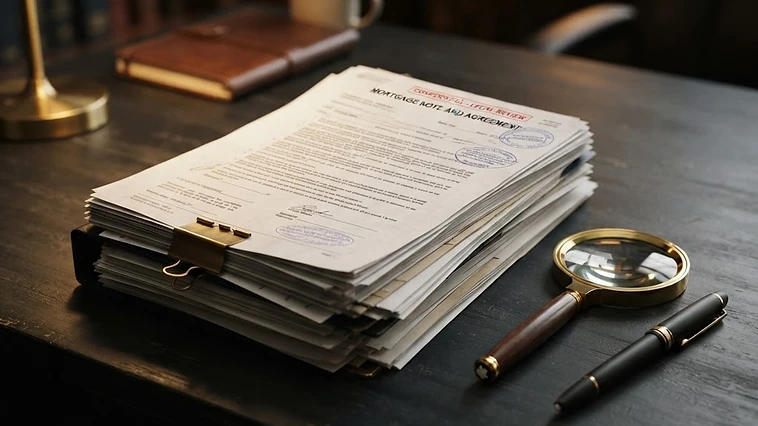
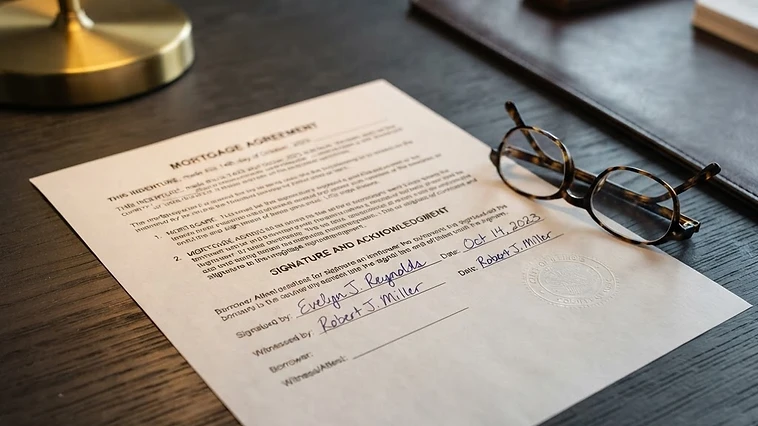 Close up of mortgage refinance paperwork on a dark desk under warm lighting, representing a mortgage document review.

More recently, in October 2026, a class-action lawsuit was filed against Rocket Mortgage, alleging that the company inflated Loan-to-Value (LTV) ratios on FHA loans, causing borrowers to be overcharged for mortgage insurance for years Lawsuit alleges Rocket Mortgage inflates FHA ratios, overcharges thousands on insurance | Mortgage Professional. Shockingly, the lawsuit claims that when borrowers sent formal notices of error under RESPA to correct the issue, the servicer not only refused to fix the classification but actually embedded predatory refinancing pitches inside their formal error-resolution letters. Instead of fixing the math, they tried to sell the borrowers a new loan at a higher interest rate. This highlights exactly why a personal mortgage audit is so critical: you cannot blindly trust your servicer to correct their own mistakes.
Identity Theft and Predatory Refinance Fraud: A Growing Threat
Mortgage fraud is not just committed by massive financial institutions; it is also perpetrated by organized criminal rings targeting unsuspecting homeowners. In November 2026, five individuals were indicted in Queens, New York, for a brazen identity theft and mortgage fraud scheme FIVE INDICTED FOR IDENTITY THEFT AND MORTGAGE FRAUD SCHEME IN FLUSHING – Usa News Online. The fraudsters allegedly impersonated a husband and wife who owned a home free and clear, using forged driver's licenses and Social Security cards to take out a fraudulent $688,000 "cash-out" refinance mortgage on the victims' property. The true homeowners had no idea their property had been leveraged until the fraudulent mortgage was recorded against their title.
Similarly, in September 2026, a federal grand jury in Texas indicted four individuals in a sweeping $7.3 million mortgage fraud scheme that flooded lenders with fabricated finance, employment, and bank records to push through unqualified loans Grand jury indicts 4 in sweeping $7.3 million mortgage fraud scheme targeting FHA and VA programs | Office of Inspector General, Department of Housing and Urban Development.
While these specific cases involved criminals defrauding lenders or stealing equity, they underscore a terrifying reality: the systems designed to verify identity, title, and document accuracy are highly vulnerable. If a fraudster can take out a half-million-dollar loan in your name without your knowledge, what other errors or fraudulent assignments might be hiding in your property's chain of title? Regularly checking your county recording office for unauthorized liens or assignments is a crucial part of protecting your home.
How to Conduct a Basic Mortgage Document Review
If you are a current homeowner, you should not wait until you are facing financial hardship to look at your loan file. Conducting a basic mortgage document review now ensures that your equity is protected and your terms are accurate. Here are the foundational steps to begin your own mortgage audit:
- Gather Your Original Closing Documents: Locate your original Promissory Note, Mortgage (or Deed of Trust), Closing Disclosure (or HUD-1 Settlement Statement), and Title Insurance Policy. If you do not have these, request a complete copy of your collateral file from your current servicer.
- Verify the Math and Terms: Cross-reference your Closing Disclosure with your Promissory Note. Ensure the interest rate, loan term, and principal balance match exactly. Check your current monthly statement to ensure your servicer is applying your principal and interest payments correctly according to the amortization schedule.
- Audit Your Escrow Account: Review your annual escrow analysis. Verify that your servicer is paying the correct property tax amounts to your local municipality and the correct premium to your chosen homeowner's insurance provider. Look out for unauthorized "force-placed" insurance charges.
- Check the Chain of Title: Visit your county recorder's office (many have online portals) and search for your property address or name. Ensure that any recorded assignments of your mortgage are legitimate and that no unauthorized liens or fraudulent deeds have been recorded against your property.
- Scrutinize Refinance Paperwork: If you are currently refinancing, do not sign blindly. Read every page of your new refinance paperwork. Ensure that no hidden fees, prepayment penalties, or inflated appraisal values have been slipped into the contract.
By taking these steps, you take control of your financial destiny. You transition from a passive borrower to an empowered homeowner who demands accuracy and transparency from the financial institutions handling your largest asset.
Why Auditing Your Mortgage Paperwork Matters
Even if you have never missed a payment, the recent surge in loan document errors, RESPA violations, and title fraud proves that the mortgage industry is far from perfect. Mistakes happen daily, and intentional fraud is a persistent threat. Auditing your mortgage paperwork matters because it is the only way to ensure you are not being overcharged, that your title is clear, and that your legal rights are protected before you sign new refinance paperwork or face an unexpected future default.
If you want to learn exactly how to dissect your loan file like a professional, the "Foreclosure Defense Survival Playbook" is your ultimate resource. This comprehensive 530-page educational guide teaches you how to spot hidden fraud, identify critical errors, and uncover fatal defects in the documents your lender or servicer handed you. Do not wait for a crisis to understand your mortgage. Order the Playbook today, conduct your own mortgage audit, and secure the peace of mind that comes with knowing your home is truly protected.


Order The Playbook
Get the Foreclosure Defense Survival Playbook
530 pages of structured, educational guidance covering mortgage documents, foreclosure procedures, evidence organization, and legal research — the same foundation this article draws from.