Mortgage Documents
The Hidden Dangers in Your Refinance Paperwork: Why Current Homeowners Must Audit Their Mortgage Documents
Even if you are current on your mortgage payments, hidden errors and fraud in your loan documents can derail a refinance or jeopardize your property rights.

Disclaimer: The information contained in this article is for educational purposes only and does not constitute legal advice. If you require legal assistance regarding your mortgage or property rights, please consult a qualified attorney.
Many homeowners operate under a dangerous assumption: if you pay your mortgage on time every month, your loan file must be in perfect order. You receive your monthly statements, you make your payments, and you assume the bank has accurately recorded your property rights. However, when interest rates shift and homeowners begin looking to lower their payments or tap into their home equity, they often uncover a nightmare hiding in their refinance paperwork.
Recent industry data and federal enforcement actions reveal a disturbing trend. Mortgage fraud, title defects, and loan document errors are not just problems for borrowers facing foreclosure. They are increasingly targeting current, on-time homeowners. Before you sign a new stack of refinance paperwork, conducting a thorough mortgage document review is one of the most critical steps you can take to protect your most valuable asset.
The Surging Threat of Refinance Fraud
It is a common misconception that mortgage fraud primarily occurs during the initial purchase of a home. In reality, the refinance market has become a massive target for sophisticated fraud schemes. According to a recent Milliman Inc. study commissioned by the American Land Title Association (ALTA), fraud and forgery claims tied to mortgage refinances have surged dramatically. These claims now represent over 40% of all title insurer losses and expenses Refinance fraud and forgery claims soar, driving up title insurance losses.
The financial impact of these hidden defects is staggering. The average cost of fraud and forgery claims on refinances has climbed to $207,000—almost seven times higher than other claim types. As ALTA CEO Chris Morton noted, "These findings underscore that refinances are by no means risk-free." Fraud and forgery are actually more common and more costly in refinance transactions compared to purchase transactions.
For the current homeowner, this means that the title to your property might have been compromised without your knowledge. Fraudsters can file forged deeds, release of liens, or fraudulent assignments in the public record. Because these issues cannot always be detected through a simple public records search, homeowners who blindly trust their existing documentation may find themselves facing severe legal and financial hurdles when they attempt to refinance.
How AI and Digital Forgery Are Complicating Mortgage Document Review
The landscape of mortgage fraud has evolved rapidly, moving away from crude paper forgeries to highly sophisticated digital manipulation. Legacy detection methods were built for a world where fraudsters submitted paper documents and showed up in person. Today, that world is gone Detecting and Deterring Mortgage Fraud.
Artificial intelligence and generative AI tools have made it incredibly easy for bad actors to fabricate documents. According to industry experts, GenAI has increased the level of sophistication and the ease by which fraudsters can create falsified income, asset, and title documents Mortgage Fraud: Emerging Risks, Mitigation Strategies. Synthetic identities and deepfake technology allow criminals to bypass standard automated checks.
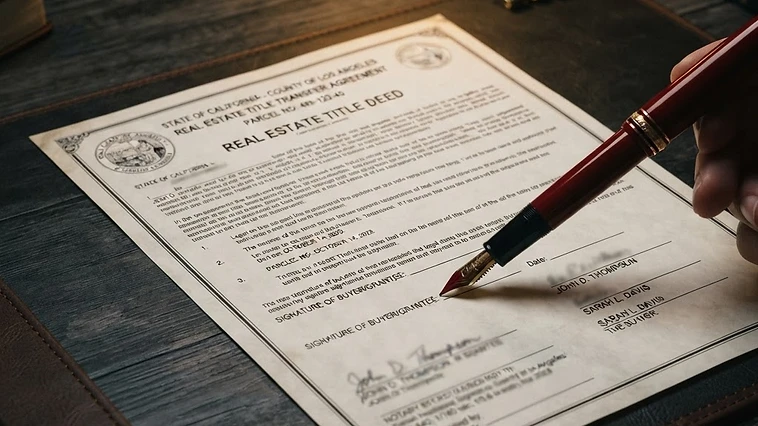 Close-up of a mortgage document being reviewed for errors under warm desk lighting.

What does this mean for you, the current homeowner? It means that the integrity of the documents recorded against your property is under constant threat. If a bad actor uses synthetic identity fraud to take out a second mortgage on your home, or if a previous lender used automated, unverified systems to assign your mortgage to a new trust, the chain of title could be fundamentally broken. A comprehensive mortgage audit is the only way to verify that the documents in your file are authentic, properly executed, and legally binding.
Common Loan Document Errors Hiding in Plain Sight
Even without malicious fraud, the sheer volume of administrative errors in the mortgage servicing industry is staggering. When you decide to refinance, your new lender will scrutinize your existing loan file. If they find incurable title defects, missing assignments, or notary irregularities, your refinance could be denied, or you could be forced to pay thousands of dollars to clear the title.
Federal regulators have repeatedly penalized major mortgage servicers for systemic administrative errors. For example, the Consumer Financial Protection Bureau (CFPB) recently entered into consent orders with multiple servicing companies for failing to properly manage loan files. In one case, companies systematically failed to respond to homeowner requests for loan payoff statements and lien releases 2024 Year in Review: Mortgage Origination and Servicing | Goodwin - JDSupra. In another action, a major servicer was penalized for widespread systemic issues and compliance management system failures regarding improper foreclosure practices.
When conducting a mortgage document review, homeowners should look for several common red flags:
- Missing or Broken Chain of Title: Has your mortgage been sold or transferred multiple times? If so, there must be a clear, unbroken chain of assignments recorded in the county records. Missing assignments can render the current servicer's claim to the property invalid.
- Notary and Signature Irregularities: Are the signatures on your deed of trust or mortgage assignments legitimate? "Robo-signing"—where employees sign thousands of documents without verifying their contents—remains a persistent issue in the industry.
- Inaccurate Principal Balances and Fee Padding: Servicers often add unauthorized fees, corporate advances, or inflated property inspection fees to your account balance. If you refinance without auditing these figures, you will end up rolling fraudulent fees into your new, larger loan.
- MERS Discrepancies: The Mortgage Electronic Registration Systems (MERS) is often used to track loan transfers. However, discrepancies between MERS records and county land records can create massive title defects.
Why a Proactive Mortgage Audit is Essential Before You Refinance
Many homeowners wait until they are facing financial hardship or foreclosure to scrutinize their loan documents. This is a critical mistake. The best time to conduct a mortgage audit is when you are current on your payments and under no immediate financial distress.
When you apply for a refinance, you are essentially asking a new lender to pay off the old lender based on the existing paperwork. If that paperwork contains loan document errors, you are carrying those defects forward. Worse, if you sign a new set of refinance paperwork without understanding the terms, you might inadvertently waive your rights to challenge previous servicing errors or predatory lending practices.
A proactive mortgage document review allows you to:
- Verify Ownership: Ensure that the entity claiming to hold your note actually has the legal right to do so.
- Clear Title Defects: Identify and resolve missing assignments or fraudulent liens before they derail your refinance application.
- Recover Overpayments: Spot unauthorized fees or misapplied payments that have artificially inflated your payoff balance.
- Protect Your Equity: Prevent title insurance claims and legal battles that can drain the equity you have built in your home over the years.
Do not rely on your mortgage servicer or a title company to catch these errors for you. As the recent surge in title insurance losses demonstrates, the systems designed to protect consumers are often overwhelmed by the sheer volume of fraud and administrative incompetence. You must be your own advocate.
Why Auditing Your Mortgage Paperwork Matters
Whether you are actively planning to refinance, reviewing your annual mortgage statements, or simply want peace of mind, auditing your mortgage paperwork is a vital financial practice. Even current, on-time homeowners are at risk of hidden fraud, title defects, and servicing errors that can jeopardize their property rights. Waiting until a future default or a stalled refinance to check your documents is a gamble you cannot afford to take.
Understanding the complex web of mortgage assignments, promissory notes, and servicing disclosures can be overwhelming. That is exactly why the "Foreclosure Defense Survival Playbook" was created. This comprehensive, 530-page educational resource is not just for homeowners in distress. It is the ultimate guide for any homeowner who wants to understand their mortgage documents, organize their evidence, and conduct a professional-level mortgage audit.
The Playbook teaches you step-by-step how to spot fraud, identify fatal errors in your chain of title, and uncover the defects that lenders and servicers try to hide in the fine print. Don't wait for a crisis to discover that your loan file is compromised. Take control of your property rights today, audit your paperwork, and secure your financial future by ordering the Foreclosure Defense Survival Playbook.


Order The Playbook
Get the Foreclosure Defense Survival Playbook
530 pages of structured, educational guidance covering mortgage documents, foreclosure procedures, evidence organization, and legal research — the same foundation this article draws from.