Foreclosure Defense
Fighting Back: Recent Foreclosure Trends, Servicing Abuses, and Your Homeowner Rights
With foreclosure filings on the rise, understanding mortgage servicing abuses and your legal rights is more critical than ever for homeowners facing financial distress.
Disclaimer: The following article is for educational purposes only and does not constitute legal advice. If you are facing foreclosure, please consult with a qualified attorney in your jurisdiction.
Foreclosure is one of the most terrifying experiences a homeowner can face. When you fall behind on your mortgage payments, the letters start pouring in, the phone calls become relentless, and the threat of losing your home looms large. Recently, reports have shown a significant uptick in foreclosure activity across the United States. Foreclosure filings have increased by 18% compared to a year ago, and foreclosure inventory has reached a six-year high. As pandemic-era protections fade into the rearview mirror, mortgage servicers are aggressively pursuing enforcement actions against distressed homeowners.
However, being in foreclosure does not mean you have automatically lost your home. The legal system requires banks and mortgage servicers to follow strict procedures, and history has shown that these institutions frequently make critical errors. From the infamous robo-signing scandals to ongoing mortgage servicing abuses, homeowners have powerful defenses available to them. Understanding these defenses, organizing your evidence, and knowing your rights are the first steps toward fighting back.
The Recent Surge in Foreclosure Filings
Recent data indicates a troubling trend for homeowners: foreclosure starts and filings are climbing. With the expiration of federal forbearance programs and pandemic relief measures, mortgage distress is becoming more visible. The total delinquency rate has risen, and the share of loans that are 90 days or more past due has broken out of its previous historical lows. Furthermore, "zombie foreclosures"—properties left vacant by homeowners who mistakenly believe the bank has already taken title—are rising in dozens of states.
For homeowners currently behind on payments, this surge means that banks are clearing their backlogs. Mortgage servicers are under pressure to process defaults quickly, which often leads to sloppy paperwork, procedural violations, and a disregard for homeowner rights. The Consumer Financial Protection Bureau (CFPB) and the Department of Justice (DOJ) continue to monitor these servicers, issuing warnings about compliance with loss mitigation rules and protections for specific groups, such as military families. But regulatory oversight alone will not save your home; you must be prepared to raise these issues in your own defense.
Understanding Mortgage Servicing Abuses
Mortgage servicers are the companies that collect your monthly payments, manage your escrow account, and initiate foreclosure proceedings if you default. They are not always the entity that owns your loan. Because servicers handle thousands of accounts, their automated systems are prone to catastrophic errors.
Common servicing abuses include misapplying payments, charging unauthorized fees, failing to properly evaluate homeowners for loan modifications, and dual-tracking. Dual-tracking occurs when a servicer moves forward with foreclosure proceedings while simultaneously negotiating a loss mitigation option (like a loan modification) with the borrower. Federal rules implemented by the CFPB strictly prohibit dual-tracking, requiring servicers to halt foreclosure actions once a complete loss mitigation application is submitted.
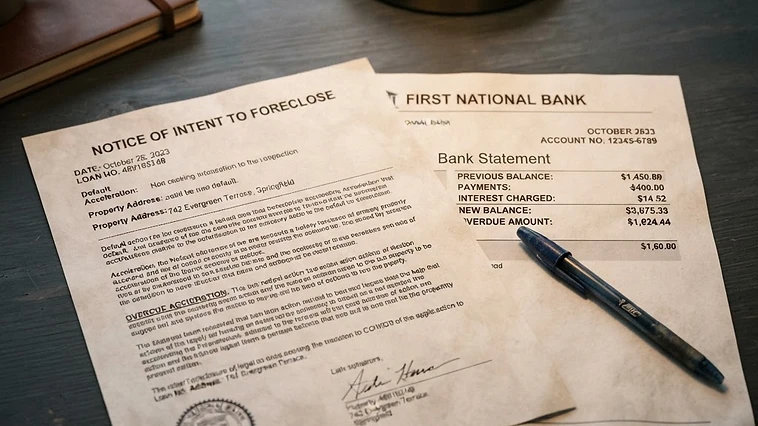 Close-up of mortgage documents and a foreclosure notice on a dark desk

Despite these rules, abuses persist. In recent years, courts and federal agencies have continued to clash over the enforcement of consumer protection laws, with massive judgments sometimes being vacated or remanded on constitutional grounds. This shifting legal landscape means that homeowners cannot rely solely on government agencies to police their servicers. You must meticulously document every interaction, save every letter, and scrutinize your mortgage statements for unauthorized charges or misapplied funds.
The Ghost of Robo-Signing and Fraudulent Assignments
During the 2008 financial crisis, the "robo-signing" scandal exposed how banks were foreclosing on homes using forged, backdated, or unverified documents. Employees were signing thousands of affidavits a day without reviewing the underlying records. This led to a historic $25 billion settlement between the federal government, state attorneys general, and the nation's five largest mortgage servicers.
While the industry claims to have cleaned up its act, the fundamental issues of securitization and document transfer remain complex and error-prone. When a mortgage is sold multiple times on the secondary market, the paperwork must follow a strict legal chain of title. An "assignment of mortgage" is the document that transfers the right to enforce the loan from one bank to another.
If the bank foreclosing on you cannot prove that it legally holds your mortgage and promissory note, it may lack "standing" to sue you. Lack of standing is one of the most powerful defenses in a foreclosure case. If the assignments are missing, improperly dated, or signed by individuals who lacked the authority to do so, the court may dismiss the foreclosure action. Homeowners must demand that the foreclosing party produce the original, wet-ink promissory note and a flawless chain of assignments.
Common Defenses in a Foreclosure Case
When you are served with a Summons and Complaint for foreclosure, you have a limited time to file an Answer. Failing to respond usually results in a default judgment, meaning the bank wins automatically. By filing an Answer, you force the bank to prove its case and you can raise affirmative defenses.
Some of the most common and effective defenses include:
- Lack of Standing: As mentioned, the plaintiff must prove it owns the debt. If the paperwork is flawed, they cannot legally foreclose.
- Failure to Provide Notice of Default: Most mortgages require the lender to send a specific "Notice of Default" or "Breach Letter" giving you 30 days to cure the default before accelerating the loan. If they skip this step or send a defective notice, the foreclosure is invalid.
- Statute of Limitations: In some states, if the bank accelerates the loan but fails to complete the foreclosure within a certain number of years, they may be permanently barred from collecting the debt.
- Unclean Hands and Fraud: If the servicer engaged in deceptive practices, fraud, or egregious servicing abuses, the court may deny their request to foreclose based on the equitable doctrine of "unclean hands."
- Procedural Errors: Foreclosure is a strict statutory process. Any deviation from state-specific procedural rules can be grounds for dismissal.
How to Protect Your Rights and Organize Your Evidence
Winning a foreclosure defense case requires more than just knowing the law; it requires impeccable organization and evidence gathering. The moment you realize you are falling behind, you should start a dedicated file for your mortgage.
Keep a log of every phone call with your servicer, noting the date, time, representative's name, and what was discussed. Save every piece of mail you receive and send all your correspondence via certified mail with a return receipt requested. When you enter the discovery phase of litigation, you will have the right to demand documents from the bank, including payment histories, pooling and servicing agreements, and internal communication logs.
By forcing the bank to produce these documents, you often uncover the very errors and abuses that can save your home. However, navigating the rules of civil procedure, drafting discovery requests, and understanding complex legal jargon can be overwhelming for a homeowner trying to represent themselves (pro se) or trying to understand what their attorney is doing.
Why the Foreclosure Defense Survival Playbook Helps
Facing a multi-billion dollar bank in court is an intimidating prospect, but you do not have to do it blindly. The Foreclosure Defense Survival Playbook is a comprehensive, 530-page educational resource designed specifically for homeowners who are behind on payments or already fighting a foreclosure lawsuit.
This Playbook demystifies the complex world of mortgage documents, court procedures, and legal research. It teaches you how to spot fraudulent assignments, how to identify servicing abuses, and how to organize your evidence like a seasoned investigator. Whether you are working with an attorney and want to understand the strategy, or you are forced to navigate the system pro se, the Playbook provides plain-language explanations of the exact defenses discussed in this article.
Don't let the banks use your lack of knowledge against you. Equip yourself with the tools to scrutinize their paperwork, challenge their standing, and fight for your home. Order the Foreclosure Defense Survival Playbook today and take the first step toward leveling the playing field.


Order The Playbook
Get the Foreclosure Defense Survival Playbook
530 pages of structured, educational guidance covering mortgage documents, foreclosure procedures, evidence organization, and legal research — the same foundation this article draws from.