Foreclosure Defense
2025 Foreclosure Trends and Servicing Abuses: How Homeowners Can Fight Back
Recent data shows shifting foreclosure trends and ongoing regulatory crackdowns on mortgage servicing abuses. Learn how to protect your home and hold banks accountable.
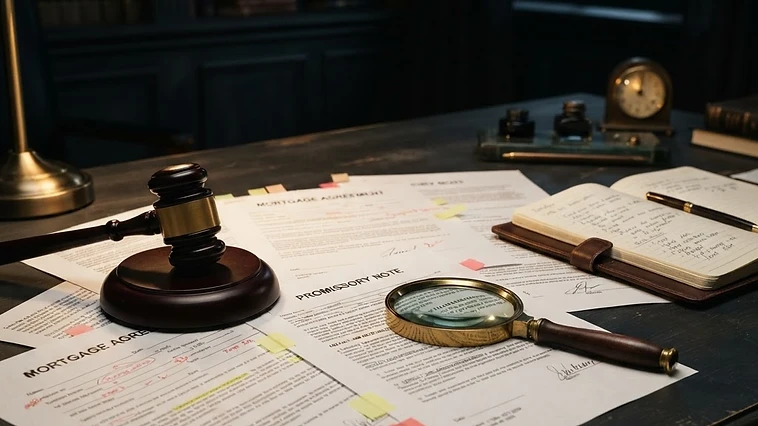
Disclaimer: The following article is for educational purposes only and does not constitute legal advice. If you are facing foreclosure, consult with a qualified attorney in your jurisdiction.
Facing foreclosure is one of the most stressful experiences a homeowner can endure. The fear of losing your home is often compounded by the confusing, intimidating, and sometimes deceptive practices of mortgage servicers and banks. However, recent data and regulatory actions reveal that homeowners are not powerless. By understanding the latest foreclosure trends, recognizing mortgage servicing abuses, and learning how to scrutinize your loan documents, you can mount a formidable defense.
In this comprehensive guide, we will explore the current landscape of foreclosures in the United States, recent enforcement actions against unlawful servicing practices, and the educational steps you can take to protect your property rights.
The Current State of Foreclosures in 2025
Understanding the broader economic context of foreclosures can help you realize that you are not alone in this fight. According to the Year-End 2024 U.S. Foreclosure Market Report released by ATTOM in January 2025, foreclosure filings—which include default notices, scheduled auctions, and bank repossessions—were reported on 322,103 U.S. properties in 2024 U.S. FORECLOSURE ACTIVITY DECLINES IN 2024 - PR Newswire. While this represents a slight decline from the previous year, it still means hundreds of thousands of families are actively battling to save their homes.
Industry experts suggest that while the market may be stabilizing, economic uncertainties, inflation, and the expiration of pandemic-era protections continue to put immense pressure on vulnerable homeowners. The sheer volume of foreclosures means that mortgage servicers are processing thousands of files simultaneously. This high-volume environment is exactly where errors, shortcuts, and outright abuses tend to occur. When banks rush to foreclose, they often fail to strictly comply with the law, creating critical opportunities for homeowners to defend themselves.
CFPB Crackdowns on Mortgage Servicing Abuses
The Consumer Financial Protection Bureau (CFPB) has been actively monitoring and penalizing mortgage servicers for violating homeowner rights. Recent enforcement actions highlight a disturbing trend of unlawful foreclosure practices. For example, the CFPB has repeatedly warned servicers about ineffective loan servicing, classifying it as an abusive act or practice CFPB: Ineffective Loan Servicing Is an Abusive Act or Practice.
One of the most egregious violations is "dual tracking." Dual tracking occurs when a mortgage servicer moves forward with foreclosure proceedings while simultaneously evaluating the homeowner for a loan modification or other loss mitigation options. This practice is strictly prohibited under federal law, yet it remains a common tactic used to blindside homeowners.
Furthermore, the CFPB and the Department of Justice have issued stern warnings to servicers regarding the protection of military families under the Servicemembers Civil Relief Act (SCRA), emphasizing that extra protections must be afforded to prevent unlawful foreclosures Foreclosures - Latest News | American Banker. These regulatory crackdowns prove that mortgage servicers are not infallible. They make mistakes, they cut corners, and they frequently violate federal consumer protection laws. As a homeowner, identifying these violations can be the key to stopping a foreclosure in its tracks.
Understanding Your Rights Against Robo-Signing and Fraud
During the 2008 financial crisis, the term "robo-signing" became infamous. It referred to the practice of bank employees rapidly signing thousands of foreclosure affidavits and assignments without ever verifying the accuracy of the documents or possessing personal knowledge of the facts. While the historic $25 billion National Mortgage Settlement in 2012 aimed to curb these abuses Office of Public Affairs | Federal Government and State Attorneys General Reach $25 Billion Agreement with Five Largest Mortgage Servicers to Address Mortgage Loan Servicing and Foreclosure Abuses | United States Department of Justice, variations of document fraud and sloppy record-keeping persist today.
When a bank attempts to foreclose on your home, they must prove they have the legal standing to do so. This means they must produce the original promissory note and a valid, unbroken chain of assignments proving that the mortgage was legally transferred to them.
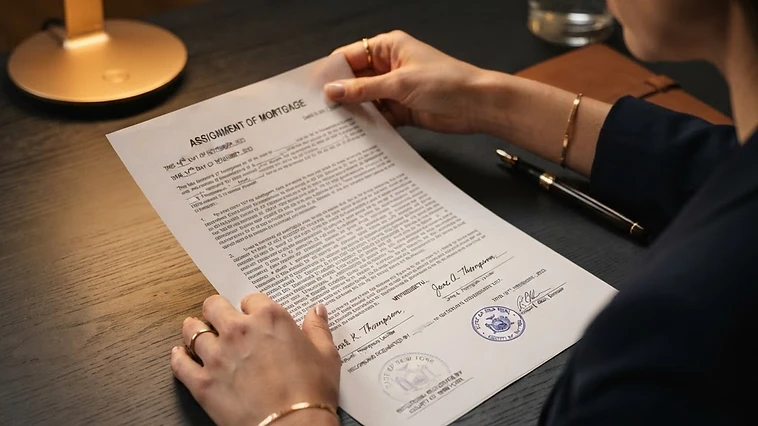 Homeowner reviewing mortgage assignment documents for servicing errors

Homeowners often discover that their mortgage was sold multiple times, securitized into a Wall Street trust, and improperly assigned. If the assignment of mortgage was fabricated, backdated, or signed by an unauthorized individual (a modern form of robo-signing), the foreclosing party may lack the legal standing to take your home. Challenging the chain of title and demanding strict proof of standing is a fundamental strategy in foreclosure defense.
How to Organize Your Evidence and Spot Errors
To effectively defend against foreclosure, you must treat your case like a forensic investigation. The burden of proof is on the bank, but you must be prepared to point out their inconsistencies. Here are the critical steps homeowners should take to organize their evidence:
- Request Your Complete Payment History: Mortgage servicers are notorious for misapplying payments, charging unauthorized "property inspection" fees, and inflating escrow accounts. Under the Real Estate Settlement Procedures Act (RESPA), you have the right to send a Qualified Written Request (QWR) or a Notice of Error (NOE) to your servicer demanding a complete, line-by-line accounting of your loan.
- Audit the Chain of Title: Go to your county recorder's office (or check their online database) and pull every document recorded against your property. Look closely at the dates, the names of the entities, and the signatures on the Assignments of Mortgage. Do the dates make sense? Was the entity that assigned the mortgage actually in business on that date?
- Scrutinize the Notice of Default: State laws strictly govern how and when a Notice of Default must be sent. If the servicer failed to send the notice via the required method (e.g., certified mail), failed to provide the exact 30-day cure period, or misstated the amount required to cure the default, the entire foreclosure action could be deemed invalid.
- Document Every Interaction: Keep a detailed log of every phone call with your servicer. Note the date, time, the representative's name, and what was discussed. Save every letter, email, and notice. This paper trail is vital evidence if you need to prove that the servicer engaged in dual tracking or provided contradictory information.
The Importance of Pro Se Education in Foreclosure Defense
Many homeowners facing foreclosure cannot afford to hire an expensive attorney. As a result, a growing number of individuals are choosing to represent themselves in court, a process known as "pro se" litigation. While navigating the legal system without a lawyer is challenging, it is not impossible—provided you have the right education and resources.
Pro se homeowners who take the time to learn court procedures, the rules of evidence, and how to conduct legal research can effectively hold banks accountable. By filing the appropriate answers, affirmative defenses, and discovery requests, you force the bank's attorneys to do the work they hoped to avoid. Often, banks rely on homeowners ignoring the lawsuit so they can obtain a quick default judgment. When a homeowner fights back with well-researched legal arguments regarding standing, RESPA violations, or servicing fraud, it completely changes the dynamic of the case.
Education is your greatest weapon. Understanding the difference between a judicial and non-judicial foreclosure, knowing how to draft a motion to compel discovery, and learning how to object to hearsay evidence in a bank's affidavit are skills that can literally save your home.
Why the Foreclosure Defense Survival Playbook Helps
Navigating the treacherous waters of foreclosure defense requires more than just a basic understanding of the law; it requires a comprehensive, step-by-step strategy. This is exactly why the Foreclosure Defense Survival Playbook is an indispensable resource for any homeowner fighting to save their property.
This massive 530-page educational book is specifically designed to level the playing field between everyday homeowners and multi-billion-dollar financial institutions. It breaks down complex legal jargon into plain, understandable language. Inside the Playbook, you will learn exactly how to dissect your mortgage documents, spot the telltale signs of robo-signing and assignment fraud, and organize your evidence like a seasoned investigator.
The Playbook guides you through the intricacies of court procedures, showing you how to respond to a foreclosure complaint, how to draft powerful discovery requests to uncover the bank's hidden errors, and how to conduct effective legal research to support your defenses. It empowers you to recognize servicing abuses—like dual tracking and phantom fees—and teaches you how to use federal laws like RESPA to your advantage.
You do not have to face the banks alone, and you do not have to be a victim of a flawed system. Equip yourself with the knowledge to fight back, hold the mortgage servicers accountable, and protect your family's most valuable asset. Order the Foreclosure Defense Survival Playbook today and take the first crucial step toward saving your home.


Order The Playbook
Get the Foreclosure Defense Survival Playbook
530 pages of structured, educational guidance covering mortgage documents, foreclosure procedures, evidence organization, and legal research — the same foundation this article draws from.