Foreclosure Defense
The Foreclosure Surge: Defending Your Home Against Fast-Tracked Bank Actions and Servicing Errors
With foreclosure filings jumping 21% in the first half of the year, homeowners must understand their rights and how to spot mortgage servicing errors before it's too late.


Disclaimer: The following article is for educational purposes only and does not constitute legal advice. If you are facing foreclosure, you should consult with a qualified attorney in your jurisdiction to understand your specific legal options.
If you have fallen behind on your mortgage payments, the constant barrage of letters, phone calls, and legal threats from your bank can feel entirely overwhelming. You are not alone. Across the United States, thousands of homeowners are currently navigating the terrifying prospect of losing their homes. Recent data reveals a dramatic shift in the housing market, with banks accelerating their legal actions and pushing cases through the court system faster than they have in over a decade.
When the banking industry speeds up its foreclosure machinery, mistakes happen. Mortgage servicers misapply payments, legal firms file sloppy paperwork, and the fundamental rights of homeowners are often trampled in the rush to auction off properties. Understanding the current landscape, recognizing common mortgage servicing abuses, and knowing your legal rights are the first steps in mounting a strong foreclosure defense.
The Foreclosure Surge: What the Latest Data Means for You
The foreclosure landscape is shifting rapidly, and the timelines for homeowners to act are shrinking. According to the latest industry data, there has been a massive spike in bank repossessions and default notices. A recent mid-year report highlighted in Foreclosures climb 21% in first half of 2026 as timelines shorten reveals that there were 227,548 properties with foreclosure filings in the first six months of the year. This represents a staggering 21% jump compared to the same period the previous year.
Even more concerning for homeowners is the speed at which these actions are taking place. The average time it takes to complete a foreclosure has plummeted to 563 days—the lowest average timeline since 2013. Foreclosure starts have climbed by 18%, and completed bank repossessions (REOs) have increased by 33%. States like Florida, South Carolina, and Indiana are currently posting the highest foreclosure rates in the nation.
What does this mean for you? It means the banks are no longer dealing with the massive pandemic-era backlogs that previously slowed down the courts. Lenders and their legal teams have streamlined their processes, and they are aggressively pursuing default judgments. If you are behind on payments, you can no longer rely on the court system's sluggishness to buy you time. You must be proactive, organized, and ready to scrutinize every single document the bank files against you.
Beware of Mortgage Servicing Errors and Abuses
When banks and mortgage servicers handle hundreds of thousands of defaulted loans, their internal systems frequently break down. A mortgage servicer is the company that manages your loan account, processes your monthly payments, and handles escrow accounts for taxes and insurance. They are often not the entity that actually owns your loan.
Because servicers manage massive portfolios, they are prone to making devastating errors that can push a struggling homeowner over the edge into foreclosure. As noted in Mortgage Servicing Errors: Misapplied Payments, Force‑Placed Insurance, and Dual Tracking Explained, common abuses include failing to properly credit monthly payments, miscalculating escrow shortages, and ignoring written requests for information.
One of the most dangerous servicing abuses is "dual tracking." Dual tracking occurs when a mortgage servicer simultaneously moves forward with the foreclosure process while the homeowner is actively applying for a loan modification or other loss mitigation option. Federal law strictly prohibits this practice. If you have submitted a complete loss mitigation application, the servicer is generally required to halt the foreclosure process until they have evaluated your application and provided you with a decision.
If you suspect your servicer has made an error, you have the right under the federal Real Estate Settlement Procedures Act (RESPA) to send a formal "Notice of Error" or a "Request for Information." The servicer is legally obligated to acknowledge your request and conduct an investigation within specific statutory deadlines. Documenting these errors is a critical component of your foreclosure defense strategy.
 Close-up of a foreclosure affidavit and fountain pen on a dark desk, representing the scrutiny of mortgage documents for robo-signing and errors.

The Return of Sloppy Paperwork: Is Robo-Signing Still a Threat?
During the 2008 financial crisis, the banking industry was rocked by the "robo-signing" scandal. To push millions of foreclosures through the courts, bank employees and third-party law firms were caught signing thousands of legal affidavits a day without ever verifying the accuracy of the information or having personal knowledge of the loan details.
While massive settlements were supposed to end this practice, the current 21% surge in foreclosures and the shrinking 563-day timeline suggest that the pressure to process paperwork quickly has returned. When a creditor requests relief from a court based on an affidavit signed by someone who simply pulled a stack of papers off a printer and signed them without reading them, they are committing a fraud upon the court.
In a foreclosure lawsuit, the bank must prove that it has the legal standing to foreclose. This requires a clear, unbroken "chain of title" showing how the mortgage and the promissory note were transferred from the original lender to the current plaintiff. Often, these transfers are documented through an "Assignment of Mortgage."
Homeowners must meticulously review these assignments. Are the dates correct? Was the assignment signed years after the original lender went bankrupt? Was it signed by a known robo-signer or an employee of a third-party document mill? Challenging the validity of these documents, the accuracy of the amounts claimed in the affidavits, and the personal knowledge of the individuals signing them is a cornerstone of holding the banks accountable.
Your Legal Rights Before and During Foreclosure
Many homeowners feel powerless when the foreclosure machine starts turning, but you have specific, enforceable legal rights under both state and federal law. Understanding these rights is your best shield against aggressive bank tactics.
First, under federal law, a mortgage servicer generally cannot officially begin the foreclosure process until your mortgage payments are more than 120 days overdue. As detailed in Homeowners' Legal Rights Before, During, and After Foreclosure, this 120-day period is designed to give you time to submit a loss mitigation application. Furthermore, the servicer must attempt to contact you by phone within 36 days of a missed payment and provide written notice of your loss mitigation options within 45 days.
Before filing a lawsuit or initiating a non-judicial foreclosure sale, the lender must also send you a "breach letter" or a notice of default. This letter must specify exactly how much you owe, what you must do to cure the default, and the deadline to do so (usually 30 days). If the bank fails to send this letter, or if the letter does not comply with the specific terms outlined in your mortgage contract, it can serve as a powerful procedural defense to get the foreclosure action dismissed.
Once the foreclosure begins, you have the right to demand that the bank produce the original promissory note. You have the right to engage in the "discovery" process, where you can legally force the bank to hand over payment histories, communication logs, and internal servicing notes. You also have the right to raise affirmative defenses, such as lack of standing, statute of limitations violations, or unconscionable servicing fraud.
How to Build Your Foreclosure Defense Strategy
Building a successful foreclosure defense requires organization, education, and persistence. The banks rely on the fact that the vast majority of homeowners (often over 80%) will simply ignore the foreclosure summons and allow the bank to take a default judgment. By simply answering the lawsuit and demanding that the bank prove its case, you completely change the dynamic.
Start by organizing your evidence. Create a comprehensive file containing your original closing documents, every monthly statement you have received, all correspondence with your servicer, and a detailed log of every phone call you have made to the bank.
Next, scrutinize the bank's complaint. Did they attach a copy of the promissory note? Is the note endorsed (signed over) to the current plaintiff, or is it endorsed "in blank"? Did they attach the assignments of mortgage? Are there unexplained gaps in the chain of title?
If you are litigating your case pro se (representing yourself) or working alongside an attorney, you must learn the rules of civil procedure in your state. You must know how to file an answer, how to draft affirmative defenses, and how to use discovery requests (like Interrogatories and Requests for Production of Documents) to uncover the bank's hidden errors. The more you educate yourself, the better equipped you will be to spot the fatal flaws in the bank's case.
Why the Foreclosure Defense Survival Playbook Helps
Facing a foreclosure is one of the most stressful experiences a family can endure, especially when the banks are accelerating their timelines and relying on confusing legal maneuvers. You do not have to fight this battle in the dark.
The Foreclosure Defense Survival Playbook is a comprehensive, 530-page educational resource designed specifically for homeowners who are behind on payments or actively fighting foreclosure. This book breaks down complex legal jargon into plain English, teaching you how to decode your mortgage documents, spot servicing abuses, and understand the critical flaws in bank paperwork like robo-signed affidavits and broken chains of title.
Whether you are trying to negotiate a loan modification, holding your servicer accountable for misapplied payments, or preparing to navigate the court system, the Playbook provides the foundational knowledge you need to organize your evidence and assert your rights. Don't let the bank steamroll you with fast-tracked legal actions. Empower yourself with the knowledge to fight back—order your copy of the Foreclosure Defense Survival Playbook today and take the first step toward saving your home.

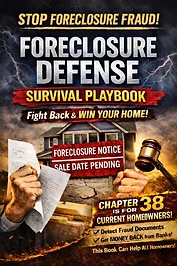
Order The Playbook
Get the Foreclosure Defense Survival Playbook
530 pages of structured, educational guidance covering mortgage documents, foreclosure procedures, evidence organization, and legal research — the same foundation this article draws from.