Foreclosure Defense
Recent Foreclosure Trends and How to Defend Your Home Against Servicing Abuses
Recent data shows over 320,000 homes faced foreclosure filings last year. Learn how to spot servicing abuses like dual-tracking and defend your rights.

Disclaimer: The following article is for educational purposes only and does not constitute legal advice. If you are facing foreclosure, consult with a qualified attorney in your jurisdiction.
Facing foreclosure is one of the most stressful experiences a homeowner can endure. When you fall behind on mortgage payments, it often feels like the bank holds all the cards. However, recent data and ongoing legal battles highlight that homeowners have significant rights and defenses available to them. By understanding the current foreclosure landscape, recognizing mortgage servicing abuses, and learning how to scrutinize your loan documents, you can level the playing field.
The Latest Foreclosure Market Data: What the Numbers Mean for You
According to the recently released ATTOM Year-End 2024 U.S. Foreclosure Market Report, foreclosure filings—which include default notices, scheduled auctions, and bank repossessions—were reported on 322,103 U.S. properties in 2024. While this represents a slight decline from the previous year, it still means hundreds of thousands of families are actively fighting to save their homes.
For homeowners currently in default, these numbers are a stark reminder that banks and mortgage servicers are actively pursuing foreclosure actions across the country. The stabilization of the housing market does not mean lenders are becoming more lenient. Instead, it means that foreclosure procedures are returning to their pre-pandemic, systematic pace. Banks rely on the fact that the vast majority of homeowners will not contest the foreclosure. When homeowners fail to respond to a complaint or fail to demand that the bank prove its case, the lender wins by default. Understanding that you are part of a massive, automated system is the first step in realizing why you must actively defend your case.
Dual Tracking and Servicing Abuses: A Continuing Threat
One of the most insidious practices in the mortgage servicing industry is known as "dual tracking." Dual tracking occurs when a mortgage servicer continues to move forward with the foreclosure process while simultaneously negotiating a loan modification or other loss mitigation option with the homeowner. This deceptive practice leads homeowners to believe they are safe because they are working out a deal, only to find out that their home has been sold at auction.
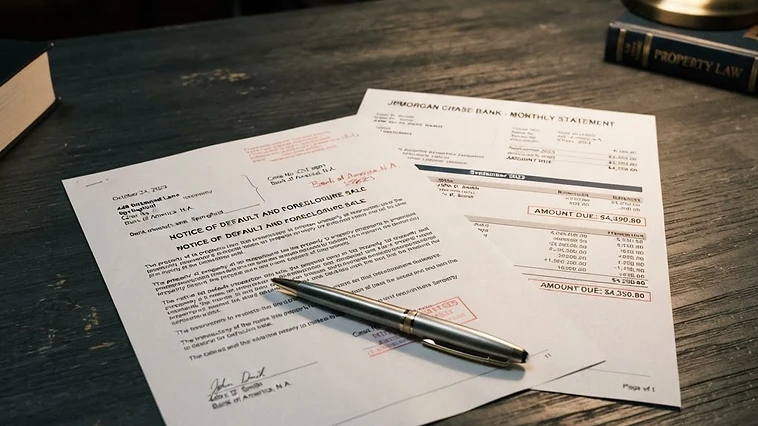 Close-up of mortgage documents and a foreclosure notice on a dark desk under warm lighting.

Recent legal battles continue to highlight the dangers of dual tracking. For example, ongoing litigation in cases like the Reese vs Select Portfolio Services (SPS) Supreme Court petition underscores the devastating impact these practices have on vulnerable homeowners. In many states, laws such as the Homeowner's Bill of Rights have been enacted specifically to prohibit dual tracking. If a servicer violates these rules, it can provide a powerful defense against the foreclosure action.
Homeowners must meticulously document every interaction with their mortgage servicer. Keep a detailed log of phone calls, save every letter, and send all correspondence via certified mail. If your servicer is demanding documents for a modification while simultaneously filing a notice of default, you may be a victim of dual tracking. Recognizing this abuse is critical to building a strong foreclosure defense.
Understanding Your Mortgage Documents and Evidence
To successfully defend against a foreclosure, you must understand the fundamental documents that govern your loan: the promissory note and the mortgage (or deed of trust).
The promissory note is the actual IOU—your promise to repay the debt. The mortgage is the security instrument that gives the bank the right to take your home if you fail to pay the note. During the housing boom, mortgages were frequently bought, sold, securitized, and transferred between various financial institutions. This chaotic transfer process often resulted in lost paperwork, forged signatures, and improper assignments.
In a foreclosure lawsuit, the bank must prove that it has the legal right to foreclose. This is known as "standing." To establish standing, the bank must generally prove that it owns and holds the promissory note and the mortgage at the time the lawsuit is filed. Because of the rampant use of automated "robo-signing" and sloppy record-keeping by mortgage servicers, banks often struggle to produce the original, properly endorsed note.
As a homeowner, you have the right to demand that the bank produce the original note and prove the chain of title. If the bank relies on a "lost note affidavit" or produces an assignment of mortgage that was signed years after the trust it was allegedly transferred to was closed, these are massive red flags. Scrutinizing these documents for fraud, backdating, and unauthorized signatures is a cornerstone of foreclosure defense.
Procedural Defenses: Making the Bank Prove Their Case
Foreclosure is a strict legal process, and banks must follow the rules of civil procedure and state law to the letter. Many foreclosure defenses are procedural, meaning they focus on the bank's failure to follow the law rather than whether or not the homeowner missed a payment.
One common procedural defense is the failure to provide a proper notice of default. Most mortgages require the lender to send a specific notice giving the homeowner a chance to cure the default before accelerating the loan and filing for foreclosure. If the bank fails to send this notice, or if the notice does not contain the exact language required by the mortgage contract, the foreclosure case may be dismissed.
Another critical defense involves the statute of limitations. When a bank "accelerates" a loan (demanding the entire balance due immediately), the clock starts ticking on the statute of limitations to file a foreclosure lawsuit. If the bank dismisses the case and tries to refile years later, they may be barred by the statute of limitations.
By forcing the bank to strictly prove every element of their case—from standing to proper notice to accurate accounting of the debt—homeowners can often expose fatal flaws in the bank's lawsuit. This is not about getting a "free house"; it is about holding powerful financial institutions accountable to the law.
Why the Foreclosure Defense Survival Playbook Helps
Navigating the complex world of mortgage documents, court procedures, and legal research can feel overwhelming, especially when you are facing the loss of your home. You do not have to fight this battle blind.
The Foreclosure Defense Survival Playbook is a comprehensive, 530-page educational resource designed specifically for homeowners who are behind on payments or already in foreclosure. This Playbook breaks down complex legal concepts into plain, understandable language. It teaches you how to read your mortgage documents, spot evidence of robo-signing and fraud, and understand the procedural rules that banks must follow.
Whether you are looking to hold your servicer accountable for dual-tracking abuses, demand proof of standing, or simply buy enough time to negotiate a fair loan modification, the Playbook provides the foundational knowledge you need. It empowers you to organize your evidence, understand the discovery process, and communicate effectively with the courts and opposing counsel. Don't let the bank steamroll you by default. Order the Foreclosure Defense Survival Playbook today, educate yourself on your rights, and take control of your home's future.


Order The Playbook
Get the Foreclosure Defense Survival Playbook
530 pages of structured, educational guidance covering mortgage documents, foreclosure procedures, evidence organization, and legal research — the same foundation this article draws from.