Foreclosure Defense
Defending Your Home: Recent Trends in Foreclosure Defense and Servicer Abuses
Discover the latest strategies for defending your home against foreclosure, including challenging standing, identifying servicer errors, and leveraging federal protections.
Disclaimer: The following article is for educational purposes only and does not constitute legal advice. If you are facing foreclosure, please consult with a qualified attorney in your jurisdiction.\n\n## The Rising Tide of Foreclosures and Your Rights\n\nForeclosures are once again on the rise across the United States. Recent reports indicate that nationwide mortgage foreclosure rates have jumped significantly, leaving many homeowners feeling stressed, frustrated, and intimidated by the prospect of losing their homes. However, facing foreclosure does not mean you are without options. Every homeowner has the right to defend their property against foreclosure, and understanding the legal landscape is the first step in fighting back.\n\nFederal law generally provides a 120-day timeline before a lender can officially initiate a foreclosure. This clock starts ticking after your first missed mortgage payment. This period is specifically designed to grant financially distressed homeowners ample time to resolve their issues, apply for loss mitigation, or explore alternatives to avoid foreclosure. Furthermore, depending on your state, the foreclosure process may be judicial (requiring the lender to file a lawsuit in court) or non-judicial. In judicial states, the process typically takes longer, affording homeowners more time to mount a robust defense.\n\n## Procedural Defenses: Challenging Standing and the Promissory Note\n\nOne of the most fundamental ways to attack a foreclosure is to argue that the foreclosing party lacks the legal standing to foreclose. In legal terms, standing means that the party filing the lawsuit has the actual legal right to enforce the debt. If the foreclosing party cannot produce the original promissory note on which the loan is based, the court may dismiss the case.\n\nThis strategy, often referred to as the 'produce the note' defense, gained massive popularity during the 2008 financial crisis. While foreclosing parties have since improved their record-keeping, the complex web of mortgage securitization means that loans are still frequently bought, sold, and transferred multiple times. If the chain of title is broken, or if the assignments of the mortgage were improperly executed or robo-signed, the current servicer or trust may not have the legal authority to take your home. Scrutinizing these documents for errors, material misrepresentations, or fraudulent practices is a cornerstone of modern foreclosure defense.\n\n## Substantive Defenses: Uncovering Servicer Errors and Accounting Abuses\n\nEven if the foreclosing party has standing, they must still prove that you are actually in default for the amount they claim. This is where substantive defenses come into play. Mortgage servicers are notorious for making accounting errors that can push a struggling homeowner into foreclosure or make it impossible for them to catch up.\n\n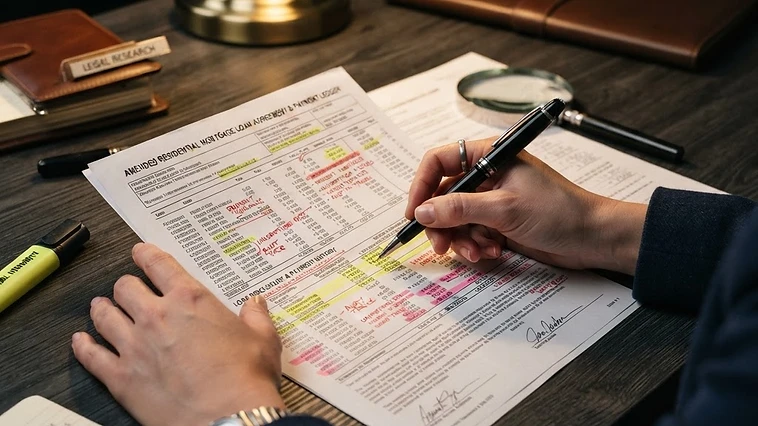 Close-up of hands reviewing mortgage documents and servicer accounting statements on a dark desk.\n\nCommon servicer errors include failing to promptly credit your payments, crediting your payments to another account, or misapplying funds to inflated corporate advances and junk fees rather than the principal and interest. This results in the servicer's records incorrectly stating that you have missed payments. Furthermore, servicers often make mistakes in stating the exact amount needed to reinstate a mortgage. An overstatement can cause a homeowner to give up their home simply because they believe they do not have enough funds to save it, when in reality, the servicer's math is wrong.\n\nMortgage servicers can also engage in outright abuse by piling up excessive fees that are not permitted under the terms of the original mortgage contract. Identifying these unauthorized fees requires a forensic review of your loan ledger and payment history.\n\n## Federal Protections: TILA and RESPA Notice Requirements\n\nHomeowners are protected by strict federal laws that govern how mortgages must be serviced and transferred. Under the Truth in Lending Act (TILA), a borrower must receive a formal notice of a mortgage's transfer to a new owner or assignee within 30 days of the transfer. \n\nSimilarly, under the Real Estate Settlement Procedures Act (RESPA), a borrower must receive a notice of a servicing transfer from their old servicer at least 15 days before the transfer takes effect, and another notice from their new servicer no more than 15 days after the transfer. Failure to provide these notices can be used as a defense in a foreclosure action, as it demonstrates the servicer's failure to comply with federal consumer protection laws. Additionally, RESPA provides strict guidelines on how servicers must handle loss mitigation applications, prohibiting the dangerous practice of 'dual tracking'—where a servicer proceeds with foreclosure while simultaneously negotiating a loan modification.\n\n## Exploring Loan Modifications and Bankruptcy\n\nIf you are behind on payments, applying for a loan modification is a critical defense strategy. A loan modification typically reduces a borrower's monthly payments by lowering the interest rate, extending the life of the loan, or forbearing a portion of the principal balance. If you have already modified your loan but the mortgage servicer has not adjusted its records to reflect the modification, they might illegally proceed with a foreclosure. You can often stop the foreclosure proceeding if you can show that you are making payments under an active loan modification plan.\n\nIn cases where a modification is not possible, filing for bankruptcy protection is another strategy that can help homeowners buy time. When a homeowner files for bankruptcy, an 'automatic stay' is immediately issued by the federal court. This stay temporarily halts all collection activities, including foreclosure sales. A Chapter 13 bankruptcy allows homeowners to restructure their debts and create a court-approved repayment plan to catch up on missed mortgage payments over a period of three to five years.\n\n## Why the Foreclosure Defense Survival Playbook Helps\n\nNavigating the treacherous waters of foreclosure defense requires knowledge, organization, and a deep understanding of how the banking system operates. This is exactly why the Foreclosure Defense Survival Playbook is an indispensable resource for homeowners fighting to save their properties. \n\nThis comprehensive 530-page educational book breaks down complex legal concepts into plain, understandable language. It teaches you how to read and analyze your mortgage documents, spot fatal flaws in assignments and endorsements, and audit your servicer's payment history for illegal fees and misapplied payments. By providing step-by-step guidance on evidence organization, discovery procedures, and legal research, the Playbook empowers you to hold banks and servicers accountable for their errors and abuses. If you are behind on payments or actively fighting a foreclosure lawsuit, you cannot afford to go in blind. Order the Foreclosure Defense Survival Playbook today and arm yourself with the knowledge you need to defend your home.

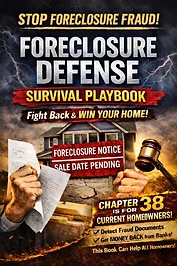
Order The Playbook
Get the Foreclosure Defense Survival Playbook
530 pages of structured, educational guidance covering mortgage documents, foreclosure procedures, evidence organization, and legal research — the same foundation this article draws from.