Foreclosure Defense
Recent Foreclosure Defense News: CFPB Rules, Servicing Abuses, and Defending Your Home
Stay up-to-date on the latest regulatory crackdowns, state enforcement actions, and consumer protection rules impacting homeowners facing foreclosure today.


Disclaimer: The information provided in this article is strictly for educational purposes and does not constitute legal advice. If you are facing foreclosure or struggling with late payments on your mortgage, you should consult with a qualified attorney to understand your specific legal options.
Introduction to the Shifting Foreclosure Landscape
For homeowners who have fallen behind on late payments or are already facing an active foreclosure lawsuit, the legal landscape can feel like a labyrinth designed exclusively to protect banks and mortgage servicers. When financial hardship strikes, the confusion of navigating loss mitigation options, coupled with the aggressive tactics of mortgage companies, can leave families feeling helpless. However, the regulatory environment is actively shifting. Recent developments in federal regulations, state enforcement actions, and consumer protection laws demonstrate that homeowner rights are increasingly being recognized, and predatory servicing practices are facing intense scrutiny.
In recent months, foreclosure filings have seen a noticeable surge. According to nationwide property data analyses released in mid-2026, foreclosure starts jumped by 21% in the first half of the year compared to the previous year. As the volume of distressed mortgages rises, the cracks in the mortgage servicing industry are beginning to show once again. Servicers are struggling to manage the influx of loss mitigation applications, leading to systemic errors, miscommunications, and outright violations of federal and state laws.
Building a robust foreclosure defense begins with understanding the current landscape of homeowner protections. By staying informed about the latest enforcement actions, regulatory updates, and prevailing trends in the mortgage industry, homeowners can better identify when their own rights have been violated. This article explores the most recent news surrounding the Consumer Financial Protection Bureau (CFPB), state-level crackdowns on servicing abuses, the rise of foreclosure-related scams, and how you can apply this knowledge to fight back.
The CFPB’s Crackdown on Mortgage Servicing Abuses
One of the most significant developments for homeowners in 2026 is the Consumer Financial Protection Bureau’s (CFPB) aggressive push to modernize and enforce Regulation X, the federal framework that governs mortgage servicing. In response to mounting complaints about how servicers handle distressed borrowers, the CFPB is targeting some of the most harmful practices in the industry, particularly focusing on streamlining the loss mitigation process to prevent avoidable foreclosures.
A central focus of the CFPB's recent regulatory efforts is the implementation of a comprehensive "loss mitigation review cycle." Historically, homeowners trying to save their homes have been subjected to endless loops of lost paperwork, redundant requests for information, and frustrating delays. Under the proposed enhancements, mortgage servicers would be strictly required to exhaust all available loss mitigation options—such as loan modifications, forbearances, or partial claims—before they are legally permitted to initiate foreclosure procedures.
Furthermore, the CFPB is taking a hard stance against "dual tracking." Dual tracking is a predatory practice where a mortgage servicer actively negotiates a loan modification with a homeowner while simultaneously pushing forward with foreclosure proceedings in court. This deceptive tactic has historically cost thousands of families their homes, as they believed they were safe while under review, only to find out their property was sold at auction. Stricter prohibitions on dual tracking represent a massive victory for homeowner rights, ensuring that borrowers are given a fair, transparent, and complete evaluation without the looming threat of an imminent sheriff's sale.
For anyone building a foreclosure defense, these federal rules are critical tools. When a servicer violates Regulation X by dual tracking or failing to properly review a loss mitigation application, it can provide powerful grounds to challenge the foreclosure action in court.
State Enforcement: Uncovering Widespread Bank Fraud and Servicing Errors
While the CFPB handles federal oversight, state attorneys general are also stepping up to hold rogue mortgage servicers accountable for systemic violations. A prime example of this occurred in August 2026, when California Attorney General Rob Bonta announced a $4.6 million settlement with a major subprime mortgage servicer. This enforcement action shed light on widespread servicing abuses that directly harmed homeowners attempting to navigate financial distress.
The state's investigation revealed that the servicer had consistently violated the California Homeowners Bill of Rights—a piece of legislation designed to ensure fair treatment for borrowers facing foreclosure. According to the allegations, the company failed to provide consumers with legally required information regarding their forbearance and loss mitigation options. Even worse, the servicer sent monthly statements to borrowers that incorrectly stated they would incur late fees while actively in a forbearance plan.
This type of misconduct blurs the line between administrative incompetence and outright bank fraud. When a servicer illegally assesses late fees, those fees are often capitalized into the loan balance, creating phantom debt that the homeowner does not actually owe. If left unchecked, this inflated debt can derail a loan modification attempt or falsely push an account into default status.
For homeowners, this recent news is a stark reminder that mortgage servicers make catastrophic mistakes. It reinforces the necessity of meticulously reviewing all mortgage documents, monthly statements, and escrow analyses. If state investigators are uncovering multi-million dollar servicing abuses, it is highly probable that individual homeowners are facing similar, undocumented errors in their own loan files.
The Surge in Foreclosures Brings "Home Saver" Scams
As foreclosure rates climb in 2026, another sinister trend has emerged: the proliferation of foreclosure rescue scams targeting vulnerable homeowners. Because foreclosure procedures require the filing of public notices—such as a Notice of Default or a Lis Pendens—scammers can easily scrape public records to identify individuals who are under extreme financial pressure.
Recent reports from consumer protection agencies have warned of a sharp increase in bad actors posing as "home savers" or foreclosure rescue operations. These predatory companies often contact homeowners via direct mail, aggressive phone calls, or targeted online ads. They promise guaranteed loan modifications, claim they can reverse a foreclosure sale, or offer to "buy" the home temporarily to help the borrower avoid a negative mark on their credit report. In reality, these schemes are designed to siphon away the homeowner's remaining cash through illegal upfront fees or, in worst-case scenarios, trick the homeowner into signing away the deed to their property, resulting in total equity theft.
 A person carefully reviewing mortgage servicing documents and organizing evidence on a dark desk illuminated by a warm lamp.

Homeowners must exercise extreme caution. Federal law generally prohibits companies from charging upfront fees for foreclosure defense or loan modification services before delivering actual results. True homeowner education involves learning to spot these scams and understanding that nobody can "guarantee" a specific outcome in a legal proceeding. Instead of relying on unsolicited saviors, homeowners are far better served by taking the time to understand their own legal situation, consulting with verified legal professionals, and organizing their own defense.
How to Defend Your Home: Organizing Evidence and Challenging the Bank
The recent headlines involving the CFPB and state attorneys general prove one indisputable fact: the mortgage servicing industry is deeply flawed, and homeowners cannot take the bank's claims at face value. If you are facing foreclosure, taking a proactive approach to your defense is essential.
The foundation of any effective foreclosure defense is meticulous evidence organization. Start by gathering every piece of correspondence between you and your servicer. This includes monthly statements, notices of intent to accelerate, loss mitigation applications, and any notes taken during phone calls. Under the Real Estate Settlement Procedures Act (RESPA), homeowners have the right to send a Notice of Error (NOE) or a Request for Information (RFI) to their servicer. These formal written requests legally compel the servicer to investigate account errors, provide a complete payment history, and supply copies of foundational mortgage documents.
When reviewing these documents, keep a sharp eye out for signs of modern-day robo-signing. During the 2010 financial crisis, manual robo-signing involved human employees blindly signing thousands of foreclosure affidavits without verifying their accuracy. Today, that practice has evolved into automated servicing software glitches. Algorithms and poorly integrated computer systems frequently auto-generate affidavits, default amounts, and fee assessments that contain fatal inaccuracies.
Additionally, you must scrutinize the chain of title and any mortgage assignments filed in your local county records. An assignment is the legal document that transfers the rights of your mortgage from one bank to another. Because mortgages are frequently bought, sold, and securitized by Wall Street, the paperwork is often sloppy, backdated, or missing entirely. If the entity attempting to foreclose on your home cannot produce a valid, unbroken chain of assignments, they may lack the legal standing to sue you. Dedicated legal research into your state's specific laws regarding standing and assignments can reveal critical vulnerabilities in the bank's case against you.
Why the Foreclosure Defense Survival Playbook Helps
Navigating the complexities of dual tracking, servicing abuses, and missing assignments is a daunting task, especially when you are trying to save your family's home. The banks rely on the fact that the legal system is overwhelming, hoping that you will simply give up without a fight. This is exactly where the "Foreclosure Defense Survival Playbook" steps in to level the playing field.
As a comprehensive, 530-page educational guide, the Playbook is designed specifically for homeowners facing late payments or active foreclosure. It demystifies complex legal jargon, breaking down foreclosure procedures and pro se litigation concepts into plain, accessible language. Inside, you will find detailed chapters on how to perform deep legal research, how to spot indicators of mortgage fraud in your loan file, and step-by-step frameworks for mastering evidence organization.
Whether you are looking to hold your servicer accountable for RESPA violations, trying to understand the intricacies of mortgage assignments, or simply trying to decipher the overwhelming stack of mortgage documents the bank has sent you, this Playbook is your ultimate resource. It empowers you with the knowledge needed to ask the right questions, demand the right documents, and assert your homeowner rights effectively. Don't let the banks dictate the outcome of your financial future—order your copy of the Foreclosure Defense Survival Playbook today and take the first step toward fighting for your home.

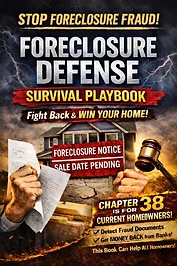
Order The Playbook
Get the Foreclosure Defense Survival Playbook
530 pages of structured, educational guidance covering mortgage documents, foreclosure procedures, evidence organization, and legal research — the same foundation this article draws from.