Foreclosure Defense
2025 Foreclosure Defense Guide: Leveraging Extended Timelines and Servicer Errors to Save Your Home
With the average foreclosure process now taking over two years, homeowners have unprecedented time to uncover servicer errors and mount a strong defense.

Disclaimer: The following article is for educational purposes only and does not constitute legal advice. If you are facing foreclosure, you should consult with a qualified attorney in your jurisdiction to understand your specific legal rights and options.
Falling behind on your mortgage payments is one of the most stressful experiences a homeowner can face. The constant letters, the threatening phone calls, and the looming fear of losing your home can make you feel powerless. However, the landscape of foreclosure defense is shifting. Recent data and regulatory actions reveal that homeowners have more tools, more protections, and critically, more time to fight back than ever before.
According to the Year-End 2024 U.S. Foreclosure Market Report released by ATTOM in January 2025, the average time it takes to complete a foreclosure has stretched to 762 days. That is more than two years. In some states, the timeline is significantly longer. This extended timeline is not just a statistic; it is a strategic advantage. It provides you with the breathing room necessary to audit your mortgage documents, uncover servicing abuses, and mount a robust foreclosure defense.
This guide will walk you through the current state of foreclosure in the United States, the difference between procedural and substantive defenses, how to spot mortgage fraud and robo-signing, and how to assert your homeowner rights against aggressive banks and servicers.
The Current Foreclosure Landscape: Time is on Your Side
The latest industry data from January 2025 paints a revealing picture of the foreclosure market. While foreclosure filings—including default notices, scheduled auctions, and bank repossessions—impacted over 322,000 properties in 2024, the actual completion of these foreclosures is slowing down. Bank repossessions dropped by 13 percent from the previous year, continuing a downward trend.
What does this mean for you? It means the banks are not moving as fast as their threatening letters suggest. The national average to foreclose is 762 days, but in states like Louisiana (3,015 days), Hawaii (2,505 days), and New York (2,099 days), the process takes years.
This delay is often due to increased judicial scrutiny, backlogged courts, and the complex web of consumer protection laws that lenders must navigate. For a homeowner facing foreclosure, this time is your most valuable asset. It allows you to gather evidence, request your complete loan file, and scrutinize every action your mortgage servicer has taken. Rushing to pack your bags is exactly what the banks want you to do. Instead, use this time to educate yourself and fight back.
Procedural Defenses: Forcing the Bank to Prove Their Case
When a bank or mortgage servicer initiates a foreclosure, they must follow strict legal procedures. A procedural defense attacks the method and legality of the foreclosure process itself, rather than arguing about whether you missed a payment.
One of the most powerful procedural defenses is challenging the foreclosing party's "standing." Standing simply means that the entity suing you actually has the legal right to do so. In the complex world of modern finance, your original mortgage was likely sold, securitized, and transferred multiple times.
To foreclose, the bank must typically prove they hold the original promissory note and have a valid, properly recorded assignment of the mortgage or deed of trust. If the chain of title is broken, or if the bank cannot produce the original note (often referred to as the "produce the note" defense), the court may dismiss the foreclosure action. While banks have improved their record-keeping since the 2008 financial crisis, missing documents and flawed assignments remain incredibly common.
Furthermore, state laws dictate exactly how and when a homeowner must be notified of a default and pending foreclosure. If the servicer fails to send the required pre-foreclosure breach letter, or if they fail to publish the notice of sale according to state statutes, these procedural errors can force the bank to start the entire process over from the beginning.
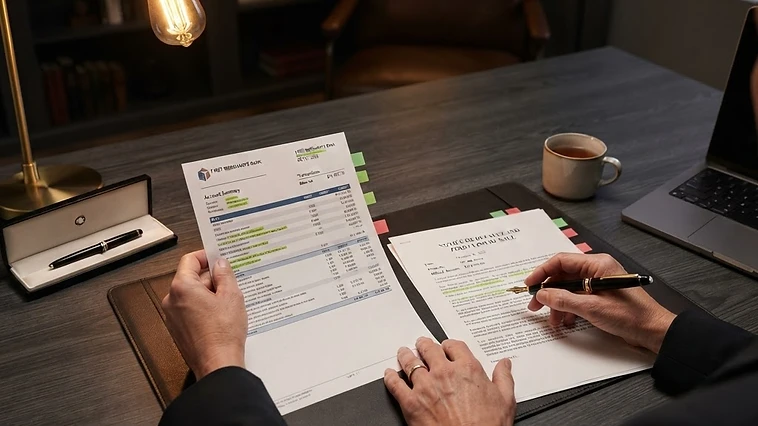 Homeowner reviewing mortgage statements and foreclosure notices on a dark desk
Substantive Defenses: Uncovering Servicing Abuses and Errors
While procedural defenses focus on the rules of the court, substantive defenses focus on the facts of your specific loan. Mortgage servicers manage millions of accounts, and their systems are notoriously prone to errors. These errors can form the basis of a powerful foreclosure defense.
Servicing abuses often include misapplied payments. You may have sent your payment on time, but the servicer credited it to the wrong account, or they applied it to arbitrary "junk fees" rather than your principal and interest. This can trigger a false default.
Another widespread issue is the mishandling of loan modifications. Servicers have been known to engage in "dual tracking"—a highly illegal practice where the servicer moves forward with foreclosure proceedings while simultaneously negotiating a loan modification or loss mitigation option with the homeowner. If you are actively working on a modification, federal law generally prohibits the servicer from selling your home at auction.
Additionally, you must look out for unauthorized fees. Servicers often pad the debt with inflated property inspection fees, excessive late charges, and unreasonable attorney fees. By demanding a complete payment history and auditing the ledger, homeowners frequently discover that the amount the bank claims is owed is wildly inaccurate. If the bank is foreclosing based on an incorrect, inflated amount, a judge can halt the proceedings.
Federal Protections: RESPA, TILA, and the CFPB
Homeowners are protected by a robust framework of federal laws designed to prevent mortgage fraud and servicing abuses. The Real Estate Settlement Procedures Act (RESPA) and the Truth in Lending Act (TILA) are your primary shields.
Under RESPA, if your mortgage servicing is transferred from one company to another, you must receive a notice from your old servicer at least 15 days before the transfer, and a notice from the new servicer within 15 days after. Failure to provide these notices can be a violation of federal law. Similarly, TILA requires that you be notified within 30 days if the actual ownership of your mortgage debt is sold or assigned to a new entity.
RESPA also gives you the power of the Qualified Written Request (QWR) or Notice of Error (NOE). By sending a formal, legally formatted letter to your servicer, you can demand a breakdown of your account, the identity of the true owner of your loan, and the correction of any accounting errors. The servicer is legally mandated to acknowledge and respond to these requests within strict timeframes. If they ignore you, they open themselves up to federal lawsuits and statutory damages.
Furthermore, the Consumer Financial Protection Bureau (CFPB) continues to monitor and regulate the industry. In mid-2024, the CFPB proposed new rules aimed at streamlining mortgage servicing for borrowers experiencing payment difficulties. These ongoing regulatory efforts underscore the fact that the government recognizes the systemic abuses within the mortgage servicing industry. You have rights, and the law provides mechanisms to enforce them.
The Ghost of Robo-Signing and Fraudulent Assignments
You might think that "robo-signing"—the practice of bank employees blindly signing thousands of foreclosure affidavits and assignments without verifying the information—ended a decade ago. Unfortunately, the legacy of these practices still haunts the chain of title for millions of homes.
When auditing your foreclosure file, you must carefully examine the assignments of mortgage. Are the signatures legible? Was the person who signed the document actually an officer of the company, or were they a third-party document mill employee? Was the document notarized properly, or was it notarized in a different state on a different date than the signature?
Fraudulent or fabricated documents are still introduced into evidence in courtrooms across the country. By learning how to scrutinize these documents, you can challenge the authenticity of the bank's evidence. If the foundation of the bank's lawsuit is a fabricated assignment, their entire case can crumble.
Why the Foreclosure Defense Survival Playbook Helps
Facing a foreclosure is terrifying, but ignorance is your greatest enemy. The banks rely on the fact that most homeowners do not understand mortgage documents, court procedures, or legal research. They expect you to default, give up, and walk away.
This is exactly why the Foreclosure Defense Survival Playbook is an indispensable resource for any homeowner fighting to save their property. This comprehensive, 530-page educational book is designed specifically to level the playing field.
The Playbook takes the complex, intimidating world of foreclosure litigation and breaks it down into plain, understandable language. It teaches you how to read and decode your mortgage documents, how to spot the telltale signs of servicing abuses and fraudulent assignments, and how to organize your evidence like a seasoned professional.
You will learn the mechanics of the discovery process, how to draft effective Notices of Error to force the bank to reveal their accounting, and how to navigate the procedural hurdles of the court system. Whether you are working with an attorney and want to understand your case better, or you are forced to defend yourself pro se, the Playbook provides the foundational knowledge you need to hold the banks accountable.
Do not let the bank steal your home because of a technicality or a servicer error. Equip yourself with the knowledge to fight back. Order the Foreclosure Defense Survival Playbook today, take control of your defense, and start fighting for your home with confidence.

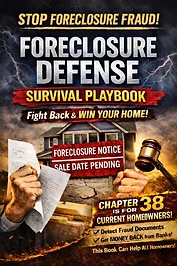
Order The Playbook
Get the Foreclosure Defense Survival Playbook
530 pages of structured, educational guidance covering mortgage documents, foreclosure procedures, evidence organization, and legal research — the same foundation this article draws from.