Foreclosure Defense
August 2026 Foreclosure News: Landmark Court Rulings and Settlements Expose Mortgage Servicing Flaws
Recent court rulings and a massive multistate servicing settlement highlight severe flaws in how banks prove standing, execute procedures, and manage escrow accounts.


Disclaimer: This article is strictly for educational purposes only and does not constitute legal advice. Homeowners should consult with a qualified, licensed attorney in their jurisdiction regarding their specific legal situation.
If you are a homeowner facing the terrifying prospect of losing your property, the legal system can feel like an insurmountable, rigged machine. Banks and mortgage servicers present themselves as infallible authorities, armed with seemingly perfect documentation and expensive legal teams. However, the events of mid-August 2026 prove that the mortgage industry is still plagued by the same sloppy practices, servicing abuses, and procedural errors that characterized the robo-signing scandals of the past decade.
In just one week—between August 10 and August 14, 2026—state regulators announced a massive $15.5 million multistate settlement against a major mortgage servicer for insurance abuses, while a New York appellate court handed down two devastating reversals against banks trying to push through flawed foreclosures.
These recent enforcement actions and court rulings are not just news stories; they are crucial educational blueprints for homeowner rights. They reveal exactly where mortgage servicers cut corners and how educated homeowners (and their attorneys) can hold them accountable by demanding strict compliance with court procedure, evidence rules, and federal servicing laws.
The $15.5 Million Settlement: Fighting Force-Placed Insurance Abuses
On August 14, 2026, the District of Columbia, leading a multistate enforcement team of 48 state financial regulators, announced a $15.5 million settlement with NewRez LLC, one of the nation's largest mortgage servicers. The settlement resolved findings from an extensive examination which determined that the servicer improperly imposed "force-placed" insurance on more than 4,200 borrowers nationwide who already had active homeowners' insurance policies.
What is Force-Placed Insurance?
To understand why this is a massive victory for homeowner rights, you must understand how mortgage escrow accounts work. When you sign a mortgage, the security instrument requires you to maintain hazard (homeowners) insurance on the property to protect the lender's collateral. If your policy lapses, the servicer has the right to buy an insurance policy on your behalf and charge you for it. This is known as "force-placed" or "lender-placed" insurance.
However, force-placed insurance is notoriously expensive—often costing up to ten times the amount of a standard policy—and it provides zero protection for the homeowner's personal belongings. Historically, servicing abuses surrounding force-placed insurance have been rampant, with servicers receiving kickbacks or commissions from the insurance companies they choose.
Federal Protections Under RESPA
The Real Estate Settlement Procedures Act (RESPA) and its implementing Regulation X strictly govern how and when a servicer can charge a borrower for force-placed insurance. A servicer must have a reasonable basis to believe the borrower has failed to comply with the insurance requirement. Furthermore, the servicer must send two distinct written notices (a 45-day warning and a 15-day warning) before charging the borrower.
The NewRez settlement highlights a recurring form of mortgage fraud and servicing abuse: charging borrowers for insurance they do not need. When an improper multi-thousand-dollar insurance premium is added to an escrow account, the borrower's monthly payment skyrockets. If the borrower cannot afford the artificially inflated payment, the servicer declares a default and initiates foreclosure.
Educational Takeaway: Homeowners must audit their monthly mortgage statements and escrow analyses meticulously. If a servicer imposes unauthorized fees or duplicate insurance, federal law empowers borrowers to send a Notice of Error (NOE) or a Qualified Written Request (QWR). Under RESPA, the servicer must acknowledge and investigate these written disputes.
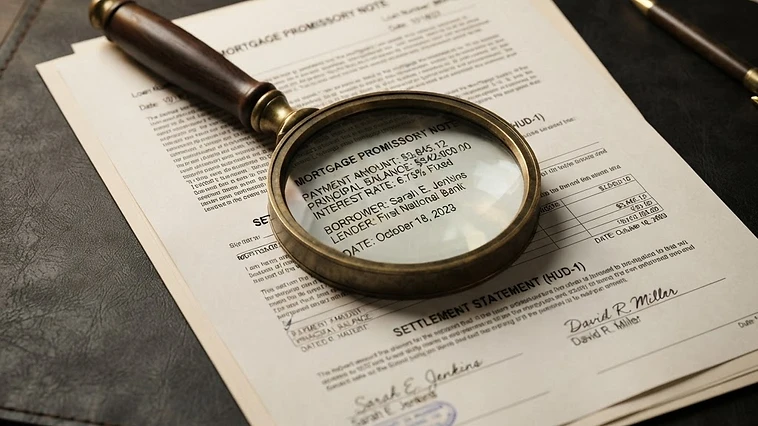 Magnifying glass examining a mortgage promissory note and legal settlement document

Suing the Deceased: Procedural Fatalities in Foreclosure Cases
Banks frequently rely on the intimidation factor of a lawsuit to secure default judgments against homeowners who fail to respond. But a shocking August 12, 2026, ruling from the New York Appellate Division, Second Department, demonstrates that a foreclosure judgment is only as valid as the legal procedure used to obtain it.
In this astonishing case, the Federal National Mortgage Association (Fannie Mae) filed a foreclosure lawsuit against a Queens homeowner in January 2014. The trial court allowed the case to proceed, eventually granting a default judgment of foreclosure and sale in 2018.
There was just one glaring problem: the borrower had died in September 2011, more than two years before Fannie Mae even filed the lawsuit.
In August 2026, an entity that had purchased the property from the deceased borrower's heirs challenged the old judgment. The appellate court agreed with the challengers, entirely erasing the 2018 foreclosure judgment and dismissing the action. The court declared the original lawsuit a "legal nullity."
Why Procedure Matters
In the American legal system, a court cannot exercise jurisdiction over a deceased person. You cannot sue someone who is no longer alive; the plaintiff must name the deceased person's estate and serve the appointed executor or administrator.
By ignoring this fundamental rule of civil procedure, Fannie Mae built its entire foreclosure case on a void foundation. Even though the judgment had stood unchallenged for over five years, the fundamental lack of jurisdiction meant the judgment was legally worthless from the day it was signed.
Educational Takeaway: Foreclosure defense requires a strict analysis of court procedure. Are the named defendants the correct parties? Was service of process executed legally? Is the court's jurisdiction valid? Homeowners and heirs must understand that a default judgment is not always the end of the road. If a bank violates core rules of civil procedure, the entire case can be unraveled, no matter how much time has passed.
Prove It or Lose It: Appeals Court Rejects Sloppy Standing and Missing Default Proof
On the exact same day—August 12, 2026—the same New York Appellate Division handed down another critical victory for foreclosure defense, this time regarding "standing" and the strict rules of evidence.
The case involved MTGLQ Investors, L.P., a notorious buyer of distressed mortgage debt, which had sued to foreclose on a religious corporation's property. The trial court had granted MTGLQ summary judgment (a win without a trial) in 2022, striking the borrower's defenses. But the appellate court reversed the decision, tearing apart the plaintiff's evidentiary proofs.
The Requirement of Standing
To have "standing" to foreclose, the plaintiff must prove that it was the legal holder of the promissory note at the exact moment the lawsuit was filed. Mortgages and notes are frequently bought, sold, and transferred multiple times. Under the Uniform Commercial Code (UCC) Article 3, standing is typically proven by showing physical possession of the original promissory note, endorsed properly (either to the specific plaintiff or endorsed "in blank").
The appeals court found that MTGLQ's sworn affidavit failed to establish when the note was actually acquired. Without clear, documented timing proving that MTGLQ held the note before filing the complaint, they had no legal right to sue.
The Business Records Exception to Hearsay
The appellate court didn't stop there. It also ruled that MTGLQ failed to properly prove the borrower had defaulted on the loan.
In foreclosure litigation, a bank cannot just send a representative to court to say, "The borrower owes us money." That is considered hearsay. Instead, the bank must rely on the "business records exception" to the hearsay rule. They must introduce the actual payment history ledger, and the person swearing to the affidavit must demonstrate personal knowledge of how those records were created and maintained in the regular course of business.
Because MTGLQ "did not submit records evincing such default" to support its summary judgment motion, the entire ruling was thrown out.
Educational Takeaway: The ghost of the 2010 robo-signing scandal still haunts the mortgage industry in 2026. Debt buyers and servicers frequently submit boilerplate affidavits signed by individuals who have no personal knowledge of the loan's history, missing critical assignments or payment ledgers. By understanding the rules of evidence and hearsay, homeowners can aggressively challenge the admissibility of the bank's documents. If the bank's evidence is inadmissible, they cannot prove their case.
How These August 2026 Developments Impact Homeowner Rights
These three August 2026 developments paint a clear picture of the modern foreclosure landscape. While the mainstream media often reports that the housing market is robust and foreclosures are rare, the reality on the ground for distressed homeowners is a battle against corporate negligence, algorithmic servicing errors, and legally defective lawsuits.
Whether it is a servicer unlawfully draining an escrow account with force-placed insurance, a bank suing a deceased borrower, or a debt buyer failing to produce the physical note and payment history, the burden of proof rests entirely on the financial institution.
For homeowners, the lesson is clear: Never assume the bank's paperwork is accurate, and never assume their legal claims are unassailable.
By taking a proactive, educated approach, homeowners can:
- Audit Servicing Statements: Watch for hidden fees, unauthorized property inspection charges, and force-placed insurance premiums.
- Demand the Note: Challenge the chain of title and demand physical inspection of the original, blue-ink promissory note to verify standing.
- Object to Hearsay: Challenge the affidavits of debt submitted by the servicer's employees if they lack personal knowledge or fail to attach the underlying business records.
- Scrutinize Procedure: Ensure that all rules of civil procedure, especially regarding standing and service of process, have been strictly followed by the plaintiff.
Why the Foreclosure Defense Survival Playbook Helps
Navigating the treacherous waters of mortgage litigation requires more than just knowing your rights; it requires knowing exactly how to enforce them. The complex concepts highlighted in these recent August 2026 news events—from drafting a RESPA Notice of Error for force-placed insurance to challenging a hearsay affidavit in court—are incredibly difficult to master on your own.
This is exactly why the Foreclosure Defense Survival Playbook is the ultimate must-have resource for anyone dealing with a distressed mortgage.
Across 530 pages of detailed, plain-language education, the Playbook breaks down the exact legal mechanics you need to understand. It demystifies the Uniform Commercial Code (UCC) so you can comprehend how chain of title and standing actually work. It provides comprehensive educational frameworks on the rules of evidence, showing you how to spot a "robo-signed" affidavit and how business records must be authenticated. Furthermore, it teaches you how to map out your own mortgage documents, audit your payment history, and prepare a highly organized defense strategy.
Don't let a servicer's errors cost you your home. Equip yourself with the knowledge to hold financial institutions to the strict letter of the law. Order your copy of the Foreclosure Defense Survival Playbook today and take the first step toward taking control of your financial and legal future.

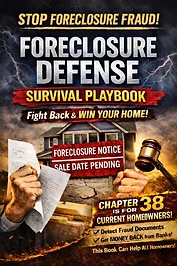
Order The Playbook
Get the Foreclosure Defense Survival Playbook
530 pages of structured, educational guidance covering mortgage documents, foreclosure procedures, evidence organization, and legal research — the same foundation this article draws from.